
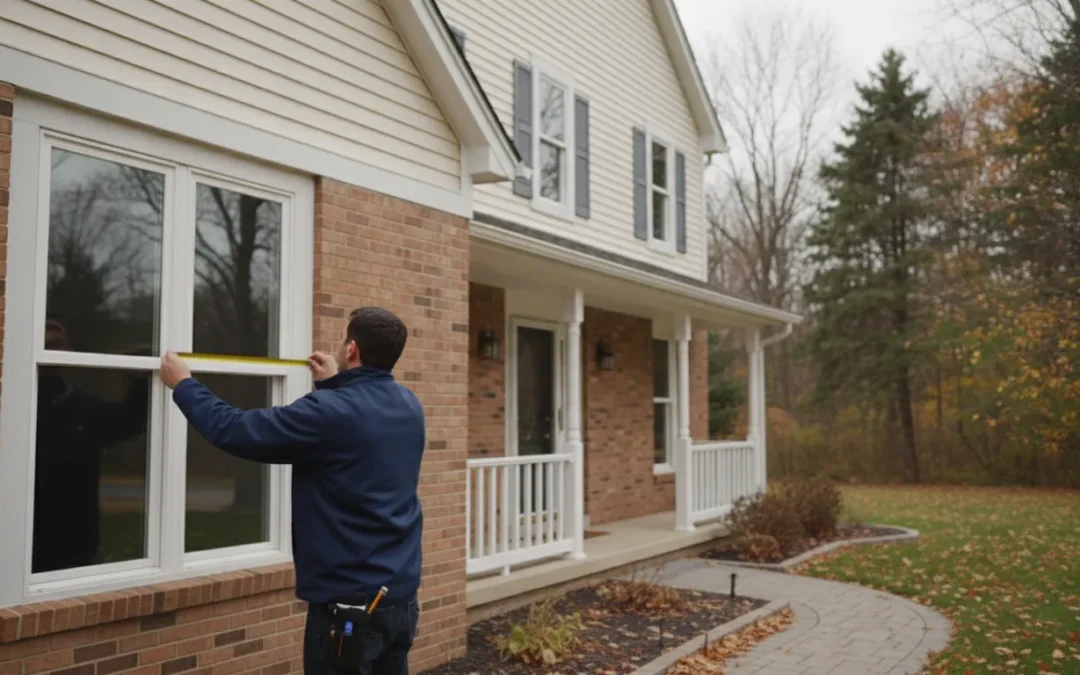
A window installation permit michigan homeowners can count on is not one statewide yes or no. The city or township that enforces the building code makes the call. In the City of Flushing, a building permit is required for any window replacement. Combination storm windows, sash replacements, and pane repair or re-glazing are the listed exceptions. A neighboring city can draw that line differently. Call the building department for the address before anyone orders units or opens a wall.
Call (810) 270-5922 to review your window project, or send the details through the contact form.
State law still sets the backdrop. The Michigan Department of Licensing and Regulatory Affairs says an owner or the owner’s builder must apply in writing before construction, and when the use of a structure changes. Ordinary repairs do not need a permit. Those repairs cannot cut away a wall, remove a structural support, or change a required exit. Full window replacement often falls outside that idea once the unit, the opening, or the way the home sheds water changes. When you are ready to talk through the openings themselves, start with the windows and doors service page.
When a Window Installation Permit Michigan Home Needs One
Start with the address, not a statewide checklist. Michigan adopts the Michigan Residential Code for one- and two-family homes, and LARA explains that local enforcing agencies issue the building permit. Genesee County cities and townships each name their own inspector. A house in the City of Flushing and a house a few miles away in a township can face different forms, fees, and inspection timing for the same window count. That is why a window installation permit michigan search should end at the local office, not at a copied answer from the next town.
The clearest local rule in Signature Home Pros’ home market is written down. The City of Flushing windows, doors, and siding guide, published for the city by SAFEbuilt, says a building permit is required for any window, exterior egress door, or siding replacement. The city’s building inspector page states the same policy: as of July 1, 2017, Flushing requires a building permit to install new or replacement windows, siding, or shingles and a new roof. The city also says permits are valid for work to begin within six months.
Flushing lists three window jobs that do not use that replacement permit:
- Installation of combination storm or screen windows.
- Sash replacements.
- Window pane replacement, repair, or re-glazing.
Those exceptions are narrow. Replacing the glass in an existing sash is not the same job as removing the whole window and setting a new frame. If the rough opening changes, the guide says to ask the building official whether an extra inspection is required. A bedroom window that is also an emergency exit is a different conversation from a fixed picture window on the first floor. Do not treat a sash-only repair as a full replacement, and do not assume a full replacement is exempt because the opening looks the same from the curb.
What Local Rules Change From City to City
Flushing’s written rule is a local ordinance choice on top of the state code. It is not a promise that Flint, Grand Blanc, Fenton, Linden, Davison, or a township uses the same exceptions. The City of Flint runs its own Building and Safety Inspections division and publishes a building-permit application, and its inspectors are licensed by the state. Each office can ask for photos, a product sheet, or a site visit before it decides.
| Question to ask | What Flushing publishes | What to confirm elsewhere |
|---|---|---|
| Is a full window replacement a building permit? | Yes. Any window replacement needs a building permit. | Ask the city or township for that address. Do not copy Flushing’s answer. |
| Which window work is listed as exempt? | Combination storm or screen windows, sash replacement, and pane repair or re-glazing. | Ask whether insert replacements, egress windows, or openings that change size are exempt. |
| Who should pull the permit? | The contractor may apply in the contractor’s name. An owner-builder is the party of record if the owner applies. | Ask whether a homeowner may apply, and whether a licensed residential builder is required for this scope. |
| What gets inspected? | A rough inspection may be required. A final inspection follows completion. After-hours work may need photos. | Ask how to schedule, whether photos are accepted, and whether smoke or carbon monoxide alarms are checked. |
| How long is the permit good? | Work must begin within six months. | Ask about expiration, extensions, and what happens if the product lead time runs past that window. |
Who Applies, and What the Office Usually Needs
LARA is plain about the applicant. Before construction, an owner or the owner’s builder, architect, engineer, or agent submits a written application to the enforcing agency. LARA also says a person engaged in building a residential structure generally must be licensed as a residential builder, with exceptions in the licensing law. The practical reading for a homeowner is simple: ask the local office who is allowed to sign the application for this job, and ask a contractor for a license you can verify before you hire.
Flushing’s guide adds a warning that matters in mid-Michigan. An owner-builder is the responsible party of record on that permit. If a contractor is doing the work, the city says you may limit your own exposure by having the contractor apply in the contractor’s name. The same guide warns that some unlicensed operators ask the owner to pull an owner-builder permit while the operator supplies the labor and materials. Hiring a licensed contractor, and having that contractor apply, is the path the city recommends.
Construction documents are part of a normal building-permit application. LARA says the building official may waive a full plan set when code compliance is clear from the description. A straight window replacement often fits a short application. An opening that gets wider, taller, or moves into a new wall may not.
Bring a short packet so the clerk does not have to guess:
- The property address and whether you are the owner.
- A count of windows, and which rooms they serve. Mark any bedroom or basement exit window.
- Whether each opening stays the same size or changes.
- The product line you plan to use, plus the manufacturer’s installation notes if you have them.
- Who will do the work, and that person’s residential builder license if a contractor is applying.
Flushing also tells applicants that drip cap, a drain pan, caulk, and sealing tape are required unless the manufacturer’s instructions specifically eliminate them. That is an installation detail the inspector can look for. It is not a brand promise, and it is not a reason to skip the manufacturer’s own instructions. Signature Home Pros installs Alliance Window Systems and Therma-Tru doors and can walk through the product notes at a consultation. The building department still decides what the permit must show.
How Inspections Fit the Installation
A permit is the ticket to an inspection, not a sticker you file and forget. Flushing says window and door projects may need a rough inspection, and every completed project needs a final inspection. If the crew will work after business hours or on a weekend, the city says photos may be required, and you should discuss that when you apply. The guide also says smoke and carbon monoxide alarms may be required so the home meets the Michigan Residential Code. Ask the inspector which alarms, if any, will be checked before the crew schedules the last day.
Plan the visit before the openings are closed up. A water-resistive detail that will sit behind trim is hard to verify after the interior casing is on. The city says to arrange the inspection during installation. If a rough opening will change size, ask whether that change adds an inspection before the new window goes in. Bedroom egress is the sensitive case. The guide says not to change a door swing or the size of an opening when that door is a primary exit. The same caution applies to a window someone would use to get out.
Product timing and permit timing are different clocks. Our article on how long window replacement takes covers order and install time. Flushing’s six-month start rule is about the permit, not the factory lead time. If windows will not arrive for many weeks, ask the clerk whether you should apply now or closer to the install date so the permit does not lapse.
Energy performance is a separate topic from the permit form. ENERGY STAR says certified windows, doors, and skylights are independently verified, and that the climate-zone label sits next to the NFRC label on the glass. Local code may set a minimum. The permit clerk can tell you whether a label or a spec sheet has to be on site. We keep material comparisons, including vinyl and fiberglass windows, on their own pages so this guide does not drift into product shopping.
What to Confirm Before You Sign
Flushing’s hiring tips are useful even outside the city. Hire only licensed contractors. Get the scope in writing and make sure you understand it before you sign. Have the contractor apply for the required permits. Do not make the final payment until you have a certificate of completion and you are satisfied with the work. Those are the city’s words, and they match how a careful homeowner should buy an exterior project.
You can check a residential builder license through LARA rather than trusting a business card. The state also explains, on the building-permit page above, that work affecting a required means of egress is outside ordinary repairs. If a contract says “permit by owner” or “permit not included,” ask why before you accept it. A low price that leaves the permit, the inspection, and the correction risk on you is not a complete price.
Insurance is another reason to stay inside the permit path. Flushing’s guide says homeowners policies may not pay for damage caused by work done without permits and inspections. That is a general warning, not a promise about any one policy. Read your own policy or ask your agent. The city also notes that a sale can get harder when improvements were never permitted, because buyers, lenders, and listing rules often ask whether permits and a final inspection exist.
Keep the rest of the project questions in their own places. Cost planning belongs with our replacement window cost guide. Cold-climate glass and comfort belong with windows for Michigan winters. If the same season will also include siding or a roof, the permit office may want those scopes listed too. Flushing’s window guide is explicit that siding replacement and roofing have their own permit triggers. Ask once, for the whole exterior scope, instead of discovering a second permit after the first crew is on site.
Call (810) 270-5922 or visit the windows and doors page to plan the next step.
Frequently Asked Questions
Does every Michigan city use the same window installation permit Michigan rule?
No. Michigan does not publish one statewide yes for every replacement window. LARA requires a permit before construction and exempts ordinary repairs that do not cut a wall or change a required exit. Cities then add their own rules. Flushing requires a building permit for any window replacement, with listed exceptions for storm windows, sash replacement, and pane repair. Call the building department for your address.
Do I need a permit to replace a broken window pane?
In Flushing, pane replacement, repair, and re-glazing are listed exceptions to the window-replacement permit. Sash replacement and combination storm or screen windows are also listed. Replacing the entire window unit is not in that exception list. If the opening will change size, or the window is a bedroom exit, ask the building official before you treat the job as exempt.
Should the homeowner or the contractor pull the permit?
Flushing says that if a contractor is doing the work, you may protect yourself by having the contractor apply in the contractor’s name. If you apply as an owner-builder, you are the party of record. LARA generally expects residential construction to be done by a licensed residential builder, with exceptions in the licensing law. Ask the local office which signature they will accept for your scope.
What happens if replacement windows are installed without a permit?
Flushing’s guide says work without a permit may have to be removed or fixed, and that insurance may not cover damage from unpermitted work. The city also says a later sale can stall when there is no final inspection. The exact remedy belongs to the enforcing agency and to your insurer. The practical fix is to ask the building department what it needs before the openings are closed.
Does a window permit also cover new siding or a roof?
Not automatically. Flushing requires a building permit for replacement windows, for siding, and for shingles or a new roof, and the window guide has separate notes for siding underlayment. If one project includes more than windows, tell the clerk the full scope when you apply. Other cities may split building, mechanical, and electrical work across different applications.
Recent Comments