
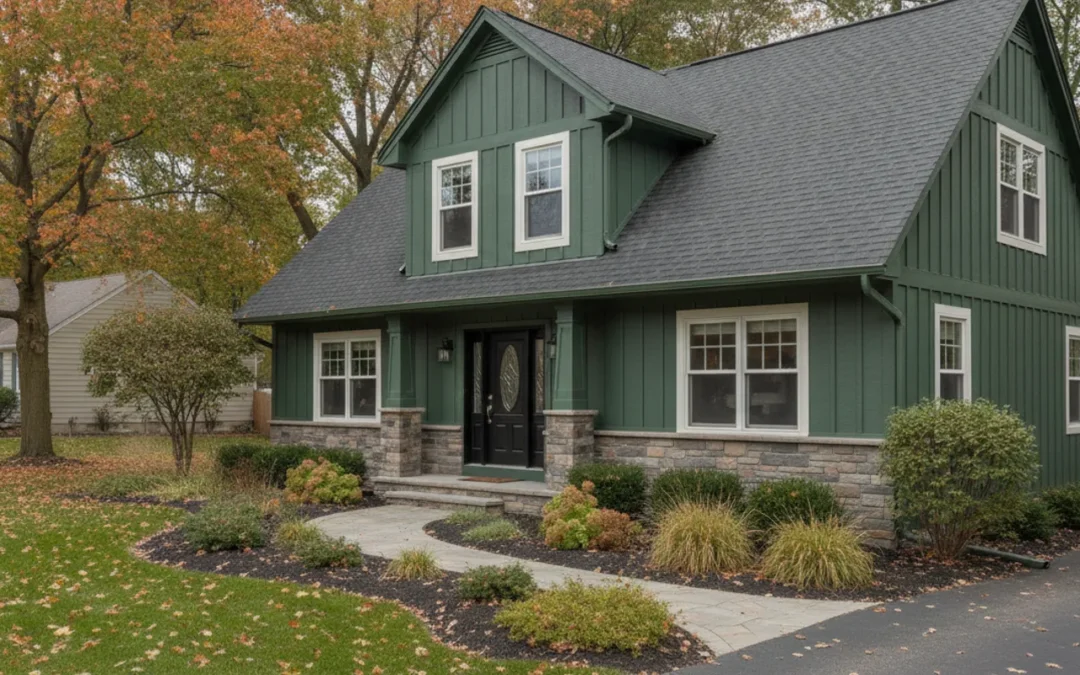
Planning exterior home remodeling in Flushing, MI is easier when you start with the home’s condition and the way exterior components connect. Roofing, siding, gutters, windows, doors, and stone accents each play a different role, but decisions about one area can affect how you plan the next. Signature Home Pros is a family-owned exterior renovation company headquartered in Flushing, with more than 20 years serving central Michigan homeowners. As you build a project list, use the company’s exterior home remodeling flushing mi gutter information as one resource for thinking through water management.
What should you assess before planning exterior work?
Begin with observations, not assumptions about what needs replacement. Walk around the home at ground level and make notes about visible wear, damage, drafts, staining, loose components, and places where water collects or runs close to the foundation. Do not climb onto the roof or take apart exterior components to inspect them. Ground-level photos and notes are enough to help explain what caught your attention.
Record what you see by elevation: front entry, each side, rear, roofline, and drainage discharge points. Add the room or interior location if the concern is a draft or water stain. This record helps you distinguish a single isolated issue from a pattern that may deserve a broader conversation. It also gives you something concrete to revisit when comparing recommendations.
- Condition: Which surfaces look worn, damaged, loose, faded, or difficult to maintain?
- Water: Do gutters appear to sag, leak, or overflow? Where do downspouts release runoff?
- Comfort and function: Are any rooms noticeably drafty, or are windows and doors difficult to operate?
- Appearance: Which changes matter most from the street, at the entry, or from commonly used rooms?
- Timing: Are there household schedules, access needs, or seasonal considerations to discuss?
Separate urgent concerns from preferences. Active water intrusion, a visibly failing component, or a safety concern deserves prompt professional attention. A color change or decorative accent may be planned on a more flexible schedule. This does not mean you must know the technical cause before calling; it simply helps the conversation start with the issues that matter most to your household.
How do the exterior systems fit together?
An exterior is a set of connected surfaces and transitions. The roof sheds water toward the gutters; gutters and downspouts direct it away from the building. Siding and trim meet at corners, openings, and roof edges. Windows and doors have their own frames and surrounding finishes. Stone accents may meet siding, trim, or masonry. Those connections are worth discussing whenever a project touches more than one area.
For example, a homeowner considering siding can note the condition of trim, window surrounds, and any existing accent materials at the same time. That does not mean all of those components must be replaced. It gives the contractor a chance to explain how the proposed siding scope will meet adjacent surfaces and which choices need to be made together. Similarly, if drainage is a concern, discuss the roof edge, gutters, downspouts, and discharge locations as a related group.
Thinking in systems can also prevent a cosmetic decision from distracting from a practical issue. A new exterior color may be important, but persistent overflow or loose gutter sections should be part of the same planning discussion. The aim is not to expand every project. It is to make sure the recommended scope addresses the concern you actually have and accounts for the parts it touches.
| Project area | What to note | Planning question | Related decisions |
|---|---|---|---|
| Roofing | Visible wear, missing material, stains, or signs of leakage | Does this need an assessment before other exterior selections? | Roof edge, gutters, skylights, and nearby siding |
| Siding and trim | Loose, damaged, faded, or mismatched areas | How will openings, corners, and transitions be addressed? | Window and door surrounds, color, and accent materials |
| Gutters | Sagging, leakage, overflow, or runoff direction | Where should water leave the home, and are downspouts included? | Roof edge and ground-level discharge locations |
| Windows and doors | Drafts, operation problems, or worn exterior trim | Are replacement units, surrounding finishes, or both in scope? | Siding, trim, and the entry appearance |
| Stone accents | Desired location and existing wall conditions | How much accent supports the overall exterior design? | Siding, entry, foundation, and neighboring finishes |
Which work should you prioritize?
Priorities depend on the home’s observed condition and what you want to accomplish. If there is active water intrusion, a safety concern, or a component that appears to be failing, put that issue first and discuss it with a qualified professional. If there is no immediate concern, group related choices instead of treating every item as a separate project: roof edge and gutters; siding and trim; or windows and doors with their surrounding finishes.
A simple priority list can use three levels:
- Needs attention: Problems affecting protection, water handling, safe use, or day-to-day function.
- Plan together: Improvements that meet adjacent materials or may be easier to consider as a coordinated design decision.
- Optional for now: Appearance changes or additions you would like, but that do not need to determine the immediate scope.
Imagine that you notice overflowing gutters, faded siding, and a front entry that feels dated. Rather than assume all three need replacement, document when and where the gutters overflow, photograph the siding, and decide what you want to change about the entry. In a consultation, ask which observations need evaluation, whether any work is connected, and what could reasonably remain outside the current project. That gives you a clearer basis for deciding what to do now and what to revisit later.
Signature Home Pros works across roofing, siding, gutters, windows and doors, and stone installation. Considering these categories through one company can reduce the burden of coordinating separate initial conversations. You can review its roofing services, siding information, window and door options, and stone installation while deciding what belongs on your list. The purpose is to understand available options, not to assume every service belongs in every home’s plan.
How should you think about materials and design?
Start with the materials already on the home and the visual effect you want. Note the roof color, siding color, trim, window frames, front door, and any existing stone or masonry. A few photographs taken in daylight can help you compare ideas. If you have inspiration images, bring them as examples of colors, proportions, or combinations rather than as an exact specification.
Ask how a proposed product or finish relates to neighboring materials, what color choices are available, and whether a detail requires a decision before another part of the scope is finalized. Brand names can help make a discussion specific: Signature Home Pros lists CertainTeed for roofing and siding, ProVia for windows, Therma-Tru for doors, Velux for skylights, StoneCraft for manufactured stone veneer, and Shur Flo for gutters. Product availability and suitability depend on the project; ask which options fit the condition and scope of your home.
For a restrained exterior update, you might keep the main siding color and consider a change at the entry, or use stone as a defined accent rather than across every wall. For a broader refresh, you might compare how the roof, siding, trim, and entry will look together before selecting individual finishes. In either case, ask for clarity about what is included and which visible surfaces will remain unchanged. Clear boundaries reduce misunderstandings about whether a proposal covers a complete elevation or only selected areas.
How can you prepare for an estimate?
A useful estimate conversation begins with the information you have, not a guess about the correct repair or total price. Gather your photos, write down concerns by location, and note any known past repairs. You do not need to diagnose the issue or choose every product first. Share what outcome matters to you, then ask the contractor to describe the work being proposed in plain language.
- List the problems to address separately from the improvements you would like.
- Take ground-level photos of the relevant elevations, details, and drainage points.
- Mark which items are essential, which might be coordinated, and which are optional.
- Bring material or color preferences as starting points, not final commitments.
- Ask for a written description of proposed work, materials, and project boundaries.
- Ask what is excluded, what assumptions were made, and what conditions could change the scope.
- Keep the proposal and your notes together so you can compare them consistently.
Actual project costs depend on the home, materials selected, and scope. There is no single total that applies to every exterior remodeling project in Flushing. If you are considering one service, ask for an estimate based on the actual property and the work described. For gutters, for instance, clarify which sections are included, whether downspouts are part of the proposal, and how the discharge locations will be addressed. Avoid treating a broad online figure or a preliminary conversation as a quote for your specific home.
Before you finish the conversation, repeat back your understanding of the proposed scope. You might say: “This proposal addresses the gutter runs on these elevations, includes these downspouts, and does not include siding repairs.” That short check gives both sides a chance to identify a mismatch before you make a decision.
How do you compare proposals fairly?
Do not compare only the bottom-line totals. Two proposals can describe different amounts of work, different materials, or different assumptions. Put the details side by side and ask each contractor to explain any difference. If one proposal is less specific, request clarification rather than assuming it includes the same work as another.
- Scope: Which surfaces or components are included, and which are excluded?
- Materials: What product and finish are proposed? Are comparable selections being considered?
- Transitions: How will the work meet existing trim, openings, roof edges, or adjacent materials?
- Unknown conditions: What could change the scope, and how will a change be discussed?
- Communication: Who should you contact with questions, and how will decisions be documented?
- Timing: What schedule assumptions are stated, and what factors could affect them?
A useful comparison does not require you to choose the longest proposal or the one with the most technical language. It should help you understand what each contractor proposes to do and why. If you cannot tell whether an item is included, ask for a direct answer in writing. If the answers remain unclear, that is a reason to pause and resolve the question before committing.
What should you ask when choosing a contractor?
Look for clear communication, a defined scope, and answers tied to your home rather than a generic package. Ask who will perform the work, which products are proposed, how questions will be handled, and what project documentation applies. For Michigan work subject to state licensing requirements, ask the contractor what credentials apply and how to verify them. The Michigan Department of Licensing and Regulatory Affairs is the official state agency to consult for licensing information; start at Michigan LARA and verify current requirements for the work being considered. Requirements may depend on the project and applicable legal thresholds, so do not rely on a general article as a substitute for current official guidance.
Also ask about insurance and workers’ compensation documentation where applicable, and make sure you understand the written agreement before work begins. A careful contractor should be able to explain the scope, identify what remains uncertain, and answer questions without pressuring you to make a rushed decision. Signature Home Pros emphasizes responsive service, craftsmanship, and a no-pressure estimate approach. Learn about the family-owned company on its company background page, and review the service area information for its regional coverage.
How can you think through project order and timing?
There is no single sequence that fits every exterior project. The appropriate order depends on the home, the work included, and how components meet. Instead of assuming that one trade or product always comes first, ask the contractor to explain which decisions depend on one another. For instance, if a project includes both siding and gutters, clarify how the gutter work relates to the roof edge and siding scope. If windows are also under consideration, ask how their exterior trim will coordinate with the selected siding details.
Make a short list of dependencies during the estimate conversation:
- Which parts of the exterior must be assessed before selections are final?
- Which materials or colors need to be chosen together?
- Are there transitions that should be included in the written scope?
- What access, household schedule, or site conditions should be considered?
- Which timing assumptions are firm, and which may change with conditions?
Use the answers to distinguish a decision sequence from an installation schedule. A proposal may identify decisions that need to be made early without promising a specific start date or duration. Ask for the anticipated timing in writing and what factors could affect it. Weather, material availability, and the amount of work can affect planning, so avoid relying on a generic timeline as a commitment for your property.
Consider a homeowner planning roofing work and new gutters while also interested in siding. Rather than deciding the whole exterior in one sitting, they can first document the roof and drainage concerns, ask which edges or connections matter, and request a clear proposal for the priority work. They can then discuss whether siding should be coordinated now or treated as a separate future decision. The useful outcome is a clear picture of what is included, what depends on another choice, and what can wait—not a predetermined package.
How can you make the planning manageable?
You do not need to settle every design detail during the first conversation. Bring your observations, explain what matters most, and ask what information is needed to define the scope. If the proposal covers several areas, ask which decisions must be made together and which can remain separate. A list of open questions is useful: material options, areas included, treatment of existing surfaces, and any factors that could affect the schedule.
Keep a simple project folder with photos, proposals, product notes, and written answers. Label photos by side of the home and date, and make a note of what question each one illustrates. When you receive a revision, compare it with the prior version so you can see which details changed. This straightforward record helps you make decisions at your own pace and reduces the chance that an important assumption gets lost in a conversation.
Signature Home Pros serves homeowners in Genesee, Shiawassee, Livingston, Saginaw, and Oakland counties. The company’s five exterior service categories can be discussed together when that is useful, while a project can also remain focused on one need. Its approach is summarized by “Come Home To Quality” and “We Create Extraordinary Exteriors”; the practical measure for your decision is still whether the proposed work fits your home, priorities, and budget.
Frequently asked questions
Does every exterior project require replacing several systems?
No. The right scope depends on the condition of the home, your goals, and how components meet. An assessment can help distinguish a focused repair or replacement from work that may be useful to coordinate.
Can I plan gutters separately from roofing or siding?
Yes. Gutters can be discussed as a standalone project. If you are also considering roof-edge or siding work, mention it so the relationship between those items can be evaluated as part of the planning conversation.
Should I choose materials before asking for an estimate?
You can bring preferences, but you do not have to finalize every selection first. Share the look and function you want, then ask which product and finish decisions affect the proposal.
How can I compare proposals when the scopes differ?
Ask each contractor to identify included work, exclusions, materials, and assumptions. Request clarification on the specific differences, then compare the revised descriptions rather than relying on totals alone.
With clear priorities and a written understanding of the proposed scope, Flushing homeowners can plan exterior improvements around the home’s actual needs and make decisions at a comfortable pace.
Recent Comments