
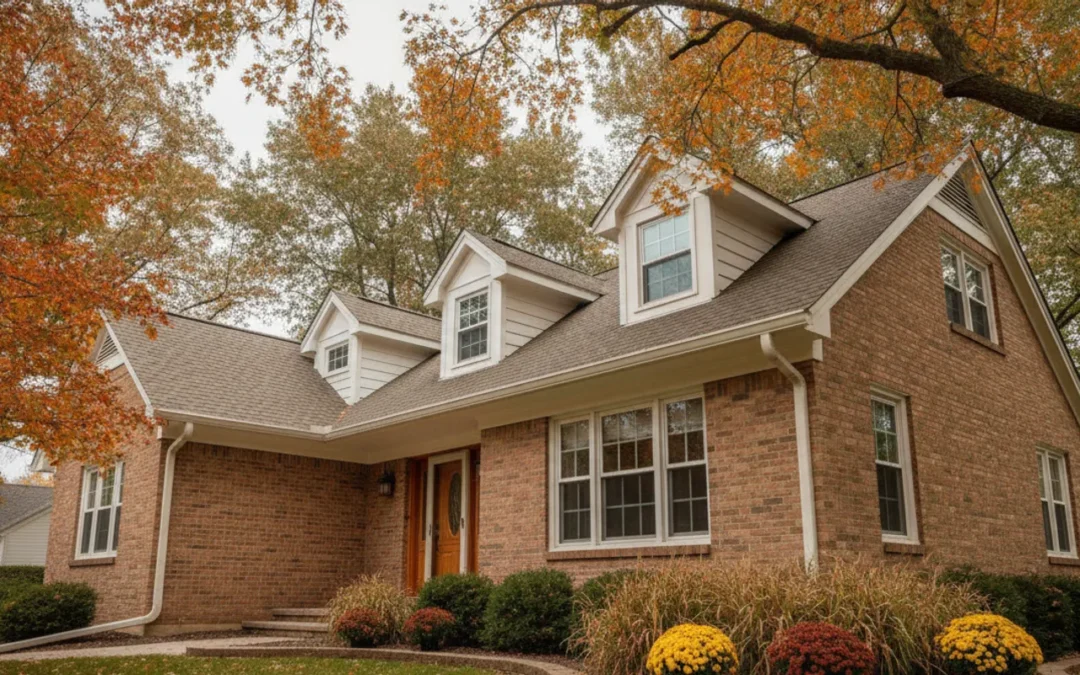
Planning gutter installation in Flushing, MI? Start with the roof, the shape of the house, and where rainwater should go—not with a one-size-fits-all product. A careful evaluation helps you compare gutter options, understand the estimate, and decide whether a new system fits your home and drainage needs.
In Mid-Michigan, homeowners need a system that works with the roofline and the ground around the home through changing weather. Signature Home Pros is a family-owned exterior renovation company serving central Michigan. Its gutter service includes custom seamless aluminum gutters fabricated on site. The purpose of this guide is to help you prepare for a useful conversation and know what details to review before deciding.
If you are comparing a full exterior project as well, start with the company’s home exterior renovation services or learn more about its approach on the About Us page.
What should a gutter installation evaluation cover?
A useful evaluation looks at how water leaves the roof, how it travels through each section of gutter and downspout, and where it exits near the home. It should also account for roof edges, corners, valleys, porches, additions, and any changes in the building footprint. These details matter because a gutter is part of a connected drainage path, not an isolated strip attached to the fascia.
Ask the contractor to walk through the proposed layout with you. Which roof edges will receive gutters? Where will each downspout be located? Where will its outlet send water? How will the plan handle inside or outside corners and roof areas that direct a lot of runoff to one point? You do not need to calculate the system yourself. You do want a clear explanation of how the design fits your home.
Roof drainage guidance for rainwater collection systems likewise treats gutters, slope, and downspouts as connected parts of the conveyance design. The Oklahoma State University Extension overview provides design considerations for those components. Its application is rainwater harvesting, so do not treat its example dimensions as a universal specification for every house; ask your contractor to size and lay out a system for your roof and site.
How can the roof and lot affect the layout?
Two homes with similar square footage can have different drainage needs. A simple roofline may have long, uninterrupted edges. Another home may have several roof planes, dormers, a porch roof, or valleys that concentrate runoff. The placement of downspouts also depends on the actual building layout and the route water can take once it reaches the ground.
- Roof edges and corners: Note which eaves are exposed to rain and which roof sections meet at corners or transitions. Ask how the proposed system accounts for each area.
- Roof valleys and additions: Where roof planes meet, water may collect and flow toward a smaller section of the edge. Ask whether the plan identifies these higher-flow areas.
- Ground slope: Observe whether the soil, walks, driveway, or planting beds slope toward or away from the house. Discuss where downspout outlets can discharge without simply moving the problem to another spot.
- Paths and outdoor features: A downspout should not be planned in isolation from an entry, walkway, patio, or area where people regularly pass. Ask how the layout will work with those features.
- Existing drainage concerns: Tell the estimator where you have noticed pooling, erosion, or water near the foundation. These observations help explain your priorities, though a gutter project alone may not resolve every drainage issue.
Take a few photos of problem areas before the visit. They can help you point out what happens during rain, especially if the issue is not visible on a dry day. Avoid assuming that a longer downspout extension or larger gutter will automatically solve a site drainage concern; the outlet location and surrounding grade matter too.
Which gutter options should you compare?
Compare options by their fit, material, joints, appearance, and maintenance expectations. The right choice depends on the home and project scope. A contractor can explain which options are available for your roof and whether a proposed product addresses the concerns you described.
| Choice to discuss | What to compare | Useful question |
|---|---|---|
| Seamless or sectional layout | Where joints occur, how sections meet at corners, and how the design follows the roofline | Where will the system have seams or joints, and how are transitions handled? |
| Gutter material and finish | Material, color availability, appearance against trim, and care expectations | Which material and color options suit this home, and what maintenance should I expect? |
| Gutter size and shape | Roof area, roof configuration, and the proposed water path | How did you determine the size and shape for these roof sections? |
| Downspout layout | Number and position of outlets and the destination of discharged water | Where will each downspout send water, and will that location work with the lot? |
| Guards or other accessories | What problem an accessory is intended to address and what care remains necessary | What does this accessory help with, and what will it not prevent? |
Seamless systems are made to the required run length, which can reduce the number of joints along a straight span. They still have connection points at corners, ends, outlets, and other transitions. The Texas Manual on Rainwater Harvesting notes that seamless gutters are generally installed by professionals and may cost more than other options. That is a general comparison, not a price quote for a Flushing home. Compare the full scope and product details in actual estimates rather than assuming that a particular style is always the best value.
Signature Home Pros describes its gutter offering as custom seamless aluminum gutters fabricated on site and lists Shur Flo among its gutter brands. You can review its gutter installation service information and use an estimate conversation to ask what material, layout, and components are available for your project.
How should gutter installation fit with other exterior work?
If you are planning more than one exterior update, discuss the sequence and scope before approving the gutter proposal. Roofing or siding work can involve the same roof edge and trim areas that a gutter system meets. That does not mean every homeowner needs to schedule several services together. It means you should make sure each estimate explains what it includes and how the work relates to the surfaces beside the gutters.
Ask whether the gutter scope includes taking down existing components, whether any related fascia or trim work is part of the proposal, and who is responsible for clarifying an issue discovered at the roof edge. If another contractor is handling roofing or siding, explain that and ask how the schedules and responsibilities should be coordinated. Get any agreed sequence or scope boundary in writing so you are not left assuming one contractor will handle work that belongs to another.
For an appearance decision, compare the proposed gutter color and profile with the home’s roof, siding, and trim rather than choosing from a small sample alone. If you are uncertain, ask how to review available options against the exterior colors on your house. Keep function in the conversation too: a preferred location for a downspout should still be checked against the drainage plan. A clear list of priorities—water routing, appearance, and any maintenance concerns—helps the contractor explain the available tradeoffs without turning the discussion into a product pitch.
What should you ask about water discharge?
Gutters collect water at the roof edge; downspouts carry it away from that edge. The final discharge point deserves as much attention as the gutter itself. Ask where water will leave each downspout and whether the location is appropriate for the slope and surfaces around your house. If you already use an extension or have a drainage feature, mention it during the evaluation.
Do not assume a contractor can correct every wet-basement, grading, or drainage issue by changing the gutters. The cause could involve grading, underground drainage, roof runoff, or another condition outside the gutter scope. Explain what you have observed and ask which parts the estimate covers. If a concern requires a separate evaluation, get that distinction clearly stated rather than treating a gutter proposal as a guarantee about the whole property.
Homeowners comparing connected exterior work can also review the company’s roofing services and siding services. This is especially useful when you are planning several exterior updates and want to discuss how the work should be coordinated; it does not mean every project needs to combine those services.
What should a gutter estimate explain?
An estimate should let you understand what is included, what is excluded, and which decisions are still open. Avoid comparing proposals based only on a single total or a brief product label. Ask for enough detail to see whether two contractors are describing the same work.
- Areas included: Identify the roof edges and sections covered. Clarify whether a porch, garage, addition, or other structure is included.
- System details: Ask for the stated material, style, size, color, and any named accessories or guards. Confirm what the estimate means by seamless or custom work.
- Downspouts and outlets: Make sure the planned locations and water discharge approach are explained, not just the gutter runs.
- Existing components: Clarify whether removal or handling of old gutters, downspouts, or related components is part of the scope. Do not assume if the proposal is silent.
- Repairs and exclusions: Ask how the estimate treats visible concerns around the roof edge, fascia, trim, or drainage. Confirm whether any repair is included, excluded, or subject to approval after further review.
- Project expectations: Ask what preparation is needed, how access should be kept clear, and whom to contact with a question about the written scope.
Get differences between proposals clarified in writing. A lower total may reflect a different number of included roof sections, a different product, or a different discharge plan. A higher total does not by itself show that a proposal is better. The useful comparison is the scope and system details side by side, together with your priorities for the home.
How do you prepare for an estimate in Flushing?
Before the appointment, write down what prompted you to consider new gutters. Are you replacing an older system, planning another exterior project, or trying to address water that lands in a particular area? Note any recurring overflow or pooling you have seen and when it tends to happen. If you can, take photos from the ground. Do not climb onto the roof to inspect it.
It also helps to note practical preferences, such as a color you want to coordinate with existing trim, a walkway where you would prefer not to have an outlet, or a place where you have seen soil wash away. These notes are not a substitute for a professional assessment, but they help make the conversation specific to your home.
When scheduling, share the address and describe the areas you want reviewed. If you are considering a broader project, say so early; Signature Home Pros also works on windows and doors and stone installation. A contractor can then clarify whether the estimate is limited to gutters or whether you want to discuss another service separately.
How should you choose a gutter contractor?
Look for a contractor who explains the proposed system in plain language and answers questions about the roofline, connections, downspouts, and discharge. Ask how the crew will confirm the scope before work begins and what to do if an unexpected condition changes the work. You should be able to understand what you are agreeing to without pressure or vague product descriptions.
Check that the written proposal matches your conversation. If it says only “gutters,” request clarification about the included sections and components. If you discussed a drainage concern, confirm whether the proposal addresses it or simply replaces the roof-edge collection system. Keep copies of the estimate and any written scope updates so that you can refer to the same details later.
Local knowledge can help a contractor understand the homes and conditions in the area, but ask questions about your specific house rather than relying on a general claim. Signature Home Pros is family-owned and serves central Michigan homeowners, with locations serving the area from Flushing and Grand Ledge. See the service area information for more about its coverage.
Schedule a Gutter Consultation
What are common planning mistakes to avoid?
- Choosing by appearance alone: Color and profile matter, but first understand the route water will take from the roof to the discharge point.
- Leaving downspouts until last: A good-looking gutter run can still leave water discharging in an inconvenient or unsuitable place. Include outlet locations in the discussion from the start.
- Assuming all estimates cover the same work: Compare the included roof sections, materials, accessories, and related work before judging totals.
- Expecting guards to eliminate maintenance: Ask what a guard is designed to do, what it does not address, and what ongoing inspection or care may still be needed.
- Expecting gutters to fix every water problem: Gutters are only one part of site drainage. Identify the symptom and ask whether the quoted work actually addresses it.
- Skipping written clarification: If an important detail is not clear, ask to have it explained in the proposal before making a decision.
Good planning is less about choosing the most complicated system and more about matching the scope to the roof and property. If you have more than one exterior concern, you can ask which issues belong in the gutter proposal and which would need separate discussion. That keeps expectations realistic and makes proposals easier to compare.
Contact Us to Discuss Your Gutters
Frequently asked questions
Are seamless gutters a good fit for a Flushing home?
They may be a fit if you want custom-made runs with fewer joints along straight spans. The appropriate system depends on your roofline, layout, material preferences, and estimate. Ask where joints will remain and how corners and outlets are handled; seamless does not mean the whole system has no connections.
Do new gutters solve water near the foundation?
They can collect runoff at the roof edge and route it through downspouts, but the result also depends on where water discharges and the conditions around the home. Pooling or foundation concerns may have causes beyond the gutter system. Describe what you have observed and ask whether the proposed scope addresses that specific issue.
Should I add gutter guards when replacing gutters?
Ask what debris or maintenance concern a particular guard is meant to address and what upkeep remains necessary. A guard is an option to evaluate for your home, not a promise that gutters will never need attention. Compare its purpose and scope with the rest of the estimate.
What should I have ready for a gutter estimate?
Share the address, the roof sections you want reviewed, any recurring overflow or pooling you have noticed, and preferences about color or downspout locations. Photos taken safely from the ground can help explain an issue. Ask for the included areas and water discharge plan to be stated clearly in the written proposal.
How can I request gutter installation information in Flushing?
You can use the company’s contact page to ask about an estimate. Explain whether you are planning a replacement or new installation and what you would like the contractor to evaluate.
A clear plan connects your roofline, gutter layout, downspouts, and the ground around your home. With those details in writing, you can make a more informed decision about gutter installation for your Flushing property.
Recent Comments