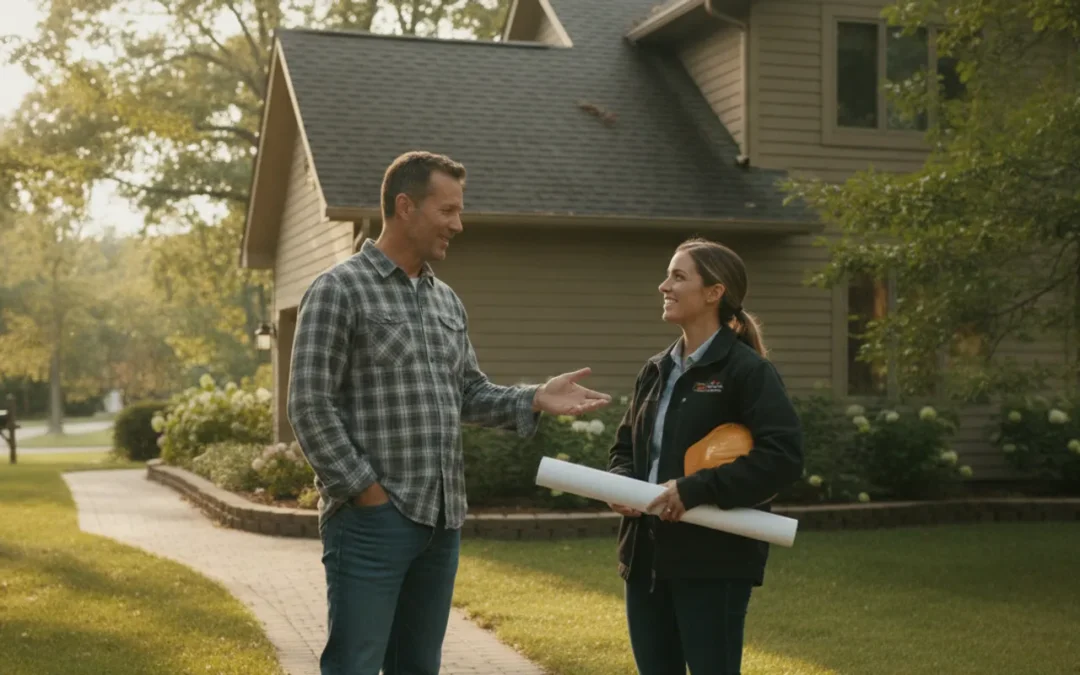
Choosing a local family owned roofing company is about more than finding a familiar name. Michigan homeowners should look for clear credentials, a written scope, responsive communication, and a process that feels right for their home. If you are beginning with the work itself, review the roofing service overview to understand the questions to bring to a contractor.
Schedule a no-pressure conversation
What does “local and family-owned” tell you?
“Local” and “family-owned” can describe how a business is organized, but neither phrase by itself proves that a contractor is qualified or the right fit. Use those details as a starting point for questions, not as a substitute for checking the work plan, credentials, and contract.
A locally based company may be easier to reach during planning and may know the weather and housing styles common in its service area. A family-operated business may emphasize continuity and personal service. But these qualities vary from one company to another. Ask who will be your point of contact, who is responsible for the project, and how questions or changes will be handled.
Signature Home Pros is a family-owned exterior renovation company headquartered in Flushing, with more than 20 years of experience serving central Michigan homeowners. That background is useful context, but you should still compare the written details of any roofing proposal you receive. A sound decision is based on evidence you can review, not a label or slogan.
Which checks should you make before comparing estimates?
Start with basic verification before discussing shingle colors or scheduling. For a Michigan roofing project, ask the company for its applicable state contractor license information and confirm how to check it. Michigan’s Department of Licensing and Regulatory Affairs (LARA) is the state agency to consult for contractor licensing information; begin at the Michigan LARA website and follow its current licensing guidance. Ask the contractor to identify the license holder responsible for the work rather than relying on a verbal assurance.
Also ask what insurance documentation is available and whether the company can explain who is responsible for the work at the home. Get answers in writing when they affect the scope, schedule, or your responsibilities. If an answer is unclear, pause and ask for clarification before signing.
- Business identity: Confirm the legal or operating business name shown on the proposal and contract.
- License details: Ask for the relevant license information and independently check it through the state’s current resources.
- Insurance: Request current documentation and ask what coverage applies to the project.
- References and examples: Request references for comparable work, and ask whether you can see completed projects relevant to your roof type.
- Written terms: Review who is doing the work, what is included, how changes are handled, and what payment terms apply.
Do not treat an online review score as a substitute for those checks. Reviews can help you identify themes about communication or follow-up, but they rarely answer every question about the exact roof, products, and responsibilities in your proposal. Read several comments and look for specifics rather than relying on a single glowing or critical post.
How can you compare roofing proposals fairly?
Two estimates are only comparable when they describe similar work. A lower total may leave out an item another contractor included, while a higher estimate may cover additional materials or tasks. Ask each company to explain its scope in plain language and identify any assumptions.
| What to compare | Questions to ask | Why it matters |
|---|---|---|
| Project scope | What work is included, and what conditions could change the scope? | Clarifies whether proposals cover the same tasks and how surprises will be addressed. |
| Materials | What product and material specifications are listed? Are options clearly identified? | Lets you compare like with like instead of comparing totals alone. |
| Removal and disposal | Does the estimate explain removal of existing materials and cleanup? | Identifies responsibilities that can otherwise be left unclear. |
| Schedule and access | What is the expected start window, and what should the homeowner prepare? | Helps set practical expectations about access, weather, and household planning. |
| Payment and changes | What are the payment milestones, and how must added work be approved? | Reduces confusion if concealed conditions or requested changes affect the plan. |
| Warranty documents | Which manufacturer or workmanship terms apply, and where can I read them? | Allows you to review actual written terms without assuming coverage is identical. |
Ask for a written explanation of any item that appears only in one proposal. If one contractor says a particular step is unnecessary, ask why and whether that reasoning is reflected in the written scope. If another includes extra work, ask what condition makes it necessary and how it will be documented.
Do not compare proposals by a single line such as “new roof.” Make sure you understand what parts of the roof are addressed, what materials are specified, how additional work would be approved, and what the contractor expects from you. The purpose is not to demand identical wording; it is to understand the differences well enough to make an informed decision.
What questions reveal how a contractor communicates?
Good communication is concrete. Instead of asking only whether a company provides good service, ask how the project will be managed and what happens when circumstances change. Listen for direct answers and a willingness to put important details in writing.
- Who is my main contact before, during, and after the project?
- How will you notify me about a schedule change or a newly discovered issue?
- Will I receive a written change order before work outside the agreed scope begins?
- What should I do if I have a question while work is underway?
- How will the final walkthrough and any open items be handled?
Notice whether the salesperson listens to your priorities and explains tradeoffs without pressuring you to decide immediately. A no-pressure conversation should leave you with clearer information, not just urgency. You can also ask for time to review the proposal and compare it with another written estimate.
For a sense of how a company describes its background and approach, read its About Us page and look through its customer reviews. Treat both as starting points for discussion. Ask the contractor to connect general claims to the specific people, products, and written terms that apply to your project.
How should Michigan homeowners think about weather and timing?
Michigan weather can affect planning, access, and the timing of exterior work. Ask how the contractor accounts for weather interruptions and how you will be kept informed if the planned date changes. Do not assume a particular season guarantees an exact start or finish date.
Before work begins, discuss practical preparations for your household. Ask what areas need to remain accessible, whether vehicles or outdoor items should be moved, and how pets or children should be kept clear of active work areas. Have the company explain its own project-specific instructions rather than relying on a generic checklist for every home.
If you have concerns about a roof issue, document what you see from a safe location and describe when it appeared. Avoid climbing onto the roof to inspect it yourself. Photos from the ground or attic, where safe and accessible, can help you explain the concern during an assessment, but they do not replace an on-site professional review.
Does family ownership make a contractor the right choice?
It can be one useful factor, especially if you value direct communication and a locally rooted business relationship. Still, ownership structure does not tell you whether the proposal is complete, whether a credential is current, or whether the terms meet your needs. Evaluate each company with the same checklist.
Look for alignment between what you want and what the contractor proposes. If your priority is a particular material, ask how the options compare. If you care most about minimizing disruption, ask how access and scheduling will be discussed. If you want one company to handle more than roofing, find out which services are actually within the proposed scope and whether coordinating them makes sense for your home.
Signature Home Pros offers exterior services that include roofing, siding, gutters, windows and doors, and stone installation. The roof remains a distinct project with its own scope and documentation; broader service offerings do not remove the need to evaluate the roofing plan on its merits. For related planning, you can explore its siding services or gutter installation information if those projects are relevant to your home.
What are warning signs to take seriously?
A concern is not automatically proof of poor work, but certain behaviors deserve a pause and a request for clarification. Be cautious if a contractor will not provide a detailed written scope, avoids questions about credentials or insurance, or asks you to sign before you have time to review the terms.
- The estimate is only a verbal total, with no meaningful description of the work.
- The contractor will not explain who is responsible for the project or how to reach them.
- Important statements about products, coverage, or schedule are not reflected in the written documents.
- You are pressured to approve additional work without an explanation and written approval process.
- The business asks you to rely on vague assurances instead of providing current documentation or clear answers.
Ask for missing information in writing. If the answer still does not resolve your concern, get another proposal or consult an appropriate state resource before committing. Taking time to compare is a normal part of a significant home project.
How can you prepare for a useful roofing consultation?
A little preparation can make an estimate visit more productive. Write down what prompted you to consider roofing work, what you have noticed, and any questions that matter most. Gather existing roof or home records if you have them, but do not delay asking for an assessment just because you do not have a complete file.
- Describe the concern: Note leaks, visible damage, past repairs, or the reason you are considering replacement.
- Set your priorities: Decide what matters most, such as material options, project planning, or understanding the scope.
- Ask about documentation: Request a written estimate, applicable credential information, and relevant product or warranty documents.
- Compare on equal terms: Use the same questions for each contractor and record what remains unclear.
- Take time to decide: Review the documents and ask follow-up questions before agreeing to the work.
Homeowners in central Michigan can also check the company’s service area information and review the roof replacement overview when preparing questions. If you would like to discuss a project with Signature Home Pros, use the contact page to request a conversation and get information specific to your home.
Request a roofing consultation
What should you look for in the written agreement?
Once you select a contractor, read the agreement alongside the estimate rather than assuming they say the same thing. The agreement should make clear which business is contracting with you, what work is authorized, what materials are identified, and how the total and payment schedule are set out. If the estimate refers to an attachment, product sheet, or separate terms, make sure you receive and review that document before signing.
Pay particular attention to how the contract handles conditions that cannot be confirmed until work is underway. Ask what kind of discovery might change the scope, who will explain it, whether you will receive a written price or scope change, and whether work waits for your approval. Do not rely on a general statement that “extra work may be needed” without understanding the approval process.
- Names and contact details for the contracting business.
- A description of the work and materials, with references to any product documents.
- Payment amounts or milestones and the method for approving changes.
- Expected timing and how weather or other delays will be communicated.
- Written terms for any product or workmanship coverage being represented.
If a statement made during the sales conversation is important to your decision, ask that it appear in the contract or an attached document. Keep a copy of the signed agreement, estimate, change approvals, and messages about the project. Organized records help you remember what was agreed and make it easier to ask precise questions later.
How do you assess local accountability?
Accountability is easier to assess through clear points of contact and transparent documents than through a company’s address alone. Ask who will answer questions after you approve the project, whether you will speak with the same person if the schedule changes, and how to raise a concern if the completed work does not match the agreed scope. A straightforward answer should identify a practical route for follow-up.
You can also ask how long the business has served homeowners in the area and whether it can provide references for work similar to yours. When you contact a reference, ask about the clarity of the proposal, communication when plans changed, and how the company handled questions after the work. Avoid asking only whether the homeowner “liked” the contractor; specific examples give you more useful context.
Local familiarity does not guarantee that a contractor will be available on a particular date or that every project will go smoothly. Instead, use the conversation to understand the process you can expect, the documents you will receive, and the person who will help resolve questions. Those details are more actionable than broad claims about being local.
Frequently asked questions
How do I verify a roofing contractor in Michigan?
Ask the contractor for the applicable license information, then use Michigan LARA’s current licensing resources to check it. Also request current insurance documentation and review the written scope and contract before hiring.
Should I get more than one roofing estimate?
Comparing written estimates can help you understand differences in scope, materials, schedule, and terms. Ask each contractor the same questions and clarify any item that is included in one proposal but not another.
Is a family-owned roofing company always the better choice?
No. Family ownership may fit your preference for a local business relationship, but it does not establish qualifications or guarantee a particular project experience. Evaluate credentials, communication, documentation, and the proposed work for every contractor.
What should a roofing estimate include?
It should clearly describe the proposed work, materials, removal and cleanup responsibilities, schedule expectations, payment terms, and how changes will be approved. Ask for clarification or supporting documents for any warranty or product statements.
Choose the company whose qualifications, written plan, and communication give you the clearest basis for a confident decision.
Recent Comments