
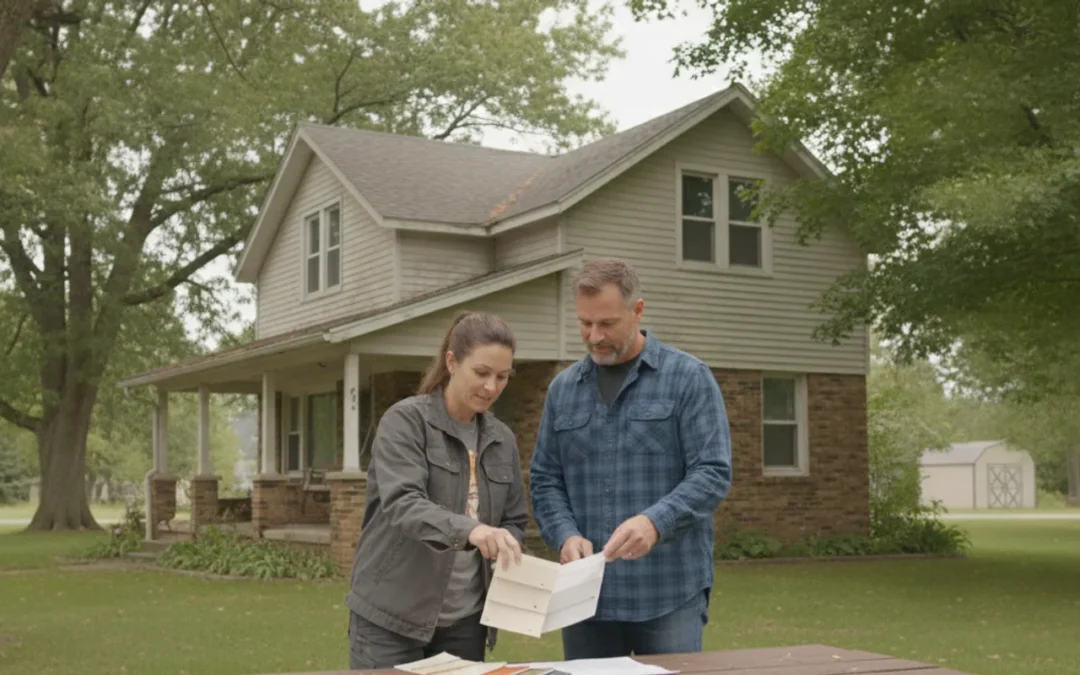
Searching for the best siding companies can turn up long lists, polished claims, and very different project estimates. The useful question is not simply which contractor looks best online. It is which company can clearly explain the work your home needs, document what is included, and communicate in a way that lets you make a confident decision.
This guide is about comparing siding contractors before you hire—not choosing a siding material or estimating a project price. Use the same questions with each company, compare the written answers, and take time to review the details. A thoughtful process can help you spot gaps early and decide whether a contractor is a good fit for your central Michigan home.
If you are first reviewing the service itself, see the overview of siding installation in Michigan. Then use the steps below to evaluate providers on the work, documentation, and working relationship.
What should you decide before contacting siding companies?
Start with the problem you want to solve. You may be planning to replace worn siding, repair a limited area, address visible damage, or update the home’s exterior appearance. You do not need to diagnose the cause yourself. Write down what you have noticed and what you hope the project will accomplish.
Walk around the house and note the locations of loose, cracked, warped, or missing pieces, areas that appear discolored, and places where trim or adjoining materials look damaged. Take photos from a safe distance. Do not climb onto the roof or remove siding to investigate. Give each contractor the same observations so their assessments can be compared on a similar basis.
Also think through practical constraints: which sides of the house are most important, whether there are landscaping or access concerns, and whether you have a preferred time window. Be open about what is flexible. A clear starting brief helps keep the conversation focused without locking you into a solution before an inspection.
How can you build a fair comparison?
Contact more than one company when practical, and ask each to assess the same general scope. A low estimate may not cover the same work as a higher one. Before comparing totals, check that each company has considered the same elevations, trim details, removal and disposal, and any visible areas that may need further evaluation.
Use one checklist for every conversation. Record the company’s answers rather than relying on memory. If an answer is not clear, ask for it in writing. A fair comparison is not about forcing each contractor into an identical plan; it is about understanding where their recommendations differ and why.
| Comparison area | What to ask each company | What a useful answer includes |
|---|---|---|
| Project scope | Which surfaces and related details are included? | Identifies areas, trim, removal, disposal, and exclusions. |
| Assessment | What did you observe, and what remains uncertain? | Connects recommendations to specific observations and notes limits. |
| Materials | What product and components are proposed? | Names products or specifications and explains how components fit together. |
| Work and schedule | Who will coordinate the job, and how will timing be confirmed? | Explains communication, expected sequence, and how changes are handled. |
| Price and payment | What is included in the written price, and what could change it? | Shows the scope, payment terms, allowances, and process for approved changes. |
| Protection and cleanup | How will nearby areas be protected and the site left? | Describes the plan for landscaping, debris, access, and final review. |
| Documents | What credentials, insurance, and warranty documents can I review? | Provides current documentation relevant to the project and explains terms. |
Use the table as a note-taking tool, not as a scorecard where every answer has equal weight. A company that gives a clear explanation of a complicated issue may be a better fit than one that promises a fast answer without showing how it reached its recommendation.
What should a siding estimate explain?
A written estimate should let you understand what the company proposes to do and what the price covers. Look for a description of the work areas, the proposed siding and related components, preparation or removal, trim treatment, cleanup, and any exclusions. The document should also explain payment timing and how the company will handle added work if conditions differ from what was visible during the initial assessment.
Ask whether the estimate includes all the details that matter to your home. Examples may include corners, window and door trim, transitions to other exterior materials, and how the new work will meet existing surfaces. The contractor should explain which items are included and which are not. You should not have to infer the scope from a single line that says “siding replacement.”
Compare estimates line by line where possible. If one proposal is substantially different, ask what explains the difference rather than assuming that the lowest or highest total is automatically the right choice. A smaller scope, different product specification, or excluded detail can affect a comparison. Avoid accepting a verbal assurance as a substitute for a written revision.
Do not feel pressured to decide before you understand the estimate. A clear proposal should give you room to ask questions and consider the options. Signature Home Pros describes its approach as no-pressure and focused on honest pricing; homeowners can learn about the company’s background on the About Us page.
Which credentials and protections should you check?
Ask each contractor what license or registration applies to the exact work in your project and how you can verify it. Michigan’s Department of Licensing and Regulatory Affairs provides information about state licensing and regulation; consult Michigan LARA for current official guidance. Requirements can depend on the type and scope of work, so confirm the applicable rules rather than relying on a general claim or a social media profile.
Request current proof of insurance and ask what coverage applies while work is being performed at your home. If a contractor uses subcontractors, ask who is responsible for confirming the relevant documentation. Keep copies of the responses with the estimate. These are ordinary due-diligence questions; they are not a substitute for checking official requirements or reviewing your own circumstances.
Ask about the company’s experience with projects similar to yours, who will be your point of contact, and how you can see examples of relevant work. A company may share completed projects or references, but make sure the example is useful to your decision. Look for details that matter, such as a comparable home layout or the kind of siding work being considered—not just a visually attractive photograph.
For manufacturer-related claims, ask which product is proposed and request the written product information and warranty terms. A brand name by itself does not tell you what is covered. Signature Home Pros works with CertainTeed siding products, including product options with stated features; review the specific product and applicable documents rather than assuming every feature or warranty applies to every installation.
How should you compare warranties and service after the work?
Ask for the applicable written product warranty and any separate workmanship or labor coverage. Read who provides each warranty, what conditions apply, how a claim is started, and what may not be covered. Ask whether registration or maintenance steps are required and who will answer questions if an issue comes up later.
Keep product and installation coverage distinct. A manufacturer’s document and a contractor’s service commitment may cover different things. Do not rely on a broad phrase such as “lifetime warranty” unless the provider explains the written terms, duration, exclusions, transfer rules, and claim process. If a salesperson summarizes terms verbally, request the documents and take time to read them before signing.
It is reasonable to ask how the company handles a concern after a project is complete. Who should you contact? What information should you provide? How will the company communicate next steps? You are looking for a clear process, not an unsupported promise that no problem can occur.
What does good communication look like before you hire?
Pay attention to the full experience of getting an estimate. Does the representative listen to your priorities and explain what they are evaluating? Do they answer questions directly, distinguish confirmed observations from assumptions, and provide documents when promised? These details offer a practical preview of how decisions may be discussed during a project.
Ask who will coordinate scheduling and whom you should contact if plans change. Clarify how updates will be shared and how the company will request approval for any change to the agreed scope. A dependable process should not leave you guessing about whether a change is authorized or what it may mean for the work.
Notice whether you are being given time to compare proposals. High-pressure tactics, unexplained urgency, or refusal to put important terms in writing are reasons to pause and ask for clarification. A useful consultation should help you make an informed choice—not make the choice for you.
How can you check a company’s reputation?
Read reviews for specific, relevant details rather than relying only on an overall rating. Look for comments about communication, preparation, cleanup, how questions were handled, and whether the reviewer describes a project similar to yours. Read a range of feedback and consider how a company responds to concerns. Reviews can inform your questions, but they cannot verify the exact scope or terms of your own project.
Ask for references or examples of work if those would help you evaluate a company. Contact references with a short, consistent set of questions: Was the agreed scope clear? Were changes explained? Did the company keep the homeowner informed? Was the site left as expected? Avoid asking for private details that are not needed to make your decision.
You can also compare a company’s public information with the documents it provides. Check that the business name and contact details are consistent, and ask for clarification if a credential, product claim, or warranty statement is difficult to verify. Signature Home Pros has a page where homeowners can read customer feedback; review it as one input alongside a direct conversation and written proposal.
What are common warning signs in a siding proposal?
- Vague scope: The proposal does not identify the areas, components, exclusions, or cleanup expectations.
- Unclear product details: It uses broad descriptions without naming or specifying the proposed materials and related components.
- Pressure to sign immediately: You are told not to compare proposals or are discouraged from reading the contract.
- Promises without documents: Warranty or credential claims are not supported with applicable written information.
- Unexplained changes: The company cannot describe how added work will be documented and approved.
- Payment terms that are hard to understand: Ask for a written schedule and explanation before committing.
- Unanswered questions: Important concerns are dismissed rather than addressed or recorded for follow-up.
One concern does not always tell the whole story, but unresolved gaps deserve attention. Ask the company to clarify the issue in writing. If the answer still leaves you unsure, take time to compare another proposal or seek the appropriate official guidance before proceeding.
How can you choose the right company for your home?
After gathering proposals, compare fit as well as price. Start with scope: does the estimate address the areas and details that matter to you? Then consider how clearly the contractor explained the recommendation, what documentation you received, and whether the communication style suits you. The goal is not to find a company that says yes to every request. It is to find one that can explain its plan and make responsibilities clear.
Before signing, read the complete agreement and confirm that it matches the estimate and any later written revisions. Check the project description, product details, payment schedule, start or scheduling terms, change process, cleanup expectations, and warranty documents. Ask about anything that is missing or inconsistent. Keep signed copies and related documents together.
If you are considering a wider exterior update, you may also want to understand how siding fits alongside other work. Signature Home Pros provides information about roofing, gutters, and windows and doors. That context can help you decide which questions to ask if projects meet at roof edges, openings, or other transitions, without assuming all work needs to happen at once.
For more on how an exterior project can be planned across multiple areas, read this guide to coordinating roof, siding, and window work. If your plans are limited to siding, keep the estimate focused on that agreed scope.
Ready to discuss a siding project?
Bring your notes, photos, and questions to a consultation. Signature Home Pros is a family-owned exterior renovation company with more than 20 years of experience serving central Michigan homeowners. You can review the service area and schedule a conversation to discuss your home and the next practical step.
Contact Us to Discuss Your Siding Project
Frequently asked questions
How many siding companies should I compare?
There is no required number. When practical, comparing multiple written proposals for a similar scope can help you see differences in recommendations and included work. Focus on clarity and fit, not simply collecting the largest number of estimates.
Should the lowest estimate decide which company I hire?
Not by itself. Confirm that the proposals describe comparable work, materials, components, exclusions, and payment terms. Ask the contractor to explain any large difference before deciding what value each proposal offers.
What should I bring to a siding consultation?
Bring photos of areas you have noticed, a list of your priorities, any questions about scheduling or access, and notes from conversations with other companies. You can also bring existing project documents if they are relevant. You do not need to identify the cause of a visible issue before asking for an assessment.
Do I need to choose a siding product before hiring a contractor?
No. It is helpful to share your preferences, but a contractor can explain options for your home and describe the product proposed in the written estimate. Ask for specific product information and applicable warranty documents before agreeing to the work.
What should I do if a contractor’s licensing status is unclear?
Ask the company for the relevant license information and how it applies to your project, then check current guidance with Michigan LARA. Do not rely on an unverified statement; confirm requirements through the appropriate official source before you sign.
A careful comparison gives you a clearer picture of the work, the documents, and the people you may be trusting with your home. Take the time to get your questions answered in writing before you choose a siding company.
Recent Comments