For Michigan homeowners comparing exterior updates, insulated vinyl siding benefits may include a more substantial siding profile, added backing behind the panels, and a chance to refresh the home’s appearance in one project. But the product is not a guaranteed fix for drafts or high energy bills. The right choice depends on the house, the exact siding system, existing wall conditions, and the quality of the proposed work.
Schedule a no-pressure siding consultation
This guide walks through what the insulation layer can and cannot do, how insulated vinyl may affect comfort and curb appeal, and what to compare before you choose. It is meant to help you ask better questions—not to promise a specific savings amount or indoor temperature change. For an overview of the company’s siding service and available options, visit Signature Home Pros siding installation.
What is insulated vinyl siding?
Insulated vinyl siding is vinyl siding made with a backing designed to sit behind the siding panels. Depending on the product, the backing is shaped to the panel profile and becomes part of the siding assembly. That backing can make a panel feel more rigid and give the exterior a fuller appearance than a thin, unbacked panel. Product construction and specifications vary, so the name alone does not tell you exactly what is included.
It helps to separate three different things that can be called “insulation” in a siding conversation:
- The siding product: the vinyl panel and any backing attached to it.
- The wall behind the siding: existing sheathing, insulation, and other parts of the home’s wall assembly.
- Air sealing and other improvements: work that may address gaps or other sources of drafts, which is a separate question from choosing a siding panel.
A siding replacement does not automatically correct every issue in the wall. Ask the contractor to identify the exact product and explain what the proposal includes, what stays in place, and whether any separate wall or air-leakage concerns are outside the project scope. The U.S. Department of Energy offers general home-energy information at energy.gov; for a specific house, product and project advice should be based on the actual conditions and scope.
Which insulated vinyl siding benefits may matter in Michigan?
Homeowners often consider insulated vinyl for more than one reason. The most useful way to evaluate its benefits is to connect each one to a real priority for your home, then confirm what the chosen product can reasonably provide.
A more finished, dimensional exterior
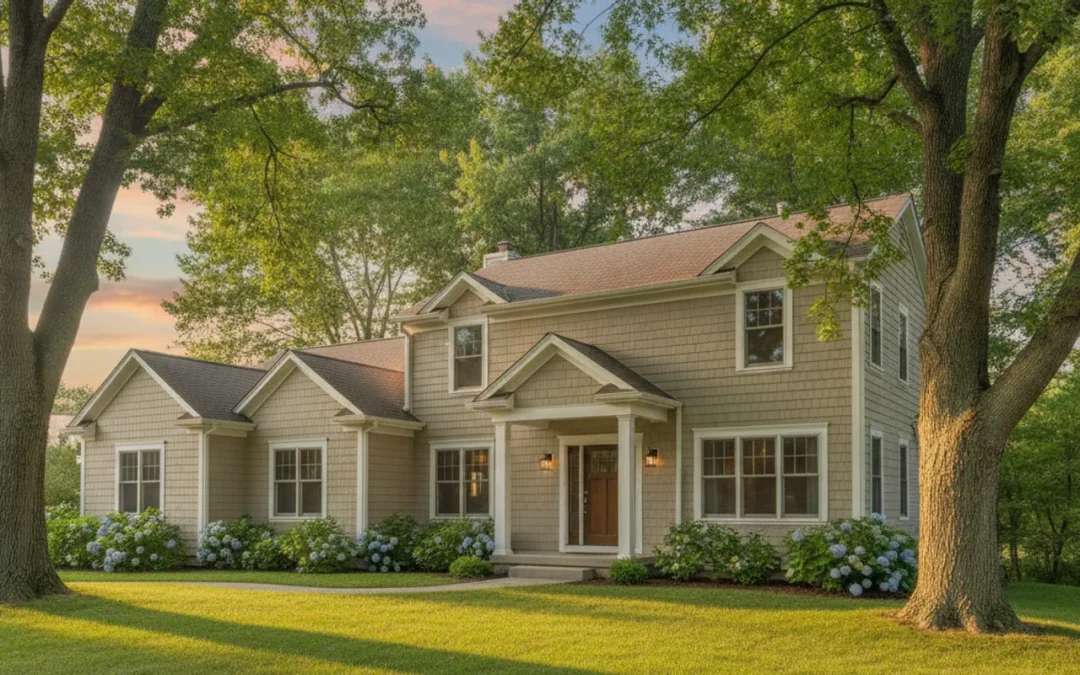
The backing can help the siding look fuller and may reduce the appearance of waviness associated with some panel installations. The result depends on the panel design, the wall beneath it, the trim details, and the installation. It is not a substitute for preparing and assessing the surface correctly. If your main goal is curb appeal, look at complete examples of the profile and color you are considering, ideally on homes with a similar architectural style.
Color and trim matter as much as the siding panel itself. Think about the roof, window frames, corner boards, soffit, and entry door as one exterior palette. For broader ideas about coordinating materials, the company’s Michigan home exterior makeover planning guide can help you organize the choices.
A potential comfort improvement, not a promise
Some homeowners hope that an insulated siding product will make rooms feel more comfortable. Added backing may contribute to the wall assembly, but comfort depends on more than the siding. Existing insulation, air leakage, windows, doors, ventilation, heating and cooling equipment, and other conditions can all matter. A siding product by itself cannot promise that a particular room will feel warmer or that a utility bill will fall by a particular amount.
Before treating siding as an energy upgrade, note where you feel drafts or temperature differences and when they occur. Ask whether the project is intended mainly to update the exterior or to address a diagnosed comfort concern. If the proposal discusses energy performance, ask which product documentation supports the statement and what other parts of the home affect the outcome.
A unified exterior renovation
Replacing siding is also an opportunity to consider how the exterior elements work together. Some homeowners may want to coordinate siding with gutters, windows, doors, or stone details rather than plan each item in isolation. That does not mean every component has to be replaced at once. It means it is useful to understand how the finished siding will meet existing trim and adjacent exterior materials.
Signature Home Pros works across several exterior service categories, including siding, gutters, windows and doors, and stone installation. If more than one part of the exterior needs attention, make sure the written scope distinguishes what is included now from what is only being discussed for a later project.
What are the tradeoffs?
Insulated vinyl is not automatically the best choice for every house or budget. Consider the product’s potential benefits alongside its limitations, and ask for details instead of relying on a broad label.
- It may not solve the problem you are trying to fix. If the concern is a draft, moisture, or an unusually cold room, the cause may be elsewhere in the building assembly. Ask what can be assessed during the siding project and what would require a separate evaluation.
- There can be a product and project cost difference. Do not assume the added backing will pay for itself through energy savings. Compare written proposals and the exact specifications, without relying on an unsupported savings estimate.
- Appearance depends on more than the panel. Wall condition, details at corners and openings, and transitions to other materials can affect the finished look. Ask how those details are addressed in the proposal.
- Product choices are not interchangeable. Profiles, colors, accessories, published specifications, and warranty terms can differ. Review the documentation for the particular product offered rather than applying a claim about one product to another.
- Existing conditions can affect scope. A quote should make clear what the contractor expects to find and how unexpected conditions will be discussed before any added work proceeds.
For another perspective on siding selection, read the guide to choosing siding for Michigan homes. If you are comparing materials, keep the focus on your house, priorities, and the specific proposals rather than looking for a single product that is best in every situation.
How can you decide what matters most?
Before meeting with a contractor, write down the two or three outcomes that matter most. You might want a color and profile update, a more substantial-looking exterior, help understanding drafts, or a plan to coordinate siding with other exterior work. Ranking these priorities makes it easier to judge whether the proposed product actually fits your goals.
Then note what you know about the home and what remains uncertain. Is the siding visibly worn, are there specific rooms that feel drafty, or are you planning around another project such as window replacement? Separate an observation from a conclusion: a cold room is a real concern, but it does not by itself identify the cause. Describe what you have noticed and ask whether the siding scope can address it.
When comparing proposals, line up the product name, profile and color, included preparation and trim details, exclusions, warranty documents, and the process for discussing unforeseen conditions. If one proposal makes an energy or comfort claim, ask what information supports it and whether the other proposal covers the same work. A clear comparison is more useful than choosing by a broad label or an assumed savings figure.
How does insulated vinyl compare with other siding choices?
This comparison is a starting point, not a product rating. The actual features and costs depend on the selected product, the existing home, and the written project scope.
| Option | What to consider | Questions to ask |
|---|---|---|
| Standard vinyl siding | May suit a homeowner prioritizing a vinyl exterior update without a product-specific insulated backing. | What panel, accessories, and wall-preparation work are included? |
| Insulated vinyl siding | Combines a vinyl panel with a backing; homeowners may value its fuller profile or potential contribution to the wall assembly. | What exact product is proposed, and what performance claims are supported by its documentation? |
| A different siding material | May offer a different look, maintenance routine, or set of product characteristics. | How do the material, finish, upkeep, and project scope fit this home and my priorities? |
| Addressing a separate wall or comfort concern | May be relevant when the primary concern is a draft, temperature variation, or another building issue rather than exterior appearance. | Can this concern be assessed as part of the project, or should it be evaluated separately? |
The table does not replace a product specification or a home-specific assessment. For example, a homeowner focused on appearance may weigh panel profile and color heavily, while someone concerned about a draft should first clarify what is causing it and whether siding work is meant to address that cause.
What should you ask before choosing insulated vinyl siding?
A useful estimate should help you understand the proposed product and scope. Bring a short list of questions and ask for clear answers in writing.
- What exact product and profile are you proposing? Ask for the manufacturer, product line, color, profile, and relevant product literature. “Insulated vinyl” is not a complete specification.
- What does the backing add to this specific product? Ask the contractor to explain the manufacturer’s description in plain language. Separate documented product characteristics from predictions about your home’s energy use or comfort.
- What will happen to the existing exterior layers? Ask what is included in the scope and how visible conditions will be discussed if they differ from what was expected. Avoid assuming that every wall issue is covered by a siding replacement.
- How will the finished work meet windows, doors, corners, and trim? Ask to see how the proposal describes the relevant details and transitions. If you also plan to replace windows or doors, clarify how the work and responsibilities fit together.
- What maintenance does the manufacturer recommend? Request the product care guidance and ask what routine cleaning or inspection the homeowner should expect. Do not rely on blanket claims that any exterior product is maintenance-free.
- What warranty documents apply? Ask for the manufacturer’s written terms and any separate workmanship coverage that applies to the project. Confirm who provides each document and what exclusions or maintenance requirements are stated.
- How are changes handled? Ask how the contractor will explain a change in scope or an additional cost before proceeding. A clear process helps avoid surprises.
For a closer look at siding options and an evaluation of your home, you can request a siding consultation. Signature Home Pros is a family-owned exterior renovation company serving central Michigan, with a no-pressure approach to discussing project needs.
How should you judge comfort and energy claims?
Be cautious when a sales conversation turns a product feature into a guaranteed household result. A backing layer is a product feature; an exact reduction in energy use or a specific indoor temperature change is an outcome claim. The latter depends on the complete home and its conditions, not just a siding label.
Ask the representative to distinguish between:
- What the manufacturer states about the product itself.
- What the contractor observes about your home before work begins.
- What the project does and does not include.
- What cannot be predicted without evaluating other parts of the home.
If the main issue is room comfort, describe the location and circumstances: which room, what season, and whether the discomfort is near a window, exterior wall, or another area. That information can make the discussion more specific. It still does not make an estimate a guarantee. The goal is to understand whether insulated siding fits the project—not to assume it will correct every comfort issue.
How can you plan the appearance and maintenance?
Start with a few practical choices. Look at color samples in different light, decide whether you want a traditional or more pronounced profile, and consider the relationship between siding and existing roof, masonry, gutters, and trim. If some exterior features are staying in place, make sure the proposed color and details work with them.
Ask to review any available product information and photographs that represent the actual panel and finish under consideration. A small sample can help with color, but it may not show how the profile looks across a full wall. Ask the contractor what examples are available and whether the sample represents the specified product.
For maintenance, request the manufacturer’s instructions rather than relying on assumptions. Ask how to clean the siding, what to avoid, and what signs might call for attention. Keep the product documents with your project records so the recommendations are easy to find later.
Homeowners comparing exterior projects in the area can also review the company’s central Michigan service area and learn more about its family-owned background on the About Us page.
Request a no-pressure estimate for your siding project
Frequently asked questions
Does insulated vinyl siding make a home warmer?
It may contribute to the wall assembly, but it cannot guarantee that a home or particular room will feel warmer. Existing insulation, air leakage, windows, doors, and other building conditions matter. Ask what the proposed product is designed to do and whether your comfort concern needs a separate assessment.
Will insulated vinyl siding lower energy bills?
There is no single savings result that can be promised for every home. Any energy outcome depends on the home and the full project, so be wary of a specific savings claim that is not supported for your situation. Request product documentation and keep the conversation focused on the exact scope.
Is insulated vinyl siding harder to maintain?
Maintenance instructions vary by product. Ask for the manufacturer’s care guidance, including recommended cleaning methods and anything to avoid. Do not assume that a particular siding choice requires no upkeep.
How do I know whether it is right for my house?
Compare the exact product, its documented characteristics, the condition of the existing exterior, your appearance and comfort priorities, and the written proposal. A consultation can help clarify the scope and provide a home-specific estimate without requiring you to commit to a product based on a general claim.
Insulated vinyl siding can be worth considering when its profile, product features, and proposed scope match your priorities, but it is not a guaranteed solution for every home concern. Compare the written details, ask direct questions, and choose the option that makes sense for your Michigan home.
Recent Comments