
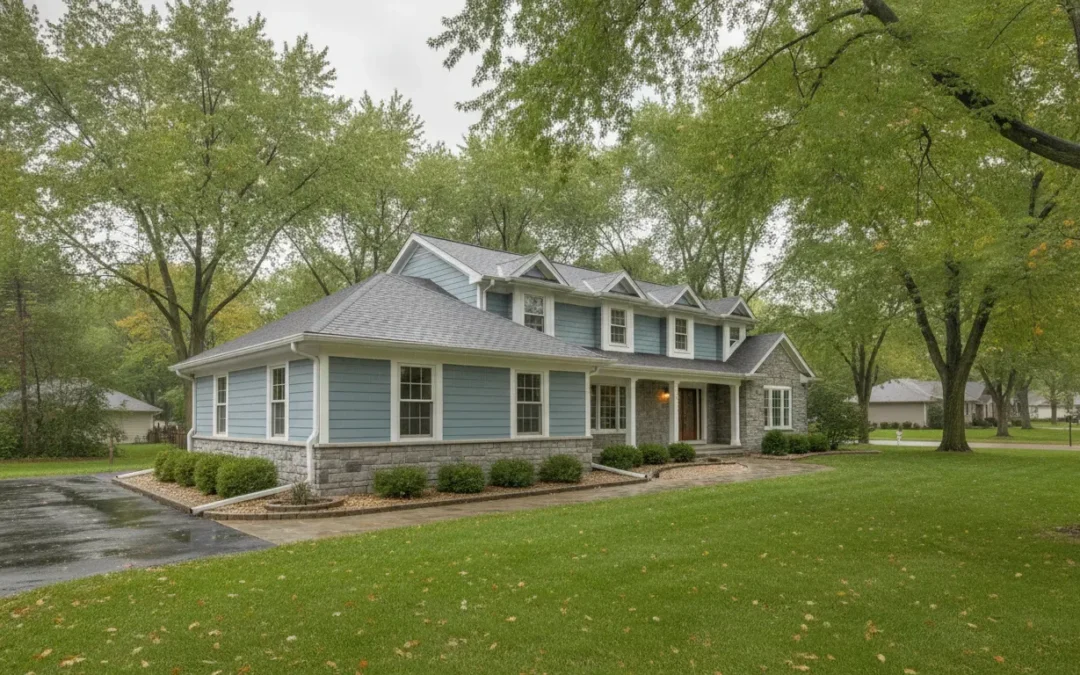
When Michigan homeowners compare seamless gutters vs. sectional gutters, the real question is not simply which system costs less at the start. It is which design can manage spring rain, summer storms, falling leaves, freeze-thaw cycles, and winter snow while protecting the roof edge, siding, landscaping, and foundation. Seamless gutters are formed to the length of each run, while sectional gutters are assembled from shorter pieces. That difference affects seams, maintenance, installation, and long-term reliability.
For the bigger picture on sizing, drainage, and gutter guards, review Signature Home Pros’ Michigan gutter installation guide.
Call (810) 270-5922 to schedule a free gutter estimate.
Seamless Gutters vs. Sectional Gutters: The Short Answer
For many Michigan homes, seamless aluminum gutters are the stronger long-term choice because they eliminate most straight-run joints. Fewer joints mean fewer places for sealant to fail, debris to catch, or water to escape. Sectional gutters can still make sense for a small repair, a short run, a temporary improvement, or a homeowner who specifically needs a readily available, pre-cut system.
The best choice depends on more than the gutter material. Roof size and shape, the number of corners, downspout placement, tree cover, fascia condition, height, drainage slope, and the home’s exposure to snow and ice all matter. A well-designed sectional system can outperform a poorly installed seamless system, while even premium seamless gutters need proper hangers, pitch, outlets, and downspout discharge.
- Seamless gutters: Custom-formed on site in long continuous runs, with joints mainly at corners, outlets, and end caps.
- Sectional gutters: Pre-cut lengths joined together with connectors, fasteners, and sealant during installation.
- Michigan takeaway: Fewer straight-run seams usually means fewer potential leak points, but installation quality and drainage design still determine performance.
What Are Seamless Gutters?
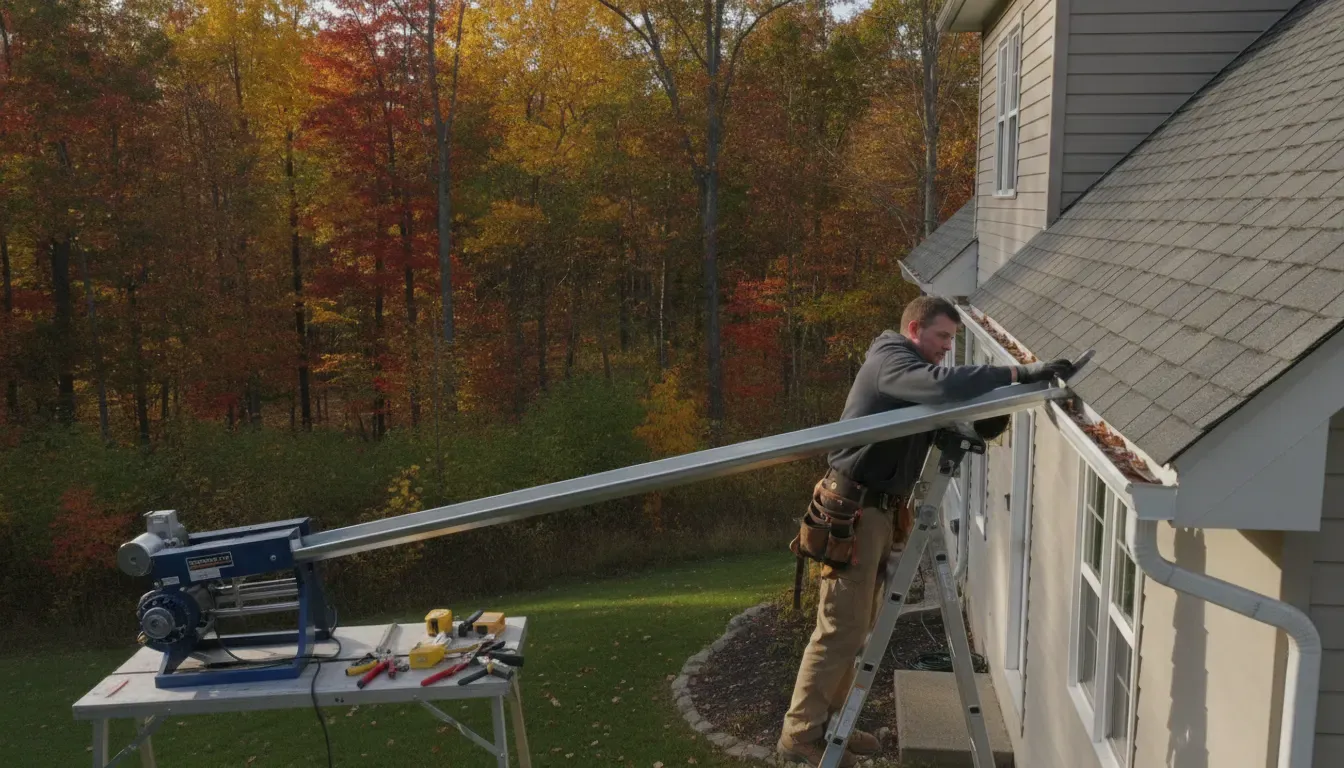
Seamless gutters are made from a continuous length of aluminum or another gutter material that is formed and cut to fit each roofline. Instead of joining multiple pieces along a straight wall, an installer measures the run, forms the gutter to the required profile, and cuts it to length on site. Corners, end caps, and downspout outlets still require connections, but a long straight run does not need a connector every few feet.
Signature Home Pros describes its gutter service as custom seamless aluminum installation for residential and commercial applications. The company’s live gutter service page also explains its standard 5-inch and 6-inch options, hidden hanger system, and focus on directing water away from the foundation.
That custom approach is especially useful on Michigan homes with long eaves, multiple roof planes, or distinctive corners. It creates a cleaner line along the fascia and gives the installer an opportunity to plan downspouts around the actual roof runoff rather than simply placing standard pieces where they fit.
What Are Sectional Gutters?
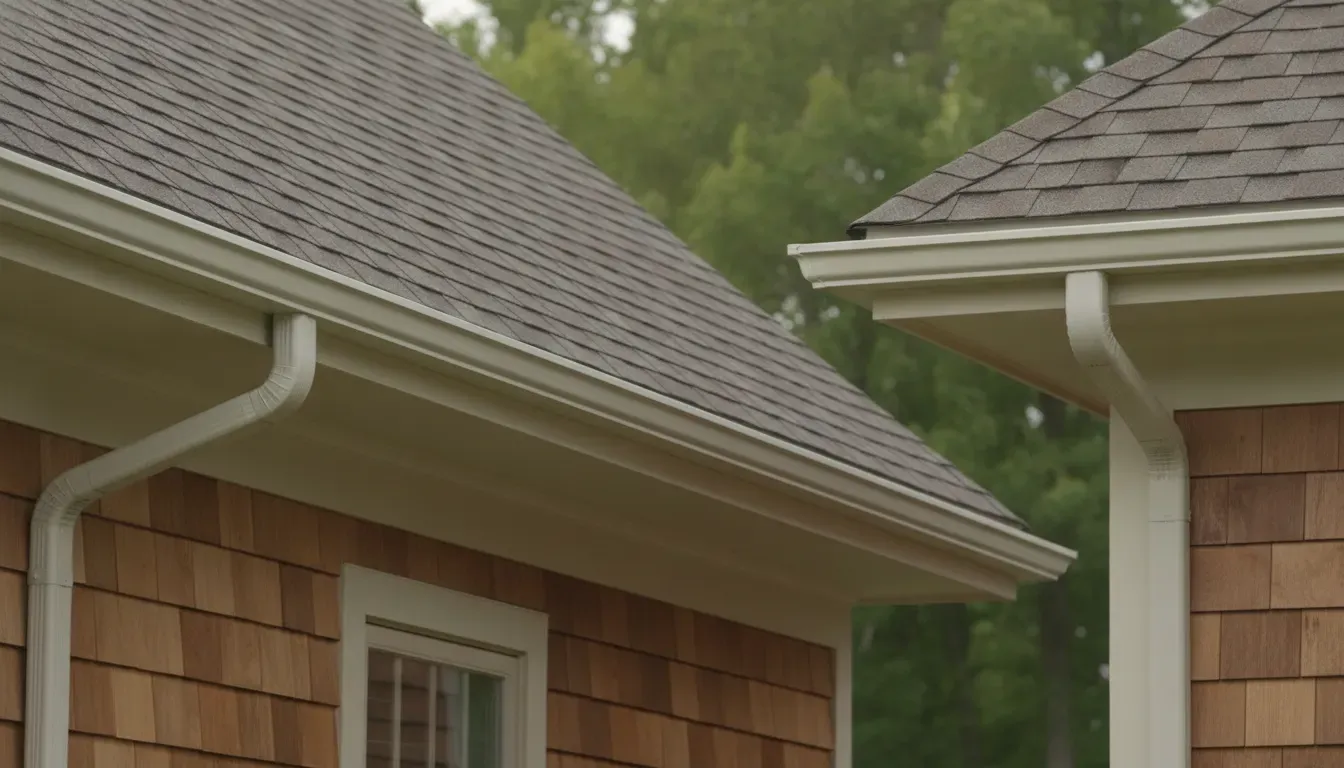
Sectional gutters are sold in fixed lengths and connected on site. The installer cuts pieces to fit, then joins them at straight-run connectors, inside and outside corners, end caps, and outlets. Depending on the material and installation method, the joints may use sealant, screws, rivets, or connector fittings.
The main appeal is accessibility. Pre-cut sections are widely available, easier to transport, and practical for a short run or a limited repair. A homeowner may also be able to replace one damaged section without removing the entire side of a gutter system. Those advantages can matter when the goal is a focused repair rather than a full roofline replacement.
The tradeoff is the number of joints. Every straight-run connector is another location that must stay sealed and aligned. Movement from temperature changes, snow weight, impact, poor pitch, or loose fasteners can eventually stress a joint. A sectional system is not automatically a poor system, but it gives maintenance and installation quality more opportunities to affect the result.
Leak Risk: Which Holds Up Better in Michigan?
Seamless gutters generally have the advantage in leak-risk reduction because they remove most mid-run joints. The remaining connections still need careful sealing, especially at corners and downspout outlets, but the long straight sections have fewer interruptions. Sectional gutters have more seams, so there are more places where sealant can dry, separate, or be disturbed.
Michigan weather makes this distinction meaningful. Warm days and cold nights can cause repeated expansion and contraction. Snow and ice add weight to the roof drainage system, while spring runoff can quickly expose a weak seam or a downspout that cannot keep up. The Michigan Department of Insurance and Financial Services advises homeowners to keep gutters clear of leaves and debris to help prevent ice damming, a reminder that winter performance depends on the entire drainage system, not just the gutter channel.
Neither gutter type prevents ice dams by itself. Ice dams are often related to roof heat loss, attic insulation, ventilation, snow, and drainage conditions. A gutter replacement may address a weak drainage component, but it should not be presented as a complete ice-dam solution. If the same area develops heavy icicles or recurring winter leaks, the roof and attic assembly should be evaluated as well.
For that reason, homeowners should ask an installer to inspect the fascia, roof edge, hangers, pitch, downspouts, and signs of water intrusion before recommending a gutter type. Replacing a leaking section without correcting loose supports or a drainage problem may only delay the next failure.
Maintenance Differences Between Seamless and Sectional Gutters
Both systems need seasonal inspection and cleaning. Seamless construction reduces seam-related maintenance, but it does not stop leaves, roof grit, nests, or ice from entering the channel. Sectional construction adds connector joints that deserve special attention during inspection.
- Inspect before winter: Look for sagging, loose hangers, separated joints, holes, rust, and areas where water stains the fascia or siding.
- Clear debris: Leaves and sediment can restrict water flow in either system, especially beneath heavy tree cover.
- Check downspouts: Water should leave the downspout and move away from the foundation instead of pooling at the wall.
- Watch during rain: Overflow, dripping at a seam, or water running behind the gutter can reveal a design or maintenance problem.
- Review guards realistically: Gutter guards can reduce debris entry, but they still need inspection and do not eliminate the need to evaluate roof, attic, and drainage conditions.
University extension guidance describes gutters and downspouts as a roof runoff system that should convey water to a controlled location. Penn State Extension also emphasizes that undersized or clogged roof runoff structures can cause ponding and erosion. Those principles apply in Michigan too: the gutter profile is only one part of the water-management plan.
Cost Comparison in Michigan: What Changes the Quote?
Sectional gutters often have a lower starting cost because the pieces are already manufactured and do not require on-site forming. Seamless gutters typically require professional equipment, custom measuring, and a dedicated installation visit. That can make the initial quote higher, especially for a short or difficult run.
However, a meaningful comparison should look beyond the first line of the estimate. Ask what the proposal includes:
- Gutter material, thickness, color, and profile
- Number and size of downspouts and outlets
- Hidden hangers or other support hardware
- Removal and disposal of the existing system
- Fascia or soffit repairs discovered during removal
- Gutter guards, if requested
- Downspout extensions or other discharge improvements
- Access requirements for a two-story or complex roofline
There is no responsible one-size-fits-all price for Michigan gutter work. House size, roof geometry, stories, material selection, access, drainage corrections, and existing damage all affect the final scope. A detailed on-site estimate is more useful than comparing a headline price for a standard length of gutter.
Sectional gutters may be reasonable when only a small, accessible area needs attention. Seamless gutters may offer better value when a homeowner is replacing most of the system and wants to reduce the number of straight-run joints over the life of the installation. The right choice is the one that matches the condition and drainage needs of the home.
Installation and Appearance: Does Seamless Look Better?
Seamless gutters usually create a cleaner visual line because long runs do not have visible connectors breaking up the fascia. That can be helpful on a newer home, a home with prominent eaves, or an exterior renovation where the gutters should coordinate with the roof and siding. Sectional gutters can still look neat when joints are aligned, sealed, and painted to match, but the connectors are more visible.
Installation quality matters more than the label. The installer should establish an appropriate slope toward the outlets, place enough support for the run, use properly fitted end caps, and confirm that downspouts discharge safely. The team should also inspect the condition of the fascia before attaching new hangers. A beautiful continuous gutter can fail if it is mounted to damaged wood or if runoff is directed against the foundation.
For a broader roofline project, it can help to coordinate gutters with roofing and siding work. Signature Home Pros provides roofing services in Michigan as well as gutters, which lets a homeowner discuss related exterior conditions with one contractor rather than coordinating several separate inspections.
Which Gutter Type Should a Michigan Homeowner Choose?
Seamless gutters are usually the better fit when a homeowner is replacing an entire system, has long roof runs, wants a cleaner appearance, or is trying to reduce the number of straight-run joints exposed to seasonal movement. They are also a practical choice when custom downspout placement and a coordinated roofline design matter.
Sectional gutters may be worth considering when the project is limited to a short run, when matching an existing system is important, or when a pre-cut piece is the most practical repair. They can work well when installed with sound supports, sealed joints, correct slope, and a clear plan for water discharge.
Before choosing, walk through these questions:
- Is the home receiving a full replacement or a small repair?
- Are there recurring leaks at straight-run joints?
- Do the fascia boards and existing hangers appear sound?
- Does water pool near the foundation or wash out landscaping?
- Are heavy tree cover, snow, or complex roof sections affecting maintenance?
- Will the system be coordinated with roofing, siding, or another exterior project?
The broader Michigan gutter installation guide covers the related decisions about sizing, slope, downspouts, and gutter guards. Use that information with an on-site inspection rather than choosing a system based only on the word seamless or sectional.
How to Compare a Gutter Estimate
A useful estimate should explain the existing problem, the proposed system, and how water will leave the property. Ask the contractor to identify the gutter profile, material, support method, downspout plan, removal scope, and any fascia repairs. You should also know whether the quote includes cleanup and disposal.
Be cautious if a recommendation focuses only on a low product price or promises that a new gutter type will solve every roof or ice problem. Good gutter work is part of a larger exterior water-management plan. The contractor should be able to explain why the selected system fits the roofline and how the work will protect the home without overstating what gutters can do.
For homeowners who value a family-owned company and a no-pressure conversation, Signature Home Pros offers a way to schedule an appointment to discuss the property and the available options.
Ready to compare your options? Contact Signature Home Pros for a free gutter estimate.
Frequently Asked Questions
Are seamless gutters better than sectional gutters in Michigan?
Seamless gutters are often the better long-term fit because they have fewer straight-run joints that can leak or require resealing. Sectional gutters can still be appropriate for short runs, repairs, or projects where pre-cut pieces are practical. The design, support, slope, and downspout layout matter just as much as the gutter type.
Do seamless gutters prevent ice dams?
No. Seamless gutters can reduce seam-related leaks, but they do not prevent ice dams. Ice dams can involve roof heat loss, attic insulation, ventilation, snow, and drainage. Recurring ice should be evaluated as a roof and attic issue as well as a gutter issue.
Are sectional gutters always cheaper?
Sectional gutters often have a lower starting cost because they are pre-cut, but the total project cost depends on the home’s size, roof shape, access, material, supports, downspouts, removal, and repairs. A detailed estimate is the best way to compare the complete scope.
How often should Michigan gutters be inspected?
Inspect gutters at least seasonally and after major storms, with extra attention before winter and after spring thaw. Homes under mature trees may need more frequent cleaning. Look for sagging, separated joints, holes, overflow, and water collecting near the foundation.
Can gutter guards replace gutter maintenance?
No. Gutter guards can reduce the amount of debris entering a gutter, but they still need inspection and cleaning. They also do not correct poor slope, damaged fascia, undersized downspouts, or roof-related ice-dam causes.
Recent Comments