
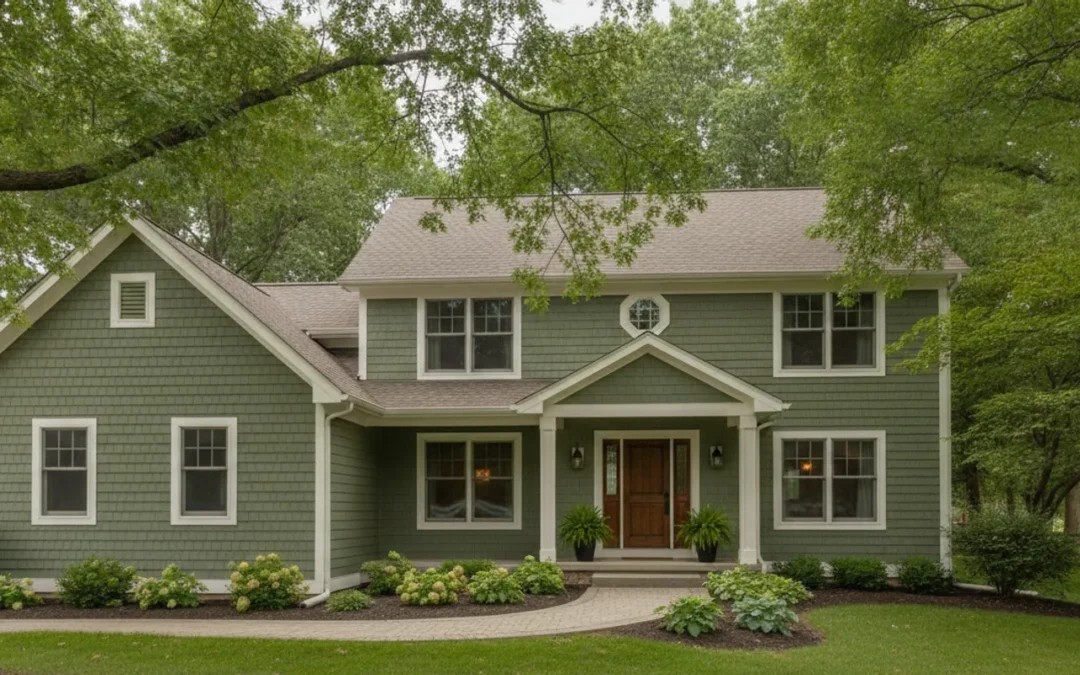
Engineered wood siding can offer the look of wood in a manufactured product, but the right choice depends on the home, the product specifications, and how much upkeep you want to take on. This guide explains what engineered wood siding is, what to compare, and what Michigan homeowners should ask before choosing a siding system.
Schedule a no-pressure consultation
What is engineered wood siding?
Engineered wood siding is made by combining wood fibers or other wood components with binders and additives, then forming them into siding products. The exact ingredients, surface finish, profile, and required installation details vary by manufacturer and product line. Check the product documentation rather than assuming that every product marketed as engineered wood is the same.
Some products are designed to resemble traditional lap siding, while others have panel or board-and-batten profiles. A manufactured face can provide a consistent appearance across boards. It may suit homeowners who want a wood-inspired look but are comparing alternatives to solid wood. A general overview describes engineered wood siding as a composite intended to offer a natural-wood appearance with durability-related advantages, but the details still depend on the product selected: overview of different siding types.
Think of it as a complete wall-covering system, not just a board. The siding, trim, fasteners, flashing, joints, and transitions all affect how the finished exterior looks and handles water. For a broader look at siding choices, see Signature Home Pros’ Michigan siding installation service.
What benefits might engineered wood siding offer?
The strongest reason to consider engineered wood is the balance it may offer between a wood-like appearance and manufactured consistency. That balance is not automatic; compare actual samples and product documents.
- Wood-inspired appearance: Profiles and surface textures can echo painted wood siding. Look at a full-size sample outdoors, not only a small indoor swatch.
- Consistent product dimensions: Manufactured pieces are made to defined specifications. Ask how the selected line handles joints, corners, and trim transitions.
- Multiple profile choices: Depending on the product line, options may include lap, panel, or vertical looks. Confirm which profiles and trim components are available together.
- Potential fit for a coordinated exterior: Siding can be planned with roofing, windows, doors, gutters, and stone details. Matching colors and proportions across those elements can make the whole exterior feel intentional.
- Several products to compare: Different manufacturers may offer different finishes and installation requirements. That gives homeowners a reason to compare specifications instead of choosing by the category name alone.
These are reasons to investigate the material, not guarantees about a specific product or home. Ask for the exact product name and its current installation and care instructions before treating a claimed benefit as settled.
What tradeoffs should you understand?
Engineered wood is not maintenance-free, and it is not interchangeable with solid wood, vinyl, or fiber cement. Its suitability depends on the product and the conditions at the house. Consider these tradeoffs while comparing options:
- Moisture detailing matters: Siding should not be treated as a substitute for the layers and details that manage water behind an exterior finish. Ask how the proposal addresses openings, joints, edges, and transitions, and what the product instructions require.
- Finish upkeep still applies: The product may have a factory-applied finish, field-applied finish, or another specified coating system. Find out what inspection, cleaning, or refinishing is recommended and who is responsible for each step.
- Damage needs attention: Any exterior cladding can be affected by impact, water exposure, or poor detailing. Ask how to identify damage and what repair method the manufacturer permits.
- Installation rules can be product-specific: Fastener type and placement, clearances, cutting, sealing, and finishing requirements can vary. A generic description of engineered wood does not replace the instructions for the chosen product.
- Warranty language needs reading: Coverage, exclusions, duration, and claim steps depend on the manufacturer and product. Do not infer that a broad material category comes with a particular warranty.
- Initial price is only one part of the decision: Without a written scope for your home, a headline price comparison can be misleading. Compare included materials, trim, preparation, disposal, and any stated exclusions.
For Michigan homes, pay particular attention to places where water can collect or enter, such as around windows, doors, roof-to-wall intersections, and the bottom edges of siding. Freeze-thaw seasons, wind-driven rain, snow, and changing temperatures make sound exterior detailing important. Conditions differ from one house to another, so use the product instructions and a site-specific proposal rather than assuming one detail fits every wall.
How does engineered wood compare with other siding?
There is no single best siding for every home. Use the comparison below as a starting point, then confirm the details for the actual products under consideration.
| Option | What may appeal to you | What to check |
|---|---|---|
| Engineered wood | Wood-like appearance with manufactured profiles and product specifications. | Composition, moisture-related instructions, finishing and maintenance, allowed repair methods, and warranty terms. |
| Vinyl | A broad range of colors and profiles; many homeowners consider it when seeking a lower-maintenance exterior. | Product quality, color and profile availability, movement and fastening guidance, repair approach, and how trim details will look. |
| Fiber cement | A rigid siding category available in several familiar exterior styles. | Weight and handling requirements, cutting and dust controls, finish upkeep, fastening details, and product warranty. |
| Natural wood | Real wood grain and a traditional material that can be painted or stained, depending on the species and finish. | Inspection and finish upkeep, moisture exposure, repair needs, and whether the maintenance level suits your plans. |
Descriptions such as “low maintenance” or “durable” are not enough to make a fair comparison. Ask each contractor to identify the product being proposed and explain its care requirements. You can also review this guide to choosing siding for a Michigan home for broader selection factors.
What should Michigan homeowners inspect before choosing?
Begin with the house rather than a color chart. Walk around the exterior and note what you see, without trying to diagnose hidden problems yourself. Look for loose or damaged boards, peeling finish, staining, soft or swollen-looking areas, gaps, and places where trim or siding meets another material. Photograph concerns from a safe location and share them during an assessment.
Then consider how the siding will work with the home’s existing features:
- Architectural style: A narrow lap profile, wider boards, or vertical panels can change the apparent scale of a home. Compare the sample at a distance and beside existing trim.
- Roof and masonry colors: Check the siding sample next to permanent features that will remain. A color that looks balanced by itself may read differently beside the roof or stone.
- Windows and doors: Review casing, sills, and corner transitions. If replacement windows or an entry door are also being considered, coordinate the scope and timing. Signature Home Pros provides window and door installation information.
- Water-management details: Ask how the plan treats the edges and transitions that are particular to your house. If gutters are part of a wider exterior plan, compare how the work will be coordinated with seamless gutter installation.
- Long-term care: Be realistic about the time you are willing to spend inspecting and maintaining the finish. Keep the product’s care documents with your home records.
If you are weighing new siding against repairs, first ask whether the visible concern is limited to a small area or appears across several walls. The decision may depend on the condition of the existing material, details around the affected area, and your goals for appearance and future upkeep. A contractor can explain the observed condition and the options without requiring you to settle on a product before you understand the scope.
What questions belong in a siding estimate?
A useful proposal lets you compare like with like. Request a written description of the product and the work, not simply a total or a verbal assurance. If an estimate is unclear, ask for clarification before deciding.
- Which product is included? Record the manufacturer, product line, profile, finish, and color, along with any specified trim components.
- What areas are included? Confirm the elevations or sections to be covered and whether corner boards, soffits, fascia, window trim, or other components are included or excluded.
- What happens to existing materials? Ask whether the proposal includes removal, disposal, surface preparation, and handling of conditions that may be found after work begins.
- How will openings and transitions be addressed? Ask for an explanation of the planned details around windows, doors, corners, roof intersections, and connections to other cladding.
- Which instructions govern the work? Ask whether the work will follow the selected product’s current manufacturer instructions and how any necessary changes will be discussed.
- What is excluded or subject to change? Understand how concealed or unexpected conditions are handled, how changes are documented, and who approves them.
- What care and warranty documents will you receive? Request the manufacturer’s warranty terms and maintenance guidance for the exact product, and clarify any workmanship terms stated in the proposal.
Keep copies of the proposal, product documentation, color selection, and written change approvals. That makes it easier to understand what was selected and what to refer to later if a question arises.
For a closer look at what to expect when planning a siding project, read the Michigan siding installation process guide. If you want to discuss a specific home, schedule an appointment or contact Signature Home Pros through the contact page.
How can you evaluate siding samples and product claims?
Use samples to compare appearance, but use product documents to verify performance and care. If you are considering more than one product, try to gather comparable information for each rather than relying on different sales descriptions. That makes it easier to see where the real differences are.
- View the sample in changing light: Look at it outdoors in daylight and beside the home’s trim or masonry. Notice how texture and color shift in shade and brighter conditions.
- Ask for the full product identity: Write down the manufacturer, series, profile, finish, and any accessory components. A category name alone is not enough to match an estimate with a product guide.
- Read the care instructions: Look for recommended inspection, cleaning, coating or repainting, and steps for addressing damage. If a phrase is unclear, ask the contractor to explain where the manufacturer states it.
- Check how claims are framed: Ask whether a claimed benefit applies to the complete product, a particular finish, or only under stated conditions. Request the related documentation instead of assuming that marketing language guarantees a result.
- Keep warranty terms separate from appearance: A pleasing finish does not tell you what a warranty covers. Read the warranty for exclusions, required upkeep, transfer rules if relevant, and the process for raising a claim.
These steps are useful when two samples look similar but their care requirements differ, or when a product seems appealing but its warranty wording is unfamiliar. If a contractor cannot identify the proposed product or provide its documentation, pause before comparing the quote as if the details were settled.
Talk through your siding options with the team
How should you narrow the shortlist?
A short decision sequence can keep the comparison manageable:
- Set your priorities. Decide whether appearance, maintenance routine, coordination with existing features, or another concern matters most. Be specific about what you mean by “low upkeep” or “wood-like.”
- Remove options that do not fit the house. Use the site assessment and product requirements to rule out choices that do not fit the home’s details or your willingness to maintain the finish.
- Compare complete proposals. Review product identification, included trim and preparation, written exclusions, and care and warranty documents side by side.
If the finalists still feel close, consider which ongoing care routine you will realistically follow and whether the selected profile works with the parts of the exterior that will remain. There is no need to rush to a favorite before you have a written scope. A clear explanation of the alternatives is more useful than a broad promise about a material category.
How can you make a confident material choice?
Choose engineered wood siding when the specific product’s look, documented requirements, and expected upkeep align with your priorities. Do not choose it only because a sample looks attractive or because a general claim sounds appealing. The product line and the home’s details matter as much as the category.
Before making a decision, gather a sample, written product information, and a detailed scope. Compare those materials with at least one alternative using the same criteria: appearance, maintenance, installation requirements, trim coordination, repair approach, warranty wording, and total project scope. If two options seem close, decide which tradeoff matters more to you, such as a particular wood-like look or a maintenance routine you are comfortable following.
Homeowners coordinating several exterior projects may also want to consider how siding will meet the roof, gutters, windows, doors, or stone. Signature Home Pros describes its broader exterior services on its home exterior renovation page. Signature Home Pros is a family-owned exterior renovation company with 20+ years of experience serving central Michigan. Its primary tagline is “Come Home To Quality,” and its positioning is “We Create Extraordinary Exteriors.” The About Us page provides more background.
Request a no-pressure siding consultation
Frequently asked questions
Is engineered wood siding real wood?
It is a manufactured product made with wood fibers or other wood components combined with binders and additives. It is not the same as siding boards cut from solid lumber. Ingredients and manufacturing details vary, so check the documentation for the exact product.
Can engineered wood siding be used in Michigan?
Whether a particular product is suitable depends on its manufacturer’s requirements, the home’s conditions, and how the exterior details are planned. Ask for product-specific installation and care instructions and discuss water-exposed transitions on your home before choosing.
Does engineered wood siding require maintenance?
Yes, homeowners should follow the product’s inspection, cleaning, and finish-care instructions. The required routine varies by product and finish. Ask for those instructions in writing rather than relying on a general maintenance claim.
Is engineered wood siding better than vinyl or fiber cement?
Not for every homeowner. Compare the actual product options for appearance, care, installation requirements, repair guidance, and warranty terms. Your priorities and the conditions of your house determine which tradeoffs make sense.
A clear decision starts with the exact product, a site-specific scope, and an honest comparison of the care each option requires.
Recent Comments