
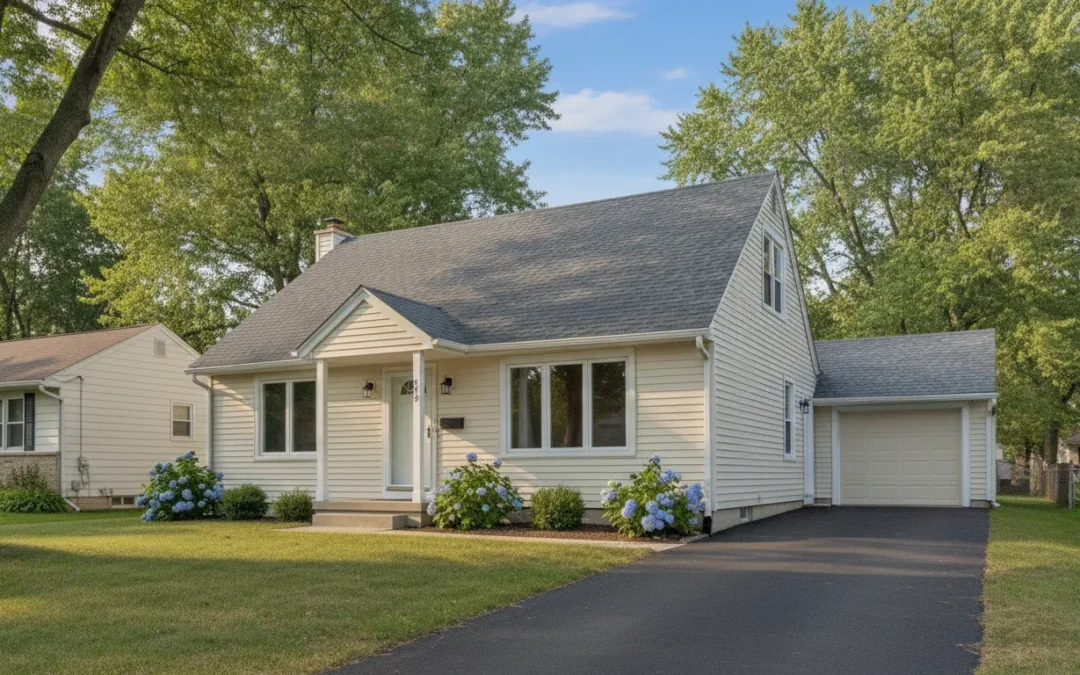
Yes, you can often bundle a roof, siding, and window replacement into one project in Michigan. The work may happen in phases rather than all at once, but one coordinated plan can simplify decisions, protect weather-sensitive transitions, and create a more consistent exterior. For a broader look at siding and window materials, costs, and energy considerations, read our Michigan siding, windows, and doors guide. This article focuses on the narrower planning question: when does bundling make sense, and how should you organize it?
Schedule a no-pressure consultation with Signature Home Pros to discuss your exterior project.
When Does It Make Sense to Bundle Exterior Projects?
Bundling is most useful when several exterior systems are reaching the end of their service life, when one project affects another, or when you want a coordinated design instead of a series of disconnected upgrades. A roof replacement may expose or change the edges where siding meets the roofline. Window replacement can affect trim, flashing, and siding around each opening. Planning those relationships together gives the contractor a chance to address the exterior as a system.
Bundling can also make sense when you are preparing an older Michigan home for several more decades of use. Many homes in the Flint, Flushing, Grand Blanc, and surrounding areas have aging exterior components that were installed at different times. Rather than selecting a new roof color today and trying to match it to new siding several years from now, a whole-exterior plan lets you evaluate colors, profiles, trim, and window proportions together.
That does not mean every homeowner should replace all three components immediately. A sound roof with many useful years remaining may not need to be removed simply to match new siding. Likewise, a window with good operation, sound frames, and no water intrusion may not belong in the first phase. The goal is not to sell work that a home does not need. The goal is to identify related needs early and build a practical sequence around the home’s condition and your priorities.
What Are the Main Benefits of One Coordinated Project?
One plan for connected exterior details
Your roof, siding, and windows meet at many of the places where water and air can enter a home. A coordinated plan gives the project team a chance to review roof-to-wall transitions, window openings, trim, flashing, and weather barriers before installation begins. The exact details depend on the existing construction and the products selected, but early coordination reduces the risk of treating one visible symptom while missing a related condition nearby.
Fewer scheduling and communication handoffs
Separate contractors can each be excellent at their trade and still leave the homeowner managing the gaps between their schedules. You may need to explain the same goals several times, coordinate site access, and determine who returns if a trim or flashing detail sits between scopes. A single exterior contractor can provide one point of contact for the shared plan, while qualified crews complete each trade in the proper phase.
A more cohesive exterior design
Roofing, siding, windows, and trim make up most of a home’s visible exterior. Choosing them together makes it easier to coordinate color, texture, sightlines, and proportions. This is especially helpful when a homeowner wants to update curb appeal without creating a new roof that looks disconnected from older siding or replacement windows that do not fit the home’s architectural style.
Less repeated disruption
Every exterior project brings some combination of staging, material delivery, noise, driveway use, landscaping protection, and cleanup. Combining compatible work can reduce how many times the property goes through that preparation. It does not eliminate disruption, and a larger project may involve more active work during the selected phase. It can, however, make the overall renovation plan easier to anticipate than several unrelated projects spread across multiple seasons.

Can Bundling Save Money?
It can improve project efficiency, but a bundle should not be described as an automatic discount. The total investment depends on the home’s dimensions, roof geometry, existing materials, window count and sizes, access, repairs, product selections, permits, and the condition of the sheathing or wall assembly. A reliable contractor should inspect the property and provide a scope-specific quote instead of applying a generic package number.
There may be practical efficiency when compatible work is planned together. Site setup, delivery coordination, measurements, protection, and project management can be organized around one schedule. The contractor may also be able to plan material transitions once, rather than reopening completed work later. Those advantages are different from promising a fixed percentage savings. Ask for the bundled scope, the individual scope of each service, and any actual package adjustment to be shown separately in writing.
Compare quotes by scope, not just by the total. A lower number may omit trim, flashing, ventilation, disposal, repairs, permits, or the preparation needed to connect the systems correctly. A higher number may include more complete materials or a more detailed protection plan. Ask whether the quote identifies products, installation responsibilities, cleanup, warranty coverage, and the process for handling concealed damage.
Signature Home Pros serves homeowners across central Michigan with roofing, siding, gutters, windows and doors, and stone installation. A consultation can help determine whether those services belong in one project, a short series of phases, or a single service plan.
Which Projects Work Well Together?
Roofing and siding
Roofing and siding are natural candidates for coordination because both affect the roofline and the wall’s upper edge. The project team can review drip edges, step flashing, wall flashing, starter courses, kick-out details, and the condition of the existing siding near the roof. The appropriate details depend on the home’s design and local requirements, so the written scope should explain what will be removed, repaired, and installed.
Homeowners considering this combination can review Signature Home Pros’ roofing services and siding services before the consultation. The company’s siding options include CertainTeed vinyl siding in styles such as lap siding, cedar shake, and board and batten. Product selection should follow an evaluation of the home’s design, exposure, ventilation, and maintenance goals.
Siding and windows
Siding and window replacement often overlap at the window perimeter. Removing siding around an opening can reveal older trim, flashing, or substrate conditions that need attention. Planning both services together can make it easier to coordinate window placement, exterior trim, water management, and the finished siding pattern.
Measurements and product decisions matter. Window replacement is not simply a matter of ordering a standard size and covering the opening. A professional consultation should evaluate the existing window, opening, trim, drainage, operation, and the installation approach. See the windows and doors service page for the company’s in-home consultation process and product information.
Start with a free consultation to see whether bundling fits your Michigan home.
Roofing, siding, and windows
All three can be bundled when the home needs broad exterior renewal and the contractor has the systems, crews, and project-management process to coordinate them. The key is to treat the work as one plan with distinct phases. This gives the homeowner one design conversation and one overall scope while preserving the trade-specific steps that each installation requires.
What Is the Best Order for the Work?
There is no universal sequence for every house, but many coordinated exterior projects follow a top-down logic. The contractor may begin with inspection and measurements, complete roof work before lower wall finishes, and then coordinate siding and windows around the selected installation method. In other homes, window ordering and lead times shape the schedule, while repairs or structural conditions change the sequence.
A typical planning discussion should answer these questions:
- Which components are urgent because of active leaks, unsafe conditions, or failed operation?
- Which materials need to be measured, ordered, or manufactured before the first installation day?
- How will the roofline, window openings, siding, trim, and flashing connect?
- Which work must be completed before another trade can begin?
- How will landscaping, exterior fixtures, driveways, and entrances be protected?
- What conditions would change the scope after old materials are removed?
Do not choose an order based only on a calendar estimate. Good sequencing protects completed work and gives the crews enough access to perform their portion correctly. Your contractor should explain the proposed order, the expected handoffs, and the conditions that could affect timing.
How Should Michigan Homeowners Plan Around Weather?
Michigan weather makes scheduling an important part of any exterior renovation. Rain, snow, freeze-thaw cycles, wind, and temperature changes can affect the safe installation of roofing, siding, sealants, and windows. A qualified contractor will monitor conditions and protect the home if weather interrupts a phase. A shorter project window is not automatically better if it forces installation outside the product or manufacturer’s requirements.
Plan for flexibility in the schedule, particularly when several services depend on one another. Ask how the contractor handles rain days, material delays, temporary openings, debris, and the transition between crews. Also ask when the property will be fully weather-tight and how the team will communicate any change to the plan.
Energy performance is another reason to coordinate the conversation. Windows and doors can affect comfort and air leakage, while siding and roof assemblies contribute to the home’s overall exterior envelope. Avoid promises of a specific utility-bill reduction without a home assessment. Instead, ask about product performance ratings, air sealing, flashing, insulation, ventilation, and how the proposed work fits with the existing assembly.
Michigan’s Home Energy Rebates Program and other financing or incentive programs can have changing eligibility rules, application requirements, and qualified-product standards. Check the current guidance from the Michigan Department of Environment, Great Lakes, and Energy before counting a rebate toward your budget. The Michigan Saves home energy improvement resource is another place to review current program information. These programs are separate from a contractor’s quote and should be confirmed before work begins.
Planning a multi-service exterior upgrade? Review Signature Home Pros’ Michigan siding, windows, and doors guide to compare materials and energy considerations before your consultation.
How Does Bundled Financing Work?
Financing a bundle is different from financing each service separately, so ask the contractor or lender how the complete scope is handled. Confirm whether the application covers the entire approved project, whether work can be phased, when payments begin, and what happens if the scope changes after inspection. The financing agreement, not a general marketing statement, controls the actual terms.
Signature Home Pros currently advertises a financing offer with no payments until 2027 across its service categories. Promotional financing is subject to current program terms, eligibility, and approval, so confirm the details during your consultation. Ask for the current disclosure and make sure you understand the full repayment schedule, any expiration date, and what happens if the balance is not paid within the promotional period.
A careful budget should also include a contingency for concealed conditions. Older homes may need repairs behind siding or around windows, and roof removal can reveal decking or ventilation concerns. You do not need to guess at that amount before an inspection, but you should ask how unexpected work is documented and approved before it is added to the project.
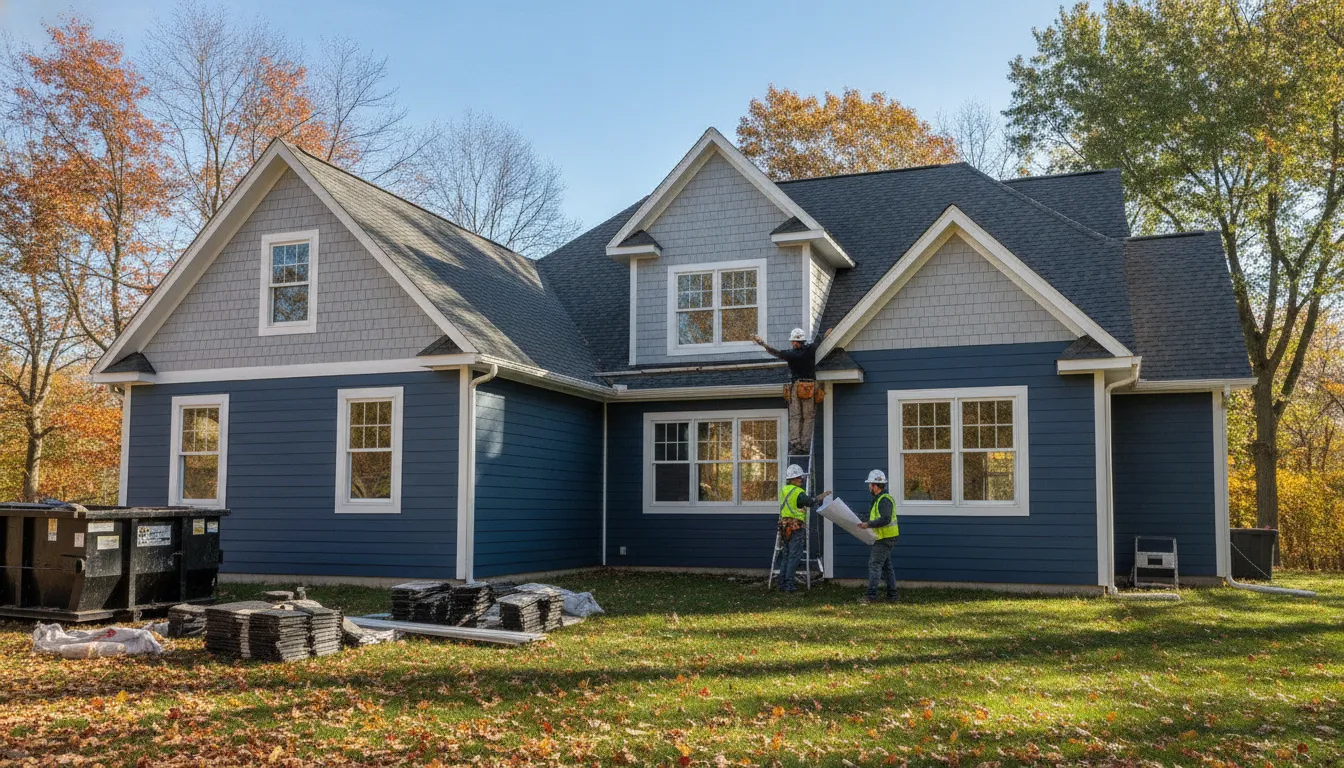
What Should You Ask a Contractor Before Bundling?
A multi-service project deserves more than a one-page total. Use the consultation to understand who owns the plan and how the work will be verified. A contractor that handles several exterior services should be able to explain its process without pressuring you to approve every recommendation immediately.
- Scope: Which roof, siding, window, trim, flashing, ventilation, and disposal items are included?
- Condition: What did the inspection find, and which repairs are required versus optional?
- Sequence: What is the planned order, and what must happen before each phase?
- Materials: Which manufacturers and product lines are proposed, and why do they fit the home?
- Coordination: Who is the project contact, and how are measurements and changes shared between crews?
- Protection: How will landscaping, driveways, interior areas, and exposed openings be protected?
- Weather: What installation conditions are required, and how are weather delays communicated?
- Warranty: Which warranty applies to materials, which applies to workmanship, and what maintenance is required?
- Payment: How are deposits, progress payments, financing, change orders, and final payment handled?
- Verification: What does the final walkthrough cover, and how are unresolved items documented?
Ask for answers that match the written proposal. If a contractor says a bundled approach will create savings, request the individual service scopes and any package adjustment so you can compare the recommendation fairly.
Why Use a Single-Source Exterior Contractor?
The primary advantage is accountability across connected work. When one company provides roofing, siding, and windows, the homeowner has one team to coordinate the design, schedule, protection plan, and final walkthrough. That does not replace the need to ask detailed questions or review the proposal. It simply reduces the number of separate handoffs a homeowner must manage.
Signature Home Pros is a family-owned exterior renovation company based in Flushing, Michigan, with more than 20 years of experience. The company serves homeowners in Genesee, Shiawassee, Livingston, Saginaw, and Oakland counties and offers roofing, siding, gutters, windows and doors, and stone installation. Its service model emphasizes free, no-pressure estimates and communication throughout the project.
Before choosing a contractor, confirm that the proposed company is experienced with each part of the bundle, has a clear project-management process, and can explain the connections between trades. The best fit is the team that gives you a realistic scope and a sequence that protects the home, not simply the team that promises the fastest completion.
When Should You Keep the Projects Separate?
Separate phases may be the better choice when only one component is failing, when the budget cannot support a broad renovation, or when a necessary repair needs immediate attention. A phased plan can also make sense when products have different lead times, when a homeowner wants to live with one material choice before committing to another, or when seasonal conditions limit the work that can be completed safely.
If you phase the work, still ask for a long-term exterior plan. The roof replacement scheduled this year should not make next year’s siding installation harder. Window decisions should account for future trim and cladding. Even when the work is separated by months or years, documenting the intended direction can help prevent mismatched materials and repeated removal.
A trustworthy consultation may result in a full bundle, a two-phase project, or a recommendation to address only the urgent issue. That answer is useful because it ties the scope to the home’s condition instead of treating every project as a preset package.
Frequently Asked Questions
Can a roof, siding, and windows be replaced at the same time?
They can often be planned as one coordinated renovation, but the work may be completed in separate phases. The final sequence depends on the home’s condition, product lead times, installation requirements, weather, and the contractor’s project plan.
Is it cheaper to bundle roof, siding, and window replacement?
Bundling can create scheduling and coordination efficiencies, but it does not guarantee a discount. Compare detailed individual and bundled scopes, including repairs, flashing, trim, disposal, permits, warranties, and cleanup. Request any actual package adjustment in writing.
What should be replaced first, the roof or the siding?
There is no universal order. Many projects use a top-down sequence, but window lead times, active leaks, existing damage, and the home’s construction can change the recommendation. Ask how each phase will protect the connections between roof, wall, windows, and siding.
Does Signature Home Pros handle all three services?
Yes. Signature Home Pros offers roofing, siding, and windows and doors, along with gutters and stone installation. A consultation can determine whether your home needs one service, a phased plan, or a coordinated multi-service project.
What areas does Signature Home Pros serve?
Signature Home Pros is based in Flushing, Michigan, and serves homeowners across Genesee, Shiawassee, Livingston, Saginaw, and Oakland counties. Confirm service availability and the best office contact for your property when you schedule a consultation.
What should I bring to a bundled-project consultation?
Bring a list of known leaks, drafts, sticking windows, siding damage, past repairs, and your preferred timing. Photos of problem areas can help start the conversation, but an in-person inspection is needed to develop a reliable scope and quote.
Recent Comments