
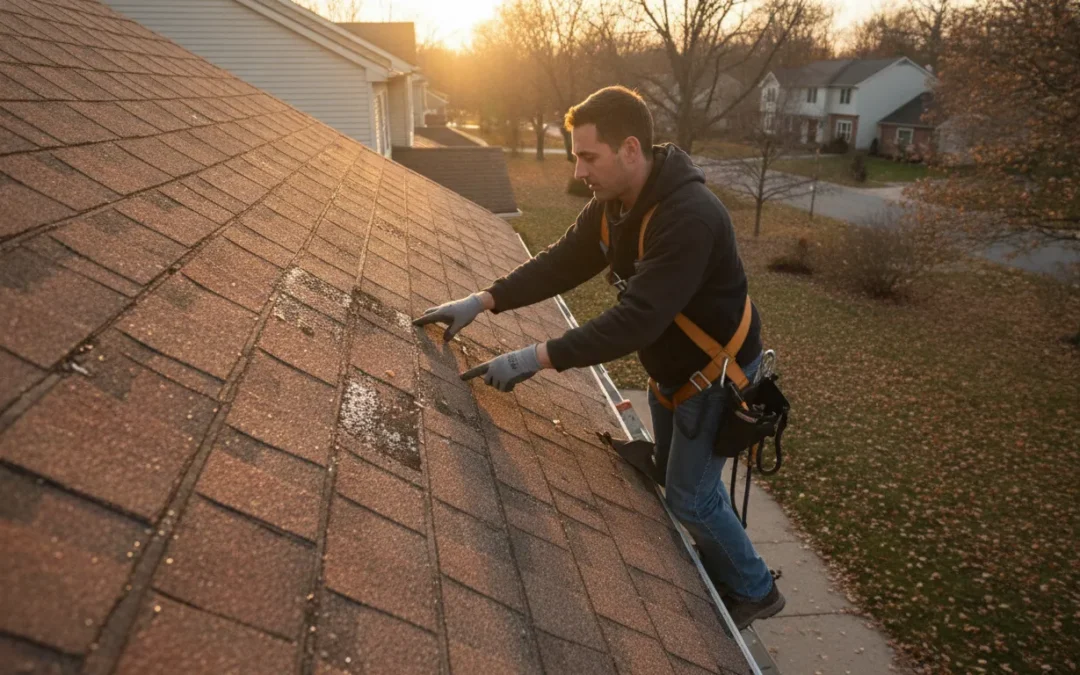
A Michigan roof can look fine from the ground while winter moisture, ice dams, and repeated freeze-thaw cycles quietly weaken shingles and flashing. The difficult part is knowing whether a small repair will solve the problem or whether continued patching is only postponing a larger failure.
The clearest signs you need a new roof michigan homeowners should watch for are widespread missing, curled, cracked, or deteriorating shingles, repeated leaks, large moss or algae growth, and a roof nearing the end of its expected service life. Isolated damage may be repairable, but a professional inspection is the safest way to separate a manageable issue from a replacement decision.
Signature Home Pros starts every project with a detailed, no-pressure inspection so you can make an informed choice. If replacement is the right path, our Michigan roof replacement process guide explains what to expect. First, look more closely at the warning signs Michigan weather tends to expose.
Top Signs You Need a New Roof in Michigan
Roof problems rarely improve on their own, and Michigan’s freeze-thaw cycles, heavy snow, and ice dams can accelerate damage. Some warning signs call for prompt attention but may still be repairable. Others suggest the roof system is failing across a wider area and may be nearing replacement time. A professional inspection is the best way to separate cosmetic wear from damage to the shingles, flashing, ventilation, or roof deck.
Look for changes in the shingles
Curled or buckling shingles are a clear sign that the roof surface is losing its ability to shed water properly. Cracked, ripped, or bald spots deserve similar attention. Bald areas mean protective granules have worn away, leaving the shingle more exposed to weather and ultraviolet damage. Missing shingles can result from wind, storm impact, or deteriorated fasteners, and even one missing section can allow water beneath the roof covering.
Discoloration and dark streaks may indicate granule loss, while uneven patches can reveal areas that are aging faster than the rest of the roof. Moss or algae growth is another warning sign. It may hold moisture against the shingles, especially in shaded areas, and larger or spreading patches should not be treated as purely aesthetic. The FORTIFIED program of the Insurance Institute for Business & Home Safety identifies water leaks. Curled shingles, cracked or ripped shingles, and moss or algae as signs that warrant evaluation: review its roof warning guidance.
Do not overlook interior evidence
Water stains on a ceiling or wall are more urgent than a stain’s size may suggest. They can point to an active leak or moisture that has already moved through the roof assembly. Check attic areas and upper-floor ceilings after heavy rain, snow, or a thaw. Sagging drywall, damp insulation, peeling paint, or a musty odor should also be reported during an inspection rather than covered up.
Minor warning or serious damage?
| More likely limited damage. | More serious concern. |
|---|---|
| One or two missing or damaged shingles with no interior staining. | Widespread curling, cracking, bald spots, or missing shingles. |
| Small moss or algae patch in one shaded area. | Large, spreading growth combined with deteriorated shingles. |
| Old discoloration with no active moisture. | New water stains, damp materials, or repeated leaks. |
A roof’s average service life is often about 20 to 25 years, but severe weather can shorten it. If several signs appear together, especially visible leaks and widespread shingle deterioration, arrange an inspection promptly. Acting early helps clarify whether targeted repairs can restore protection or whether replacement is the more dependable choice.
When a Roof Repair Is Enough
Not every roofing problem calls for a complete replacement. When damage is isolated and the rest of the roof remains in sound condition, a targeted repair can restore protection without disturbing healthy materials. It can also be a practical short-term solution while you plan for a future replacement based on the roof’s age and overall condition.
Situations that may call for repair
Repair is often appropriate when a single storm event damages only a small area. A few missing shingles, one or two torn shingles. Or a minor impact from wind-blown debris may be repairable if the roof deck beneath them is dry and intact. Replacing the affected shingles and checking the surrounding area can help prevent a small opening from becoming a larger leak.
Small leaks around flashing, plumbing vents, or other roof penetrations may also be repair candidates. These areas can fail at seals or transitions even when the field shingles are still performing well. The correct fix may involve replacing damaged flashing, renewing a seal, or repairing a limited section of shingles. The source of the water should be identified before any repair is recommended, since moisture can travel underneath roofing materials.
How much damage is too much?
A local repair may remain viable when damage affects less than about 30% of a roof section and there is no evidence of underlying deck damage. That percentage is only a screening guideline, not a do-it-yourself measurement. Age, previous repairs, ventilation, moisture, and the condition of the shingles around the visible damage all affect the recommendation.
For background on the work homeowners commonly encounter, review our guide to common roof repairs. Signature Home Pros begins with a free, no-pressure inspection to determine whether repair is sufficient. The inspection checks the shingles, flashing, ventilation, and roof deck so you can make a decision based on the roof’s actual condition, not just the most noticeable damage.
When You Need a Full Roof Replacement
Some roof problems are too widespread for a targeted repair. If shingles are damaged across multiple sections, or several areas are leaking at once. Replacing the roof can provide a more dependable long-term solution than chasing one failure after another.
Damage across the roof, not just one spot
The 25% rule is a useful starting point: when more than roughly one-quarter of the roof surface is curled. Cracked, torn, or missing, replacement often makes more sense than patching. Large areas of moss or algae, extensive bald spots. And shingles that have lost their protective granules can also signal that the roofing system is nearing the end of its service life. Moss and algae may hold moisture against the shingles, while widespread curling and cracking leave more of the roof vulnerable to Michigan weather.
Multiple active leaks deserve prompt attention, especially when water is appearing in different rooms or along several roof sections. Look in the attic for daylight visible through roof boards, water staining, or damp insulation. These signs may indicate that moisture has moved beyond the surface shingles and that the roof deck or underlayment also needs evaluation.
Age and structural problems change the decision
Most asphalt shingle roofs last about 20 to 25 years, although severe weather and poor ventilation can shorten that window. A roof that has passed 20 years and is also showing widespread wear is usually a stronger replacement candidate than a newer roof with one isolated damaged area. Sagging in the roof deck is another serious warning sign. It can point to prolonged moisture damage or weakened structural materials and should be assessed by a qualified roofing professional.
A full replacement generally provides about 20 to 30 years of reliable protection and can end the cycle of recurring repair costs. It may also increase a home’s value by approximately $12,000, depending on the project and market. For planning purposes, review the current roof replacement costs in Michigan, then ask for an inspection before making a decision. Signature Home Pros also offers financing with no interest, no payments until 2027 for qualifying homeowners.
A detailed inspection can separate repairable damage from conditions that call for a complete replacement. Explore Signature Home Pros roofing services to schedule a no-pressure evaluation.
How Michigan Weather Accelerates Roof Wear
Michigan roofs face repeated moisture, temperature swings, and storm stress that can shorten the useful life of asphalt shingles. Severe weather and extreme temperatures can accelerate the aging of any roofing material, according to the Insurance Institute for Business & Home Safety’s FORTIFIED program. Learn more about common roof-aging warning signs.
Freeze-thaw cycles crack shingles
During a Michigan winter, water can work into tiny openings in shingles and roofing components. When temperatures drop, that water freezes and expands inside the micro-cracks. Repeated freezing and thawing gradually widens those openings, causing shingles to crack, split, or lose their protective granules. Granule loss leaves the asphalt layer more exposed to ultraviolet light and future weather, so small areas of wear can become larger problems over time.
Snow loads, wind, and ice dams add stress
Heavy snow places sustained weight on the roof system and can stress the roof deck, rafters, and shingle bonds. High winds can lift or tear shingles, especially where previous storms or age have weakened the seals. Even when damage is not obvious from the ground, loose or missing shingles can allow water to reach the underlayment and decking.
Ice dams create a different pathway for damage. They form when heat causes snow to melt on the warmer upper roof, then the water refreezes at the colder eaves. The resulting ridge of ice can trap later meltwater and force it beneath shingles. Water may then reach the roof deck, insulation, walls, or ceilings instead of draining safely into the gutter.
Why spring is the right inspection window
Spring is a practical time to inspect a Michigan roof because the full effect of winter weather is easier to identify after snow. Ice, wind, and freeze-thaw cycles have accumulated. Homeowners should look for exposed decking, missing or lifted shingles, granules in gutters, ceiling stains, and damp attic insulation. If the roof is approaching the end of its service life. Michigan conditions may mean asphalt shingles last closer to 15 to 20 years rather than the 20 to 25 years often cited as a national average.
A professional inspection can distinguish isolated damage from broader deterioration. If replacement is approaching, homeowners can also compare metal roofing options for a roof system designed around long-term weather exposure.
What a Free Roof Inspection Can Tell You
A professional inspection replaces guesswork with a clear picture of your roof’s condition. Signature Home Pros begins every project with a free, no-pressure estimate and a detailed inspection. Then recommends repair or replacement based on what the roof actually needs, not a sales quota.
The assessment starts with the shingles. An inspector looks for curling, cracking, missing areas, bald spots, granule loss, discoloration, and other signs that the roofing system is aging or has sustained storm damage. Flashing around chimneys, vents, skylights, and roof-to-wall transitions is checked because small failures in these areas can allow water behind the exterior.
Ventilation is another important part of the inspection. Poor airflow can contribute to excess heat and moisture in the attic, while damaged or blocked vents may shorten the life of the roof. The inspector also reviews gutters and downspouts for blockage, separation, or drainage problems that can send water back toward the roofline and foundation.
When conditions warrant it, the inspection includes the attic. Signs of leaks, dampness, staining, mold-like growth, damaged decking, and inadequate insulation can reveal problems that are not visible from the ground. These findings help distinguish a surface repair from a deeper roofing-system concern.
You should receive a detailed written report explaining the observed conditions and recommended next steps. As a CertainTeed SELECT ShingleMaster, Signature Home Pros follows strict manufacturer specifications and brings advanced installation knowledge to that recommendation. CertainTeed SELECT ShingleMaster roofing services can help you schedule an evaluation and make an informed decision with no pressure.
Frequently Asked Questions
What are the common signs your roof needs replacement in Michigan?
Look for widespread curling, cracking, bald spots, missing shingles, large moss patches, repeated leaks, or visible sagging. Discoloration alone may not mean the roof needs replacement, but it deserves an inspection when it appears with deteriorating shingles or water damage. A roof’s age, ventilation, flashing, and deck condition also affect the decision.
Is it better to repair or replace a roof with missing shingles?
One or a few missing shingles may be repairable if the surrounding shingles, underlayment, flashing, and roof deck remain sound. Replacement is more likely when missing shingles are part of widespread storm damage, the roof is aging, or repairs keep recurring. Matching the existing shingle and checking for hidden moisture are important before choosing a repair.
How does Michigan weather affect roof lifespan?
Michigan’s freeze-thaw cycles can contribute to cracking and granule loss. Heavy snow adds stress, while ice dams can force melting water beneath shingles and into vulnerable areas. These conditions make a spring inspection especially useful after winter, even when no leak is visible inside the home.
Can I install a new roof over my old roof in Michigan?
A roof-over may conceal problems rather than solve them. Existing damage, trapped moisture, poor ventilation, or a weakened deck can remain hidden beneath the new shingles. A qualified roofer should inspect the existing layers and local code requirements before recommending whether an overlay is appropriate or a tear-off is safer.
What should a professional roof inspection check?
An inspection should evaluate shingle condition, flashing, ventilation, signs of leaks, and the integrity of the roof deck. It should also distinguish isolated damage from widespread deterioration, then explain whether repair or replacement is the more practical option. A detailed, no-pressure inspection gives you a clearer basis for deciding what to do next.
Ready to Schedule a Free Roof Inspection?
A professional inspection can clarify whether your Michigan roof needs a focused repair or a larger replacement plan. Signature Home Pros takes a no-pressure approach and treats every customer like family. Financing is available with no interest and no payments until 2027. To schedule a free roof inspection, call Signature Home Pros at (810) 270-5922.
Recent Comments