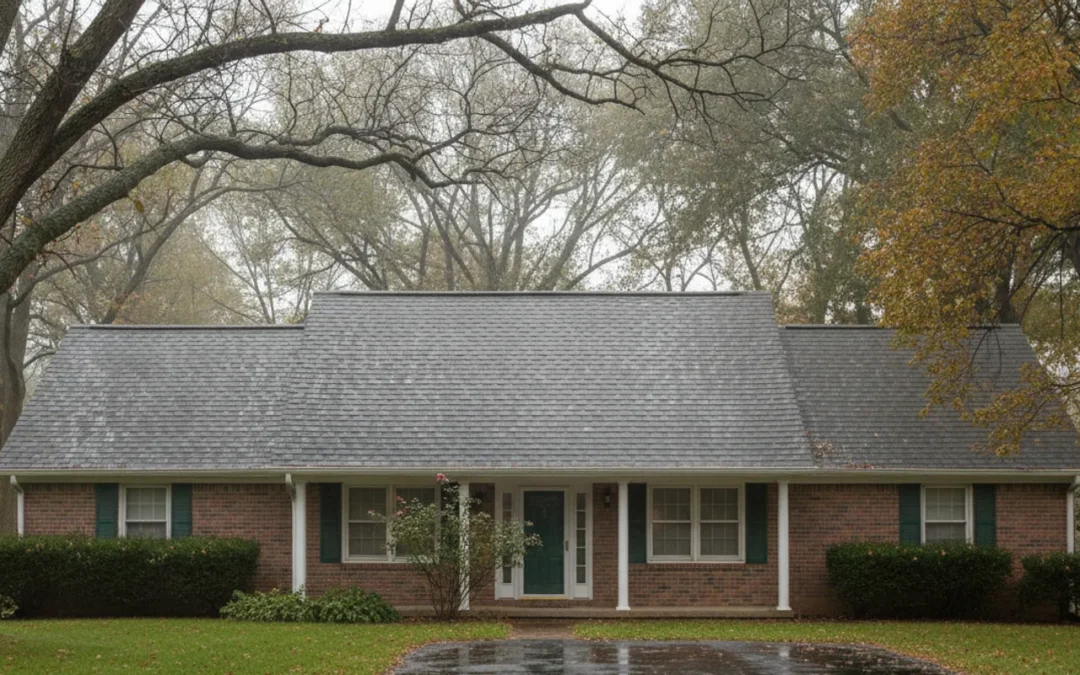
When weighing architectural vs three tab shingles in Michigan, the clearest difference is the roof’s appearance: three-tab shingles create a flatter, more regular pattern, while architectural shingles have a layered, dimensional profile. That distinction is a useful starting point, but it is not enough to judge a specific roof. Product specifications, the roof’s condition, and the written project scope matter too. For an overview of the company’s roofing services, see the service page as you consider your options.
Schedule a roofing consultation
This guide explains what the two shingle categories mean, what to compare for a central Michigan home, and how to make estimates easier to evaluate. It does not treat either category as a universal winner. Instead, use it to narrow your preferences and ask for clear, product-specific answers.
What is the difference between architectural and three-tab shingles?
Three-tab shingles are designed with a repeated pattern of separate-looking tabs along the lower edge. Once installed, that pattern tends to look flat and orderly across the roof. Architectural shingles, also called dimensional or laminate shingles, use layers that create more visible depth, variation, and shadow. From the street, the difference is usually most apparent on a large roof plane or a roof with multiple slopes and gables.
These names describe broad product styles, not a complete specification. Shingles within either category can vary by manufacturer and product line. Color choices, published product details, installation requirements, and warranty terms should be checked for the exact product in a proposal. A description that says only “architectural” or “three-tab” does not tell you everything you need to know.
| Comparison point | Three-tab shingles | Architectural shingles |
|---|---|---|
| Typical visual pattern | Flatter and more uniform, with repeating tabs | Layered profile with more depth and shadow |
| Look from the street | Simple, regular appearance | More texture and visual variation |
| What to verify | Exact product, specifications, and instructions | Exact product, specifications, and instructions |
| How to choose | Consider appearance, roof needs, scope, and budget | Consider appearance, roof needs, scope, and budget |
The table describes general visual distinctions, not a promise about performance or lifespan. Before deciding, ask the contractor to identify the precise product and show you its documentation. That lets you compare the actual options instead of assuming every shingle in a category is interchangeable.
Which style makes sense for a Michigan home?
There is no single shingle style that fits every Michigan home. Start with the result you want to see from the street, then check that the specific product is appropriate for the roof and project. Snow, wind, rain, and temperature changes are reasonable topics to discuss with a roofer, but the category name alone cannot promise how a roof will perform in a particular storm or prevent every leak.
Think of the decision as two related questions. First, which profile suits the home’s design? Second, which exact product and complete scope meet the project’s documented requirements? The first is largely a preference. The second calls for clear product information and a careful review of what the proposal includes.
A homeowner who wants a quiet, even pattern may prefer three-tab shingles. Someone who wants more visible texture may lean toward architectural shingles. Neither preference means one option is automatically right for the roof. Ask the roofer how the selected product’s published requirements relate to the roof’s pitch, layout, and observed condition. Request the answer in plain language, and ask where the relevant details appear in the manufacturer’s information.
Signature Home Pros is a family-owned exterior renovation company headquartered in Flushing and serving central Michigan homeowners. Its roofing work includes replacement, new installation, repairs, and skylights. You can learn more about the company’s approach on its About Us page, and use that context alongside the product and scope details in any proposal.
How do profile and color affect curb appeal?
A roof covers a large part of many homes’ visible exterior, so both color and shingle pattern can affect the overall impression. Three-tab shingles create a repeated, orderly look that may suit a homeowner who prefers a simple roof surface. Architectural shingles bring more depth and shadow lines, which can make the roof feel visually more textured. These are design observations, not a claim that one profile increases a home’s value.
Look at the whole exterior before choosing a color. Consider siding, trim, brick or stone, roof pitch, and the number of gables together. A color that looks balanced against one exterior may feel different against another. If the roof has several visible slopes, the shingle pattern may be more noticeable; on a simpler roof, color can have more influence on the overall effect.
If samples are available, view them outdoors and place them near the siding and trim. A small sample under indoor lighting cannot fully show how a color will look across a complete roof, in daylight, or in shade. Compare more than one option and look at the samples from a distance as well as up close. If you may also update exterior finishes, consider how your choice will sit beside the home’s siding materials and colors. Coordination does not require every surface to match; aim for a combination that looks intentional.
It can also help to separate preferences from requirements. Write down the colors and profiles you like, then ask the contractor whether the selected product is available in the proposed scope and meets its published requirements for the project. If a color or style is changed later, ask for the revised product name and documentation so the final selection is clear in writing.
What should you compare beyond the shingle category?
A useful roofing estimate identifies the proposed product and explains the work. If one proposal says “asphalt shingles” and another names a manufacturer and product line, ask the first contractor to clarify before comparing. The goal is not to make every estimate identical; it is to understand what each one includes and why the options differ.
- Product identification: Ask for the manufacturer, product line, category, color, and relevant published specifications. Confirm that the proposal and any later selection documents refer to the same product.
- Removal and preparation: Check whether the proposal describes removal of existing roofing or another approach, and how visible or uncovered substrate concerns would be discussed.
- Related roof components: Ask which underlayment, flashing, ventilation, and other materials are included. For background on one part of the assembly, see this guide to roof underlayment in Michigan.
- Work areas: Make sure the estimate identifies the roof sections and details covered, as well as any exclusions or separate work.
- Changes during the project: Ask how a condition discovered after work begins would be described, documented, priced, and approved before the scope changes.
- Worksite expectations: Clarify property access, protection, cleanup, and how you will receive updates. The written agreement should make expectations understandable.
- Warranty documents: Review the actual manufacturer and workmanship terms that apply. Do not infer coverage from the shingle category or a general statement in a sales conversation.
Conditions beneath existing roofing may not be fully apparent before removal. Rather than assuming every detail can be known in advance, ask how the contractor will communicate a newly discovered concern and what approval is needed before proceeding with added work. This helps you distinguish the original scope from a later change and keeps decisions grounded in documented information.
The company’s roof replacement information can help you frame the larger project discussion. For other material categories, its guide to roofing materials for Michigan homes gives additional context; this article focuses specifically on the two asphalt shingle profiles.
Does a more dimensional shingle automatically last longer?
No. A product category or more substantial appearance does not establish how long a particular roof will perform. Compare the manufacturer’s published information for the exact product, its installation requirements, and the terms of the applicable warranty. A broad lifespan claim is difficult to evaluate unless it is tied to a specific product and the conditions stated in its documentation.
Ask what the warranty covers, who provides it, how long the stated terms apply, and what requirements or exclusions are listed. A warranty document is not the same thing as a guarantee that a roof will never need attention. Read the actual terms rather than relying on a short summary, and ask the contractor to explain any wording you do not understand.
Installation and the condition of the roof beneath the shingles matter as parts of the overall project, but those facts do not make a category label a performance rating. If a proposal describes a product as especially resistant to wind or as a longer-lasting choice, ask for the exact published document supporting the claim. Check whether it applies to the selected product, and ask what installation or project conditions accompany it.
How can you compare two proposals side by side?
Put the estimates next to each other and compare like with like. A total alone cannot explain why one proposal costs more or less, and a different shingle category may be only one of several differences. Use a simple worksheet to record what each contractor has actually offered.
- Write down the manufacturer, product line, color, and category specified in each proposal.
- Check whether each estimate covers the same roof areas and explains comparable removal and preparation.
- List the underlayment, flashing, ventilation details, and other components each scope names.
- Note what each contractor says about assessing the roof deck and communicating concealed conditions.
- Compare the stated schedule, property access, cleanup plan, payment terms, and warranty documents.
- Mark every blank or vague item and ask for an explanation or a written revision before you decide.
For example, suppose one estimate proposes a three-tab product and another proposes an architectural line. First compare the actual products and their documentation. Then check whether each scope covers the same roof sections, preparation, and associated components. If one proposal includes work the other does not, request a clearer comparison rather than treating the difference as a simple premium for a particular profile.
Now consider a different case: two contractors both propose architectural shingles, but one estimate names a product line and the other does not. The category is the same, yet you still cannot tell whether the products, components, or warranty terms are comparable. Ask both contractors to identify the product and explain the scope. A precise written description is more useful than assuming that matching category names mean matching projects.
For additional context on how asphalt and metal roof options differ, see this separate asphalt shingles versus metal roofing guide. It addresses a different material comparison; the decision here is between two asphalt shingle profiles.
What can an outside source tell you?
A public planning record can illustrate how architectural shingles are named in a building description, but it is not a product test or installation guide. For example, a City of Detroit staff report on a construction project describes asphalt shingles and architectural features. Treat that as an example of terminology in a local project record, not evidence that a shingle category performs better. For product specifications and installation requirements, consult the documents for the exact shingle under consideration.
How can you make a final selection without overcomplicating it?
Keep your decision focused on three things: the look you prefer, the exact product proposed, and the complete work scope. You do not need to become a roofing specialist to compare options. You do need enough written detail to see what you are choosing and to raise questions where the proposals do not match.
One practical method is to make a short decision sheet before the final conversation. Put appearance preferences in one column and project requirements in another. For example, note whether you prefer a uniform or dimensional pattern, then separately record the product identification, scope, component list, and warranty documents each contractor has supplied. This prevents an appealing sample from distracting you from unresolved questions about what the estimate includes.
If the proposal names a product you have not seen, ask for a product sheet and a sample where available. Confirm the sample color and name against the written proposal. If your preferred option is not available or the contractor recommends a different product, ask what changed and request the explanation in writing. You can then compare that option with the original rather than relying on memory from a conversation.
Before making a decision, review the estimate once more from top to bottom. Mark each item as clear, needs clarification, or not included. Follow up on items in the second category and decide whether exclusions in the third category matter to your project. This is a straightforward way to turn multiple estimates into a usable comparison, even if one contractor presents the information in a different format.
What questions should Michigan homeowners ask?
Bring a short list to each estimate appointment. The answers should help you understand the product and scope without turning the consultation into a technical exam.
- Which manufacturer, product line, color, and shingle category are included?
- Can I review the product information and installation requirements for that exact option?
- What roof areas and related components are included in the written scope?
- How will you assess the existing roof and explain a condition that changes the proposed work?
- What steps are required before an added or changed item is approved?
- Which written warranty documents apply, and what requirements or exclusions should I review?
- How will property access, protection, cleanup, and project updates be handled?
- Can I view a color sample outdoors against my siding and trim before confirming it?
- What specific differences explain the total when I compare this estimate with another?
Homeowners planning work in Mid-Michigan can also check the company’s service area and review the main roofing service information. Asking these questions early helps keep the conversation centered on your house, the selected product, and the documented work rather than general promises.
What is the practical choice between architectural and three-tab shingles?
Architectural shingles generally offer a more layered appearance; three-tab shingles create a flatter, more regular pattern. That is the main distinction homeowners can see. For a particular Michigan roof, the practical choice depends on the appearance you prefer, the requirements of the exact product, the roof’s condition, and what the written proposal includes. Neither category is automatically better for every home.
Before signing, make sure you can identify the product and understand the complete scope. Compare the documentation, ask questions about unclear items, and request written clarification where estimates differ. If you are ready to discuss a project, you can schedule an appointment with Signature Home Pros.
Request a roofing consultation
Frequently asked questions
Are architectural shingles always the better option?
No. They have a more dimensional profile, but that visual difference does not make them the right choice for every home. Compare the exact product documentation, project scope, roof requirements, and the look you prefer.
Can I change from three-tab to architectural shingles?
It may be possible, but the roof’s condition and the selected product’s requirements should guide the answer. Ask a roofing contractor to assess the project and explain any preparation, material, or scope changes in writing.
Do architectural shingles prevent leaks?
No shingle category by itself guarantees a leak-free roof. The selected product, installation, roof condition, and related components all belong in the project discussion. Ask the contractor to explain how the proposed scope addresses the roof as a whole.
What should I bring to a roofing estimate?
Bring your preferred appearance, any known concerns, and a list of questions about the product, work areas, components, changes, and warranty documents. If you have other proposals, bring them so you can ask about differences directly.
Should I choose based on the sample or the estimate?
Use both, because they answer different questions. A sample helps you judge the profile and color, while a detailed estimate explains the proposed product and project work. Confirm that the sample you prefer matches the product named in the final written proposal.
A clear comparison helps you choose based on the home, the documented product details, and the work included in each proposal.
Recent Comments