
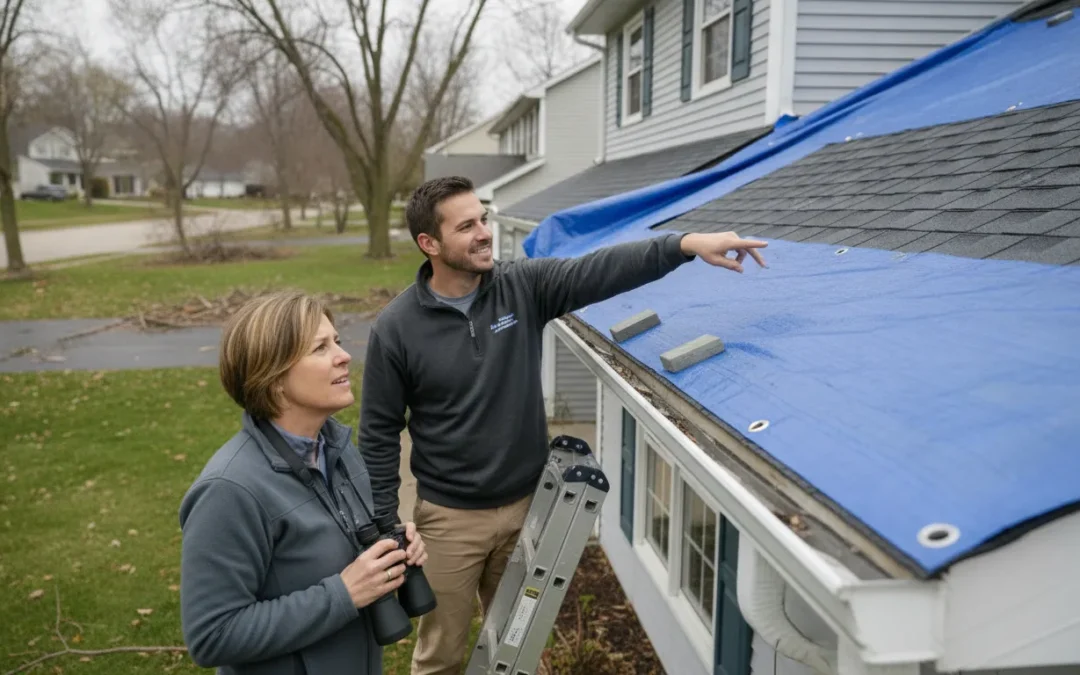
Storm damage can make a roof unsafe. Protect people first while the roof is evaluated.
After roof damage, stay off the roof, keep clear of downed lines and unstable trees, move belongings away from leaks when safe, and arrange a professional evaluation. If you need emergency roof repair flushing mi homeowners can start by documenting the damage and asking what temporary protection and permanent repair the roof actually needs.
FEMA advises avoiding damaged buildings until qualified professionals inspect them and not removing heavy debris alone. Once immediate hazards are controlled, a calm first-response sequence can help you protect the interior, preserve useful evidence, and make better repair decisions.
Ready to discuss the next step? Call Signature Home Pros at (810) 270-5922 or schedule a roofing appointment.
What to Do After Roof Damage in Flushing, MI
After roof damage, slow down and protect people before trying to protect the roof. A careful first response can help you avoid a second injury, limit additional water entry, and give the roofing professional useful information for the evaluation.
- Move people away from immediate hazards. Keep family members and pets clear of the damaged area. Look for downed or unstable trees, poles, and power lines around the property. Do not approach or touch a downed line. If the building itself appears damaged or unstable, leave it and do not go back inside until qualified professionals have inspected it. FEMA’s storm-damage guidance identifies these as important post-storm precautions.
- Do not climb onto the roof. A roof can be unstable even when the damage looks limited from the ground. Avoid entering areas affected by structural damage, falling debris, or electrical hazards. Do not remove heavy debris by yourself. If cleanup around the property is safe, wear gloves and sturdy, thick-soled shoes to protect your hands and feet.
- Control interior water only from a safe position. Place containers under active drips and move furniture, electronics, and other belongings away from the leak when you can do so without entering an unsafe area. Keep gutters and drains free of debris when they can be reached safely from the ground. Do not trade a wet ceiling or floor for a fall, electrical shock, or contact with unstable materials.
- Document what you can see. From a safe location, take photographs or video of the exterior damage, fallen branches, visible openings, interior staining, wet materials, and affected belongings. Note when you first noticed the damage and whether water is still entering. Avoid disturbing debris or making roof-level repairs before the condition has been evaluated.
- Arrange a professional evaluation. Share the photos, notes, and any safety concerns with the roofing professional you contact. Ask for an assessment of the visible damage and the areas that may not be visible from the ground. The goal is to determine what needs temporary protection, what requires repair, and whether additional inspection is appropriate, without making a rushed decision while the property is unsafe.
How to Tell If You Need Emergency Roof Repair
Some roof damage needs prompt attention because water, unstable materials, or electrical hazards can make a small problem more dangerous. An active leak, water spreading across ceilings or walls, or rain entering through an exposed section of roof should be treated as urgent. Move people and belongings away from the affected area, and do not climb onto the roof during wet, windy, or otherwise unsafe conditions.
Warning signs to take seriously
- Active water entry: Dripping, pooling, or fresh dampness in the attic or upper rooms may mean the roof is no longer keeping water out.
- Exposed or damaged roof areas: Missing covering, visible decking, lifted materials, or a large torn section can leave the structure vulnerable to additional rain.
- Fallen branches or structural debris: A branch resting on the roof can add weight and create hidden punctures. Do not remove heavy debris alone.
- Ceiling or attic stains: Staining or discoloration can indicate water intrusion, even if the leak is not active when you look.
- Damaged flashing: Flashing is commonly installed around chimneys and skylights. Wind can damage it, while cracks, gaps, or trapped debris can allow moisture through. Flashing damage or staining is a reason to have a qualified professional assess the source of the problem.
- Electrical concerns: Keep clear if water is near outlets, fixtures, wiring, or electrical equipment. Do not touch wet electrical components. If it is safe to do so without entering a hazardous area, contact a qualified professional or the appropriate utility or emergency service.
These signs support an urgent evaluation, but they do not guarantee that a provider offers emergency dispatch or same-day service. For help assessing next steps, you can review Flushing roofing repair services and request an evaluation based on the condition of your home.
When Is Temporary Roof Protection Enough?
Temporary protection is enough to reduce immediate exposure while you arrange a safe evaluation, not to close out the repair. If a storm creates an opening, stay off the roof and avoid entering any area that appears unstable. A qualified professional can determine whether the covering, flashing, or roof deck has been damaged.
FEMA identifies plywood and plastic sheeting as emergency protective materials that may help limit exposure after damage. A tarp or plastic sheet can cover an opening when it is installed by someone equipped and trained to work safely. Plywood may provide a more rigid barrier in some situations. But it still does not restore the roof system or confirm that water is no longer reaching the structure. FEMA’s emergency preparedness guidance lists these materials for protective use.
What to do inside the home
- Place buckets or other suitable containers under active drips, but do not stand beneath sagging ceilings or touch wet electrical fixtures.
- Move furniture, boxes, electronics, and other belongings away from the affected area when you can do so without entering an unsafe space.
- Keep water away from outlets, cords, light fixtures, panels, and appliances. If water is near electrical equipment, leave the area and contact a qualified professional rather than attempting a repair.
- Photograph the damage from a safe location so the evaluator can see the opening, interior staining, and affected belongings.
Even a small roof opening can let rainfall travel through joints in the plywood roof deck, according to North Carolina Sea Grant. The resulting interior water damage can cost more than replacing the roofing itself. That is why a tarp, plastic sheet, bucket, or plywood panel should be treated as a short-term protective step, followed by an inspection and permanent repair plan.
Repair or Replacement? A Simple Way to Decide
The right choice depends on what is damaged, how far the problem extends, and whether the roof deck beneath the covering is still sound. A careful evaluation should separate a limited roofing problem from damage that affects the roof system more broadly.
| Option | When it may fit | What the evaluation should address |
|---|---|---|
| Localized repair | The damage is limited to a defined area, and the surrounding roofing components appear serviceable. | Identify the source of the leak, inspect nearby materials, and confirm that the repair will restore protection without overlooking related damage. |
| Temporary protection plus evaluation | Weather is moving in, the damage cannot be fully assessed safely, or a permanent decision requires more information. | Protect the opening from additional exposure, document the condition, and arrange a thorough review before choosing a permanent scope. |
| Replacement assessment | Damage extends across multiple areas, the roof covering is broadly compromised, or the underlying structure needs attention. | Review the complete roof assembly, including the covering and deck, then determine whether replacement is more appropriate than isolated repairs. |
The roof covering and the deck beneath it form the first line of defense against wind, rain, and hail, according to the Texas Department of Insurance. That is why a visible shingle problem should not automatically be treated as a surface-only issue. Water can travel beyond the point where it first appears indoors.
Ask whether the inspection found damage to the deck, flashing, penetrations, or adjacent areas. The Texas Department of Insurance recommends having the deck inspected and replacing deteriorated or damaged decking before installing new roof covering. If replacement becomes the responsible option, review roof replacement options in Flushing alongside the inspection findings, written scope, and questions you still need answered.
How to Choose a Roofer After Storm Damage
Storm damage can make every roofing decision feel urgent, but pressure is not a reason to skip basic checks. Give yourself enough time to confirm who you are hiring, what the work includes, and what you will receive in writing.
Verify the company before discussing repairs
Start with the roofer’s identity. Confirm the business name, physical address, telephone number, and references. Call the references and ask whether the company completed the agreed work, communicated clearly, and left the property in acceptable condition. Be cautious if a representative cannot provide basic business information or discourages you from checking it.
Compare written scopes, not just verbal promises
Ask each contractor for a written scope that explains the observed damage, proposed repair. Materials, areas to be inspected, cleanup responsibilities, and what happens if hidden damage is found. The Texas Department of Insurance advises homeowners to get at least three written bids to compare: Texas Department of Insurance storm-repair guidance. A lower bid may not cover the same work as a more detailed proposal, so compare the scope line by line.
Keep the agreement and warranty terms
Before work begins, read the agreement carefully. It should identify the parties, describe the work, and state how changes will be handled. Retain a copy of every signed agreement and the warranty terms. Do not rely on a promise made only by phone or in a driveway conversation. Keep your photos, inspection notes, bids, receipts, and related correspondence together. For general information about documenting an insurance matter, see these Michigan roof insurance claim steps, without assuming that any particular damage will be covered.
Set expectations for cleanup and communication
Ask who will protect landscaping and interior areas, remove debris, and perform the final cleanup. Confirm who your contact will be, how updates will be provided, and how you will approve any added work. A trustworthy roofer should explain the options plainly and give you room to make an informed choice. Be especially wary of anyone demanding an immediate signature, insisting on cash before explaining the scope, or discouraging a second opinion.
What to Expect From Emergency Roof Repair in Flushing, MI
A professional visit should begin with a careful assessment, not an automatic recommendation for a full replacement. When possible, the roofer can evaluate the roof from the ground first, looking for missing or displaced shingles, visible openings, damaged flashing, fallen branches, and other hazards. If the roof or surrounding area is unsafe, stay off it and let trained professionals determine how to proceed.
The first priority is limiting additional exposure. Depending on the damage and conditions, temporary protection may include a tarp, plastic sheeting, or another suitable covering. These measures help reduce the chance of more water entering while the repair plan is developed, but they are not a finished repair. A small opening can allow rain through joints in the roof deck, so prompt evaluation matters even when the visible damage seems limited.
Next, expect the inspection to look beyond the surface. Flashing around chimneys, skylights, walls, and roof edges should be reviewed, along with the condition of the decking beneath the roof covering. Damaged or deteriorated decking may need attention before new roofing material is installed. The goal is to identify the source and extent of the problem rather than cover up symptoms.
The recommended scope may be a localized repair, a temporary measure followed by additional work, or a replacement assessment if the damage reaches more of the roof system. Signature Home Pros offers repairs, installations, and replacements, so homeowners can discuss the appropriate path without assuming the most extensive option is necessary. Learn more about Flushing roofing repair services or review options for roof replacement in Flushing.
Call Signature Home Pros at (810) 270-5922 to discuss the damage and next steps.
Before work begins, ask what was found, what will be protected temporarily, which areas require repair, and what follow-up will be needed. Signature Home Pros is family-owned and headquartered in Flushing, and its no-pressure approach is designed to give homeowners clear information before they decide how to move forward.
Questions to Ask Before Roof Work Begins
A few focused questions can help you make decisions without rushing into work you do not yet understand. Use the answers, photos, and written documents to compare your options.
Does this leak need attention today?
Ask what is happening now, not only what the roof may need eventually. Active water entry, new ceiling or attic staining, exposed decking, or damaged flashing deserves prompt evaluation. FEMA notes that staining or discoloration can indicate water intrusion, and recommends professional help when staining or flashing damage is present. Do not climb onto the roof to investigate if conditions are wet, unstable, or otherwise unsafe.
Should the opening be covered temporarily?
Ask what temporary protection is appropriate until permanent work can be assessed. Plywood and plastic sheeting are among the emergency protective materials FEMA lists, but placing them on a roof can create a fall hazard. A small damaged area can still allow rain through joints in the roof deck. So temporary protection should be treated as a way to limit additional exposure, not as a finished repair. Keep people away from unsafe areas and address interior water only when it can be done safely.
Is a repair enough, or should the roof be evaluated for replacement?
Ask the provider to explain the condition of the covering, flashing, and underlying deck. The deck and roof covering work together as a home’s first defense against wind, rain, and hail. If decking is deteriorated or damaged, it should be inspected and addressed before a new covering is installed. Request a clear explanation of which areas are affected and why the proposed scope fits the observed damage.
What should I document before work starts?
Ask what photographs, videos, damage notes, and previous repair records will help establish the condition. Save copies of the written scope, any bids, signed agreements, and warranty terms. If insurance may be involved, review these Michigan roof insurance claim steps separately, without assuming a claim will be approved.
Who will perform the work, and what exactly is included?
Verify the contractor’s identity, address, telephone number, and references. Ask for a written scope and compare written bids rather than relying on a verbal promise. Before work begins, confirm cleanup, materials, the handling of unexpected damage, payment terms, and the warranty language. Keep the signed agreement for your records.
Frequently Asked Questions
Does a roof leak always require same-day attention?
Active water entry, exposed roof decking, ceiling staining, or damage around flashing should be treated as a prompt repair concern. Move belongings away from the leak, contain water only when it is safe, and arrange a professional evaluation. Staining or flashing damage is a reason to have a qualified professional assess the source of the problem.
Can I tarp my roof myself after storm damage?
Temporary protection can help limit additional water entry, but climbing a damaged or wet roof creates another hazard. Stay off the roof when conditions are unsafe and ask a qualified professional to install or assess temporary protection. Plywood and plastic sheeting are recognized emergency protective materials, but they are not a finished repair.
How do I know whether my roof needs a repair or replacement?
The decision depends on the location and extent of damage, the condition of the roof covering, and the underlying deck. A localized issue may be repairable, while widespread deterioration or damaged decking may require a broader replacement assessment. The deck should be inspected and damaged sections addressed before new roof covering is installed.
What should I ask a roofing contractor after storm damage?
Ask for the contractor’s identity and references, a written scope of work, and a clear explanation of temporary protection, repairs, or replacement. Compare written bids when practical, then keep signed agreements and warranty terms. Do not feel pressured to approve work before you understand what is being recommended.
Ready to Address Roof Damage?
A professional evaluation can help you understand what needs immediate attention, what temporary protection may be appropriate, and which repair options fit your home. For a no-pressure discussion of roof damage and next steps, call Signature Home Pros at (810) 270-5922 or schedule a roofing appointment. You can share what happened, ask questions, and decide how you would like to proceed.
Recent Comments