
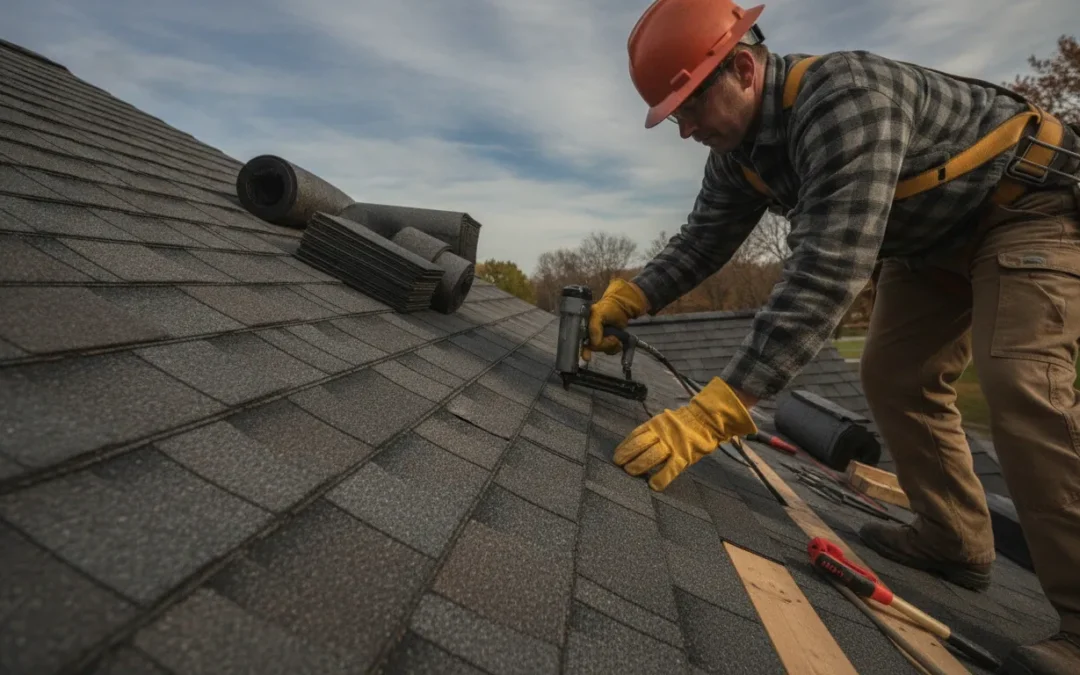
Michigan roofs work through more than four seasons. Freeze-thaw cycles, heavy snow, ice, hail, summer heat, and strong wind can all test the materials above your home. The right choice depends on more than curb appeal or the lowest starting price. It should fit your roof’s design, your maintenance expectations, and the weather your home faces year after year.
Ready to compare roofing materials for your Michigan home? Schedule a free roofing consultation with our CertainTeed SELECT ShingleMaster certified team.
The best roofing materials michigan homeowners can choose from balance cold-weather durability, snow and ice management, wind resistance, expected service life, and total cost. Asphalt shingles are practical and widely used, while metal, slate, and tile may offer different advantages for homes that need longer life or specialized performance.
This guide compares those tradeoffs in plain language so you can make an informed decision without pressure. For a broader look at replacement planning, see our Michigan roof replacement guide. First, it helps to understand the specific demands Michigan weather places on any roofing system.
What Does Michigan’s Climate Demand From Roofing Materials?
Michigan roofs have to handle more than one kind of weather. A roof may face below-freezing temperatures, repeated thawing, heavy snow, spring hail, summer heat, and strong wind in the same year. That range makes material selection and installation details equally important.
Freeze-thaw cycles put materials under stress
When temperatures move above and below freezing, trapped moisture can expand, contract, and work into small weaknesses. Asphalt shingles can become brittle and crack during cold weather, particularly through repeated freeze-thaw cycles. Damaged shingles then give melting snow and rain an easier path into the roof system, according to this overview of climate and roofing materials.
That does not make asphalt automatically wrong for a Michigan home. It does mean the roof should be inspected for cracking, lifted edges, and areas where water may be getting underneath. If you are unsure how to know when your roof needs replacement, those warning signs are a practical place to start.
Snow, ice dams, hail, and wind all matter
Heavy snow adds weight, while uneven melting can create ice dams along colder eaves. A slick metal surface can help meltwater and snow shed more readily, reducing the buildup that contributes to leaks and ice dams. Metal roofing is also naturally less likely to trap meltwater than asphalt, though no material replaces proper attic ventilation, insulation, flashing, and maintenance. See the comparison of metal and asphalt roofs in Michigan snow and ice for additional context.
Hail and wind call for shingles, panels, fasteners, and flashing selected for the home’s exposure, not just its appearance. A qualified installer should account for roof slope, prevailing wind, ventilation, and the way each material moves or sheds water.
Summer heat is part of the equation
Michigan summers can heat a dark roof significantly. The U.S. Department of Energy reports that traditional dark roofs can reach 150 degrees Fahrenheit or more in summer sun. A cool roof under the same conditions may stay more than 50 degrees cooler. Read the Department of Energy cool roof guide for the underlying data. Color, reflectivity, ventilation, and material should be considered together when planning a roof built for Michigan’s full seasonal cycle.
Why Are Asphalt Shingles the Most Common Choice in Michigan?
Asphalt shingles remain one of the most widely used roofing materials in Michigan because they offer a practical balance of durability, flexibility, and upfront affordability. The typical shingle uses a fiberglass mat coated with asphalt and finished with mineral granules. That layered construction creates a dependable barrier against rain, hail, and wind, as described by L&S Home Improvements. Asphalt shingles are also available in many colors and profiles, so homeowners can match the roof to a ranch, colonial, or newer build without changing the home’s character.
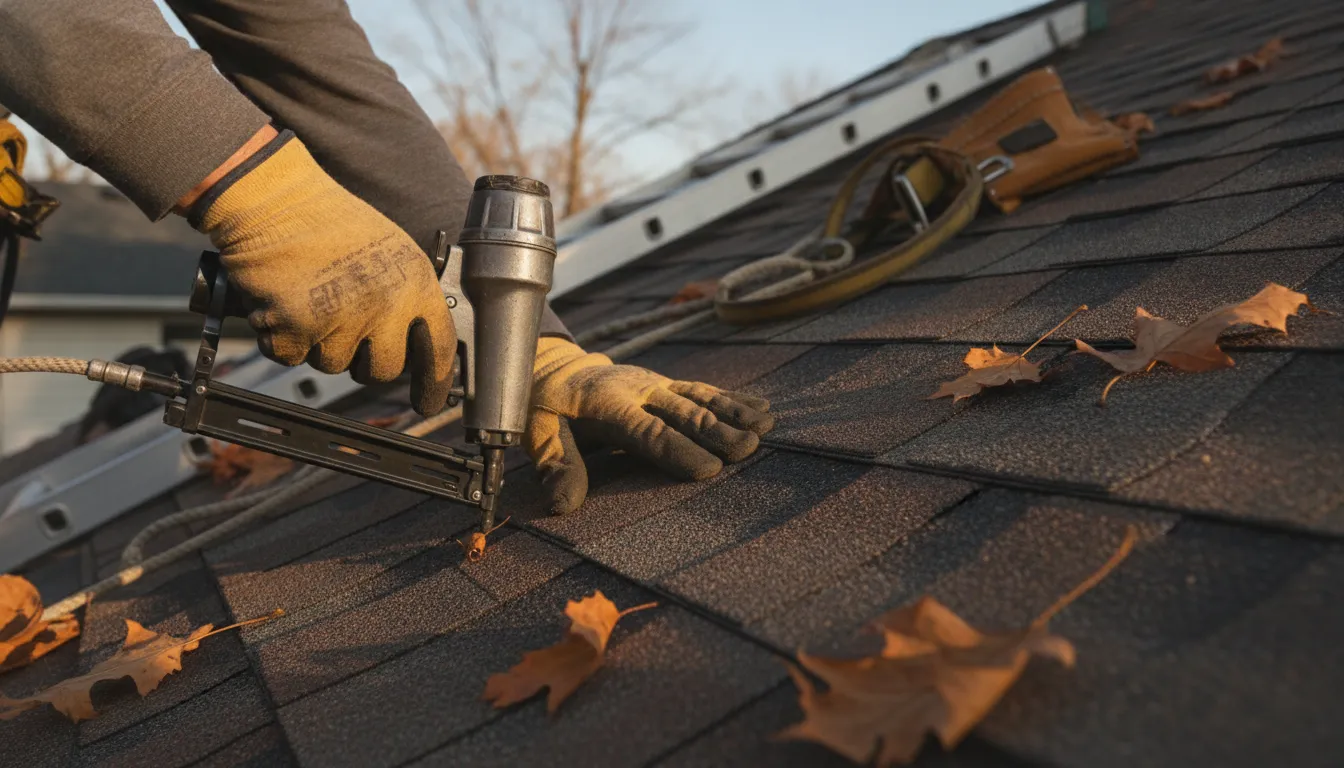
For many Michigan homes, the material is affordable upfront compared with metal roofing. Properly installed asphalt shingles typically last about 20 to 25 years, although severe weather, ventilation problems, and installation quality can affect that service life. A sound roof system still depends on more than the shingle itself. The underlayment, flashing, ventilation, and workmanship all help determine how well the roof handles winter moisture and summer storms. Signature Home Pros installs CertainTeed roofing systems with those details in mind. Explore our CertainTeed roofing services to see how the full system is evaluated.
Architectural vs. 3-Tab Shingles
Three-tab shingles use a uniform, flat profile and are often selected for straightforward roof designs. Architectural shingles, also called dimensional shingles, have multiple layers that create a more textured appearance. They can provide a stronger visual finish, longer warranty options, and better wind ratings than basic three-tab products. The right choice depends on the roof’s design, the manufacturer’s specifications, and the exposure of the home. A roofing professional should confirm that the selected product, fastener pattern, and installation method work together.
Impact Ratings and Hail Resistance
Michigan hail can damage shingles by loosening granules, bruising the mat, or creating fractures that are not obvious from the ground. Impact-rated products are tested and labeled by class, commonly Class 3 or Class 4, with Class 4 representing the higher impact-resistance rating. An impact rating is useful information, but it is not a promise that a roof will never be damaged by hail. Storm size, wind, roof age, installation, and the condition of surrounding components still matter.
Homeowners comparing roofing material options for a Michigan replacement project should look beyond the label. Asphalt’s versatility and manageable installation make it a strong fit for many properties, while the product tier and installer determine how well that choice performs over time. For background on the material’s fiberglass, asphalt, and granule construction, see this asphalt shingle overview.
How Do Metal Roofs Handle Michigan Winters?
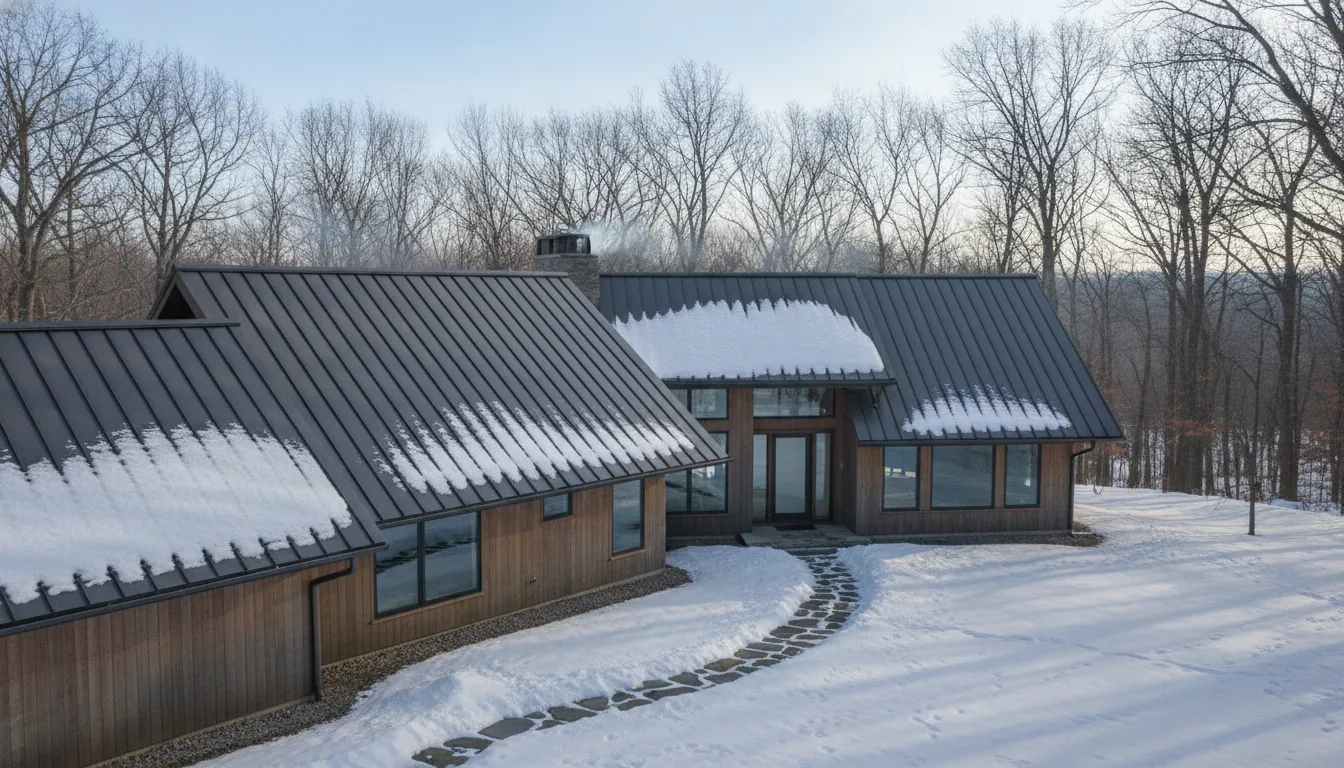
Metal roofing is well suited to Michigan’s snow, ice, and sharp temperature changes. Its smooth surface helps snow and ice slide away instead of accumulating in heavy layers. Metal roofs also perform well in cold climates because they shed moisture before it can contribute to leaks or ice dams. A properly designed system can be a durable choice for homeowners planning beyond the next replacement cycle.
Standing Seam vs. Corrugated Panels
Standing-seam metal roofing uses raised seams that keep many fasteners concealed and create clean, continuous drainage paths. It is often selected for its streamlined appearance and long-term weather performance. Corrugated or exposed-fastener panels can offer a more traditional, practical look and may suit garages, barns, additions, and some residential designs. The right option depends on the home’s style, roof slope, budget, and installation details.
Metal typically costs more upfront than asphalt shingles, but that initial investment is spread across a longer service life. Metal roofing can last approximately 40 to 70 years, compared with about 20 to 25 years for typical asphalt shingles. Over several decades, avoiding an additional replacement can improve the overall value. See our metal roof buyer’s guide for a closer look at panel options.
Metal roofs are also known for strong wind performance. One Michigan roofing comparison reports ratings of more than 140 mph for many metal systems. The exact rating depends on the panel, clips, underlayment, roof design, and installation. A contractor should verify the specified system rather than rely on a general material label.
Snow Guards and Ice Dams
Metal’s slick surface helps meltwater run off quickly, which can reduce the conditions that contribute to ice dams. It does not make ice dams impossible. Snow guards may be important above entryways, walkways, driveways, or landscaping where sliding snow could create a safety or property concern. Their placement should be planned with the roof layout and expected snow movement in mind.
Installation quality is especially important because metal panels expand and contract as temperatures change. As climate and roofing research explains, installers must account for that movement with appropriate fasteners, seams, flashing, and spacing. Good winter performance comes from the complete roof system, not the panel alone. Metal’s cold-climate performance is generally excellent, but only when the design and installation are done correctly.
Still deciding between asphalt and metal? Book a free roofing consultation and review both systems for your home.
Choosing the Best Roofing Materials Michigan Homeowners Need
The right roof balances more than the initial estimate. Compare your budget, expected service life, winter performance, wind exposure, and the architectural style of your home. A material that works well for a simple ranch may not be the best match for a historic or heavily detailed house.
| Material. | Typical cost. | Lifespan. | Snow and ice performance. | Wind resistance. | Best fit. |
|---|---|---|---|---|---|
| Asphalt. | $4-$6 per sq. ft.; about $8,000-$12,000 installed for 2,000 sq. ft. | 20-25 years. | Good with proper installation and maintenance; monitor freeze-thaw wear. | Good when correctly installed and rated for local conditions. | Most budgets, traditional and contemporary homes. |
| Metal. | $7-$15 per sq. ft.; $30,000 or more for 2,000 sq. ft. | 40-70 years. | Excellent snow shedding; can help limit ice buildup. | Strong when properly fastened and detailed. | Long-term durability, steep roofs, and snowy sites. |
| Slate. | $15-$30 per sq. ft.; $60,000 or more for 2,000 sq. ft. | 100+ years. | Excellent freeze-thaw durability. | Durable, but installation quality and structure matter. | Premium historic, luxury, or slate-compatible homes. |
| Tile. | Varies by tile and installation. | 50+ years with proper maintenance. | Durable, but tile selection and installation must suit freeze-thaw conditions. | Good when properly installed; individual tiles can be damaged by impact. | Homes designed to support its weight and appearance. |
Traditional asphalt is usually the practical starting point when upfront cost matters. C&L Ward places traditional asphalt at roughly $4 to $6 per square foot, or about $8,000 to $12,000 installed for a 2,000-square-foot home. Metal costs more initially, but its 40- to 70-year service life can make the long-term calculation different. The same comparison lists steel at $7 to $15 per square foot and $30,000 or more for a 2,000-square-foot home. See the Michigan roofing material cost comparison for the cited ranges.
Work through these steps before you compare bids:
- Set a realistic budget that includes underlayment, flashing, ventilation, and disposal, not just the shingle price.
- Confirm your roof’s pitch, decking condition, and structural capacity with a professional inspection.
- Match the material’s wind and impact ratings to your neighborhood’s exposure.
- Ask how the installer will handle ice-dam prevention, flashing details, and the manufacturer’s warranty requirements.
Slate offers exceptional longevity and can withstand extreme cold without the same freeze-thaw concerns. Genuine slate, however, may cost $15 to $30 per square foot, or $60,000 or more for a 2,000-square-foot home. Tile can last more than 50 years with proper maintenance, but its weight, profile, and cold-weather suitability deserve careful review before installation.
Use the table as a starting point, not a final specification. Roof pitch, decking condition, ventilation, insulation, flashing, and structural capacity can change the recommendation. For a broader planning framework, read the full Michigan roof replacement guide and review about Michigan roof replacement costs before comparing proposals.
CertainTeed Products Available for Michigan Homeowners
CertainTeed offers several architectural asphalt shingle options that fit the needs of Michigan homes. The Landmark series is the company’s flagship architectural shingle line, designed to give homeowners the dimensional appearance of wood shake while providing the practical performance of asphalt. Its layered profile can add visual depth to a ranch, colonial, or two-story home without making the roof look out of place.
For homeowners comparing the roofing services available from Signature Home Pros, CertainTeed products also offer useful protection details to discuss during the selection process. Many CertainTeed shingles include lifetime fade protection, helping the roof maintain a more consistent appearance through bright summers, snow cover, and seasonal weather changes. CertainTeed shingles generally carry strong wind warranties for the 110- and 130-mph zones that cover Michigan. The exact warranty terms depend on the product, roofing system, and installation requirements, so reviewing the manufacturer documents for the selected shingle is important.
Why Installer Certification Matters
A quality shingle still depends on the quality of the installation beneath it. Manufacturer warranties live or die on proper installation, including the correct underlayment, flashing, ventilation, fastening pattern, and weather-sealing details. Small mistakes can leave a roof more exposed to wind-driven rain, ice, and freeze-thaw movement.
Signature Home Pros is a CertainTeed SELECT ShingleMaster certified roofer. That certification means the installation team has completed CertainTeed’s factory training and passed the manufacturer’s verification requirements. It gives homeowners a meaningful way to evaluate roofing expertise beyond a brand name printed on a shingle package.
Certification does not remove the need to ask questions. A careful contractor should explain which CertainTeed line fits the home’s design, how the roof system will be installed, and which warranty terms apply. The goal is not to push the most expensive option. It is to help Michigan homeowners choose a well-matched product and understand what they are buying before work begins.
How to Match Roofing Material to Your Home’s Style
Your roof should protect the house and look like it belongs there. The right material supports the home’s architecture instead of competing with it. On a low-slung ranch, clean asphalt shingles or simple metal panels can reinforce the home’s horizontal lines. Craftsman homes often suit dimensional shingles in warm, grounded colors. Colonial homes typically pair well with symmetrical rooflines, traditional asphalt profiles, or slate-inspired materials. For cottages, textured shingles and softer, natural colors can complement the home’s character.
Color matters just as much as material. A roof with too much contrast can make a smaller home feel visually busy, while a carefully chosen blend can make the exterior feel more balanced. Look at the siding, brick, stone, trim, and landscaping before choosing a color. If you are updating more than the roof, coordinating it with siding services can create a more unified exterior and simplify the project through one local exterior team.
Style is not only about curb appeal. A well-maintained, proportionate roof can strengthen a buyer’s first impression and support the home’s value. Signature Home Pros’ knowledge base estimates that a roofing replacement can add roughly $12,000 in home value, although actual results vary by property, market, and project quality. That makes durability, installation, and visual fit worth considering together rather than choosing solely by the lowest initial cost.
Before finalizing a color or profile, check your HOA rules and neighborhood guidelines. Some communities restrict roofing materials, visible colors, or changes that affect a consistent streetscape. A no-pressure local contractor can review those limits with you, compare style options, and explain the performance tradeoffs for Michigan weather. The goal is a roof that looks right today and continues to serve the home for years.
Get a clear material recommendation before you spend. Contact Signature Home Pros or call (810) 270-5922 for a free consultation.
Frequently Asked Questions
What is the most reliable roofing material?
Reliability depends on the material, your home’s design, and the installation. Metal performs well in snow and ice because its surface sheds buildup, while slate handles extreme cold and freeze-thaw conditions. Asphalt can also be a dependable choice when the shingle quality, ventilation, flashing, and installation are right. Metal roofs commonly last 40 to 70 years, compared with about 20 to 25 years for asphalt shingles, according to climate and roofing research.
What is the 25% rule for roofing?
The 25% rule is often used when discussing roof damage and insurance claims, but it is not a universal standard for every policy or Michigan home. Some policies or local requirements may address repair versus replacement differently. Review your policy and ask your insurer how the rule applies before authorizing work. A roofing professional can document the damage, but the insurer determines coverage.
What is the best roofing material brand?
There is no single brand that is best for every roof. Look for a manufacturer with products suited to Michigan weather, a clear warranty, and an installer who follows the required specifications. Installation quality matters as much as the label. Signature Home Pros is a CertainTeed SELECT ShingleMaster certified roofer, so our team can help compare appropriate CertainTeed options for your home.
Is Owens Corning better than GAF?
Neither brand is automatically better for every homeowner. Compare the specific shingle line, impact and wind ratings, warranty terms, color options, and total installation plan. Ask who will install the roof and how ventilation, flashing, and cleanup are handled. A correctly selected and properly installed system from either established manufacturer can be a sound choice for a Michigan home.
Schedule a Free Roofing Consultation
Michigan weather can make the right roofing material a highly personal choice. A conversation with Signature Home Pros can help you compare options for your home, priorities, and long-term plans. To schedule a free roofing consultation, contact Signature Home Pros or call (810) 270-5922 and take the next step with a clear plan.
Recent Comments