
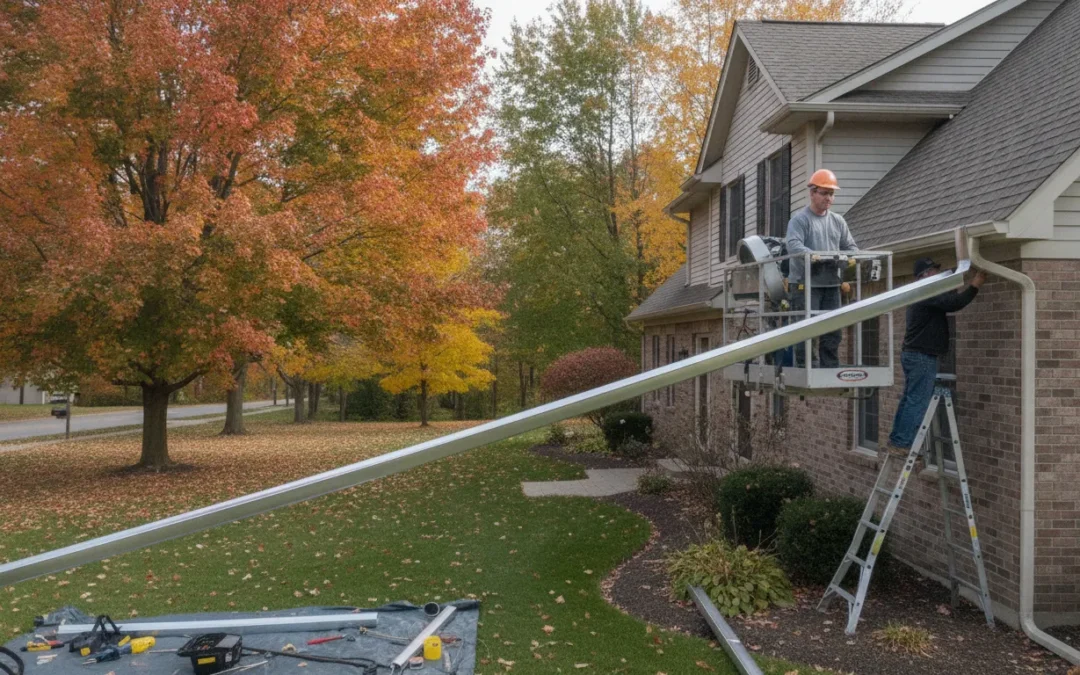
In central Michigan, a gutter system has to do more than carry rainwater away. It must handle spring runoff, falling leaves, freezing temperatures, and the snow and ice that arrive before homeowners know it. The right design also protects siding, landscaping, and the foundation from water collecting where it should not.
For gutter installation michigan homeowners can rely on, seamless aluminum gutters with on-site fabrication offer a durable, tailored solution for changing weather. Proper sizing, slope, downspout placement, and optional gutter guards matter just as much as the material.
Gutters are one part of a larger exterior plan, especially when you are also considering gutter guards or stone veneer. A careful installation starts with understanding how local conditions affect drainage and why professional planning can prevent avoidable repairs later. That foundation makes it easier to evaluate the installation choices that best fit your home.
Gutter Installation Michigan: Why Michigan Homes Need Professional Gutter Installation
Michigan weather puts a gutter system through more than ordinary rain. Freeze-thaw cycles can loosen fasteners and create expansion stress, while heavy snow and ice add weight along the roofline. Spring runoff and falling leaves then test the system again. Professional installation helps ensure the gutters are pitched correctly, securely attached. And connected to downspouts that move water away from the home instead of allowing it to collect near the foundation.
Protecting the foundation from seasonal runoff
When gutters overflow or a downspout discharges too close to the house, water can saturate the soil around the foundation. Repeated wetting and freezing can contribute to cracking, erosion, and basement moisture concerns. A professional installer evaluates the roofline, places downspouts where they can handle the expected flow, and checks that outlets direct water toward a safe drainage area. That planning matters especially during Michigan’s spring thaw, when melting snow and rain can arrive together.
Seamless systems also reduce the number of joints where leaks can develop. Sectional gutters may work in mild conditions, but their multiple connections can separate, clog, or leak as materials expand and contract. An experienced crew can recommend and install custom seamless gutters suited to the home’s roof design and drainage needs.
Reducing ice dams and winter stress
Gutters cannot eliminate every ice dam, but a properly installed and maintained system gives melting snow a clearer path away from the roof edge. Secure hangers, correct slope, and well-positioned downspouts help prevent water from backing up at the eaves. Professionals can also identify conditions that make winter problems more likely, such as inadequate drainage, damaged fascia, or sections that sag under load. Those details are easy to miss when replacing a short run as a DIY project.
Timing helps, too. Late spring or early autumn are considered ideal times for Michigan gutter installation because they avoid heavy winter snow and freezing rain. Installing before the worst weather arrives gives the system a better chance to perform when it is needed most.
Managing leaves, insects, and maintenance
Seasonal debris is another reason professional planning matters. Leaves can block outlets and hold moisture in the troughs, increasing the chance of overflow during fall rain. Michigan State University Extension recommends cleaning gutters every fall after most leaves have fallen. Its guidance also notes that at least three or four mosquito species can lay eggs in or on gutters. Making fall cleaning useful for more than just water flow (MSU Extension fall maintenance tips).
DIY work can be appropriate for minor cleaning when the homeowner can do it safely, but installation involves ladder work, roof-edge access, drainage decisions, and winter-load considerations. A professional installation addresses those pieces together, helping Michigan homeowners protect the foundation, limit avoidable ice-related problems, and keep seasonal maintenance manageable.
Seamless Aluminum Gutters vs. Sectional Gutters
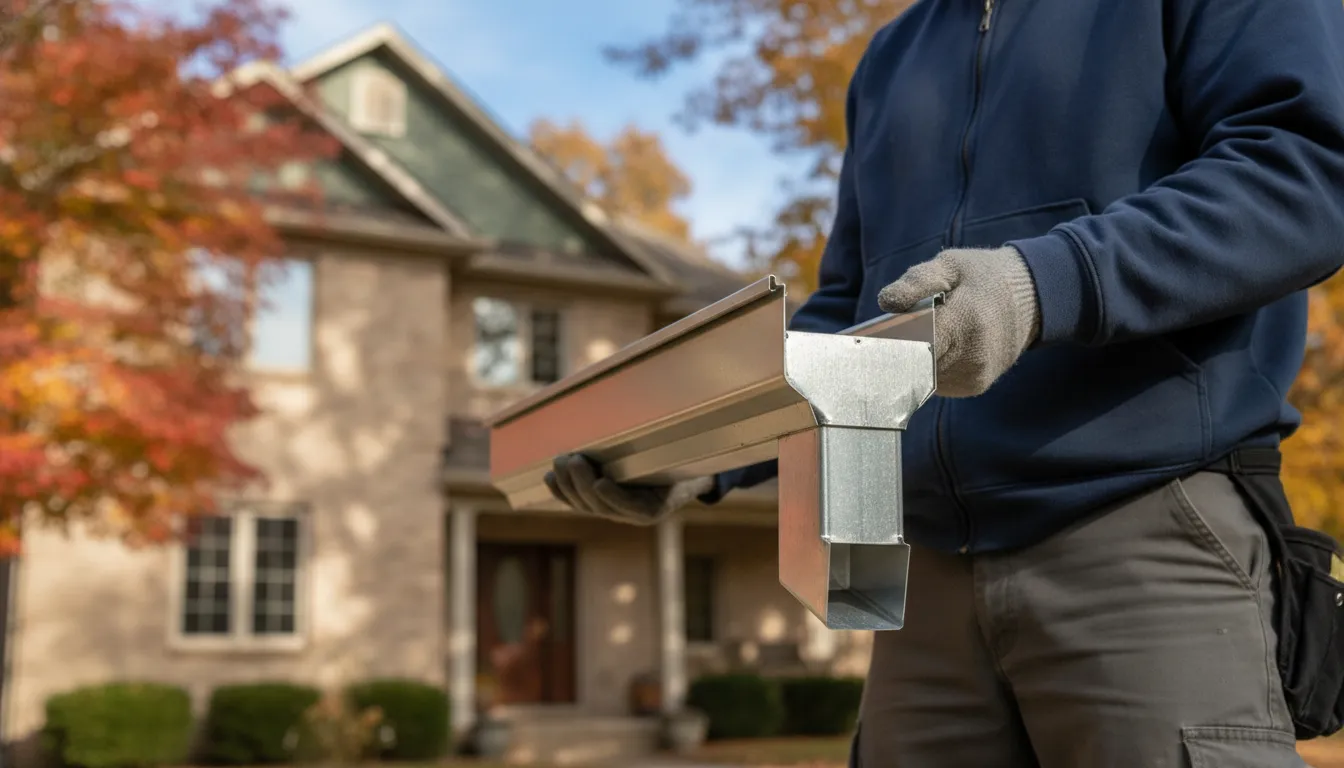
Michigan homeowners usually choose between sectional gutters, assembled from shorter pieces, and seamless aluminum gutters, formed to fit the home. Both systems can move rainwater away from the roof, siding, and foundation when they are properly sized and installed. The construction difference matters, however, because Michigan homes face freezing temperatures, heavy snow, and repeated expansion and contraction throughout the year.
| Feature | Seamless aluminum gutters | Sectional gutters |
|---|---|---|
| Seams | Few or no horizontal seams along the main runs, which reduces common points for leaks. | Multiple joints connect individual lengths, creating more locations that may loosen or leak over time. |
| Fabrication | Measured and formed on site to match each roofline, with sections cut to the needed length. | Pre-cut lengths are assembled at the property and joined at corners and along longer runs. |
| Michigan weather | Generally preferred for durability against heavy snow loads and freezing temperatures. | Can perform well with proper installation and maintenance, but its additional joints need careful inspection. |
| Typical cost | About $8 to $33 per linear foot, with an average near $20 per linear foot, depending on the project. | Material costs may be lower in some projects, but the final price still depends on length, corners, downspouts, access, and labor. |
| Appearance and options | Clean, continuous lines with Shur Flo options and more than 30 available colors to coordinate with the exterior. | Commonly available in a range of colors and profiles, although visible joints can create a more segmented appearance. |
Why fewer seams matter
Every connection is a potential maintenance point. Sealant can age, fasteners can loosen, and freeze-thaw movement can place stress on joints. A seamless system does not eliminate every possible leak, since corners, end caps, outlets, and downspout connections still require careful workmanship. It does reduce the number of long-run seams where water can escape behind the gutter or onto the fascia.
How seamless gutters handle Michigan conditions
Seamless aluminum is generally preferred for Michigan conditions because it combines a practical weight with resistance to the heavy snow loads and freezing temperatures common across the state. The material choice is only part of the result. Proper slope, secure hangers, correctly placed downspouts, and sound fascia support help the system carry water and seasonal runoff safely.
For homeowners comparing options, the right choice depends on the roofline, drainage needs, existing fascia, and budget. A professional measurement can identify where longer seamless runs are valuable and where the home needs additional downspouts or reinforcement. Learn more about our seamless gutter options and the available Shur Flo color selection before making a decision.
Best Gutter Guard Options for Michigan Winters
Michigan homes face two recurring gutter problems: heavy seasonal debris and winter freeze-thaw conditions. Oaks and maples can fill a gutter system with leaves, while pine needles may slip through larger openings and collect around downspouts. Gutter guards can reduce that workload, but the right style depends on the trees around your home, your roof design, and how easily the system can be inspected.
Micro-mesh guards
Micro-mesh guards use a fine screen to keep most leaves and smaller debris out while allowing rainwater to enter. They are often the strongest choice for properties surrounded by mature oaks, maples, or evergreens because the smaller openings can help limit both leaf fragments and pine needles. Their performance still depends on proper installation, roof pitch, and regular inspection. Heavy debris can sit on top of the mesh, and winter precipitation may still require attention if ice forms along the roof edge.
Foam inserts
Foam inserts fit inside the gutter and allow water to pass through the porous material. They can be a practical option where the goal is to reduce larger leaf buildup without changing the visible appearance of the gutter system. However, small debris and pine needles can settle into the foam over time. Foam should be checked before winter and after spring shedding so trapped material does not restrict drainage.
Leaf screens
Leaf screens, sometimes made from a perforated cover or larger mesh, block broad leaves while keeping the gutter channel accessible. They may work well on a home with moderate leaf fall and straightforward rooflines. Larger openings can be less effective against small fragments and pine needles. So homes beneath mature maples, oaks, or pines may need more frequent inspection than a micro-mesh system.
Gutter guards are highly recommended in Michigan for reducing the risk associated with ice dams and heavy leaf debris, but they are not a substitute for maintenance. Michigan gutters should be cleaned at least twice a year, before winter and after spring shedding. A guard system makes the most sense when trees regularly fill the gutters, roof access is difficult, or you want to reduce the frequency of heavy debris removal. It may not be worthwhile on a small, easily accessible roof with little surrounding vegetation, especially if the guard cost exceeds the maintenance savings.
Before choosing a product, have the existing gutters, roof edge, fasteners, and downspouts evaluated together. A correctly sized, well-supported system matters as much as the guard itself. If the gutters are sagging, leaking, or poorly draining, replacing or correcting the system may be the better first step. Schedule a gutter consultation and ask which guard option fits your Michigan home.
The Gutter Installation Process: What to Expect
A professional gutter project should feel organized from the first measurement through the final drainage check. While some contractors advertise estimates in as little as 20 minutes. A reliable installation still requires careful attention to your roofline, downspouts, landscaping, and the way water moves around your home.
-
Measure the roofline and plan the system
The crew begins by measuring each gutter run and identifying roof sections, corners, valleys, and existing drainage points. This planning stage helps determine the right gutter dimensions, outlet locations, and downspout routes. The goal is to move water away from the foundation without creating discharge problems near walkways, driveways, or landscaping.
-
Form seamless gutters on-site
Seamless aluminum gutters are formed on-site from continuous aluminum coils and cut to the measured lengths. This custom fabrication creates long, fitted runs with fewer joints than sectional systems. Fewer joints means fewer potential leak points, especially at the long straight sections where poorly matched pieces can separate over time. For homeowners comparing professional seamless gutter installation, on-site fabrication is an important part of the installation method, not just a product label.
-
Position and secure the gutters and downspouts
The installers place the gutter runs at the proper pitch so water flows toward the outlets rather than standing in the channel. They then secure the system to the home and install downspouts where the measurement and drainage plan call for them. Downspout placement should account for the foundation, grade, hard surfaces, and areas where concentrated runoff could cause erosion or nuisance puddling.
-
Verify drainage and water flow
After the system is installed, the crew checks that water travels through the gutters and exits cleanly through each downspout. This verification can reveal a low spot, an outlet that needs adjustment, or a discharge point that should be extended farther from the foundation. A drainage check is especially valuable in Michigan, where seasonal rain, freezing temperatures, and snow can expose weaknesses in an improperly pitched system.
-
Inspect the work area and clean up
The final step includes checking fasteners, seams, corners, downspout connections, and the surrounding work area. Installation materials and debris should be removed before the crew leaves, with the property left ready for normal use. Late spring or early autumn is often an ideal time to schedule the work in Michigan. When weather is generally more manageable and homeowners can address drainage before the next demanding season.
5 Signs Your Gutters Need Replacement
Not every gutter issue requires a full replacement, but some warning signs should prompt a closer inspection. Michigan homeowners who spot these problems early can plan the work on their schedule rather than responding to an emergency.
- Cracks or splits. Even small cracks let water escape onto the fascia or siding, which can accelerate wood rot and paint failure over time.
- Peeling exterior paint near the roofline. Moisture escaping from overflowing or leaking gutters often shows up as peeling paint on the fascia before other damage is visible.
- Sagging sections or pulled-away hangers. Gutters that no longer sit flush against the fascia have likely collected debris or water weight beyond what the fasteners can support.
- Water pooling near the foundation after rain. If downspouts cannot carry water far enough from the house, the soil around the foundation may stay saturated longer than it should.
- Rust or corrosion on older metal gutters. Surface rust that has progressed to visible flaking indicates the material has thinned and may soon develop leaks at multiple points.
Stone Veneer Installation: Adding Curb Appeal and Value
Gutters protect your home from water, while stone veneer helps define its character. Used thoughtfully, manufactured stone can add visual interest, texture, and a finished appearance without the weight and expense associated with natural stone. It is a practical option for homeowners who want an exterior update that feels substantial while remaining flexible enough to suit different architectural styles.
Flexible applications inside and outside the home
Stone veneer can be used on exterior features such as entry columns, foundation walls, porch surrounds, garage fronts, and selected sections of siding. A focused installation can create an inviting focal point without covering the entire facade. It can also work indoors on fireplace surrounds, accent walls, mudroom features, or other areas where a durable, textured finish fits the room.
Because manufactured veneer comes in varied profiles, colors, and textures, homeowners can choose a look that complements existing siding, roofing, trim, and landscaping. A warm, natural palette may reinforce a traditional design, while cleaner lines and more uniform tones can support a contemporary exterior. The goal is a coordinated appearance, not an isolated feature that competes with the rest of the home.
Why consider StoneCraft manufactured stone veneer?
Signature Home Pros installs StoneCraft manufactured stone veneer for interior and exterior applications. Compared with natural stone, manufactured veneer offers lower weight and cost while still delivering the durable, masonry-inspired appearance many homeowners want. Its lighter profile can provide more design flexibility, especially when adding an accent to an existing structure. Proper preparation and installation remain essential for a secure, long-lasting result.
Stone veneer can also support curb appeal when it is used to highlight the portions of a home visitors notice first. Enhancing the entry, porch, or lower facade may make the property feel more finished and welcoming. For homeowners considering a broader renovation, stone veneer installation services can be planned alongside other exterior improvements rather than treated as a disconnected project.
Pairing stone veneer with gutter improvements
Gutter work and stone veneer address different needs, but they can complement one another during an exterior upgrade. New gutters help direct rainwater away from the foundation and siding, while stone veneer adds a durable design element to visible areas of the home. Planning both together allows the team to coordinate trim lines, downspout locations, transitions, and the overall color palette.
This combined approach is especially useful when gutters, siding, or foundation areas already show signs of wear. A carefully planned exterior renovation can improve water management and appearance at the same time, helping your home come home to quality from the roofline down.
Why Choose Signature Home Pros for Gutters and Stone Veneer in Central Michigan
When gutters and stone veneer are part of a larger exterior project, it helps to work with one dependable team instead of coordinating several contractors. Signature Home Pros is a family-owned company based in Flushing, serving homeowners throughout central Michigan for more than 20 years. The team brings roofing, siding, gutters, windows and doors, and stone veneer under one roof, giving homeowners a single point of contact from planning through completion.
One team for the whole exterior
Gutters do more than complete a roofline. They direct water away from the foundation and help protect siding and other exterior surfaces. Stone veneer adds character and durable visual appeal to entryways, facades, and other features. When these elements are planned alongside roofing or siding work, the details can be coordinated instead of handled as disconnected jobs.
Signature Home Pros is the only local provider offering all five of these exterior services under one roof: roofing, siding, gutters, windows and doors, and stone. That single-source approach can make it easier to discuss materials, colors, drainage, trim, and the overall look of your home with one experienced team. Homeowners can also review the company’s exterior renovation services when planning improvements beyond gutters and stone.
Local experience and a straightforward process
Central Michigan homes face changing seasons, and exterior work should be planned with the property, materials, and long-term maintenance in mind. Signature Home Pros serves Genesee, Shiawassee, Livingston, Saginaw, and Oakland counties from offices in Flushing and Grand Ledge. Its local focus means homeowners can work with a company that understands the communities it serves, rather than a national franchise using a rotating local crew.
The company has earned a 4.9-star rating and builds its reputation around quality workmanship, clear communication, and treating customers like family. The guiding promise is simple: “Come Home To Quality.” For homeowners evaluating related roof work, the roof replacement guide offers helpful planning information before a consultation.
Financing that gives homeowners more flexibility
Exterior improvements are important, but timing a project around a household budget can be challenging. Signature Home Pros offers financing with no interest and no payments until 2027 for qualifying customers. Ask about current terms during your consultation so you can understand the available options before making a decision. There is no need for a high-pressure conversation. The goal is to help you compare the work, materials, and investment clearly.
From the Flushing office, call (810) 270-5922 to discuss gutter installation, stone veneer, or a coordinated exterior renovation. Grand Ledge homeowners can also connect with the local office. A free consultation is a practical first step toward a more protected, cohesive home exterior.
Frequently Asked Questions
How much does gutter installation cost in Michigan?
There is no single price because the total depends on your home’s roofline, linear footage, material, access, downspout layout, and whether old gutters must be removed. A proper estimate should account for the complete drainage system rather than quote a generic per-foot number. Most central Michigan installations fall in the range of $8 to $33 per linear foot for seamless aluminum.
When is the best time for gutter installation in Michigan?
Late spring and early autumn are generally the most practical installation windows because they avoid heavy winter snow and freezing rain. Scheduling before the leaves fall can also help you enter winter with a clear, properly draining system. Most installations can be completed in a single day for an average home.
Do I need gutter guards in Michigan?
Gutter guards are worth considering when your property has mature trees, frequent leaf buildup, or a history of ice-related drainage problems. They can reduce debris entering the troughs, but they do not eliminate the need to inspect the system and confirm that water still reaches the downspouts. Micro-mesh styles tend to perform best around Michigan’s oaks and pines.
How often should gutters be cleaned in Michigan?
Plan to clean them at least twice a year: once after spring shedding and again before winter. Fall cleaning is especially important because leaves and standing water can create a sheltered environment for insects. Michigan State University Extension recommends cleaning after most leaves have fallen (source).
What are the best gutter materials for Michigan winters?
Seamless aluminum is generally a strong choice for Michigan homes because it handles heavy snow loads and freezing temperatures while minimizing seams where leaks can develop. The right profile, slope, hangers, and downspout placement matter just as much as the material itself.
Can stone veneer be installed on top of existing siding?
In most cases, a proper stone veneer installation requires removing the existing siding first, installing a weather-resistant barrier, metal lath, and a scratch coat before applying the veneer. Stacking veneer directly over siding can trap moisture and lead to rot behind the surface.
Does stone veneer require special maintenance in Michigan winters?
Manufactured stone veneer is durable through freeze-thaw cycles when properly installed with adequate drainage and waterproofing behind it. Routine inspection for cracks or loose mortar is recommended after heavy freeze events, but ongoing maintenance is generally minimal.
Ready to Plan Your Exterior Updates?
A consultation can help you compare gutter, gutter guard, and stone veneer options for your home before choosing the right project scope. Signature Home Pros can talk through your priorities and available financing options without a high-pressure sales approach. To schedule a free consultation, call Signature Home Pros at (810) 270-5922. Take the next step toward practical improvements and quality craftsmanship for your Michigan home.
Recent Comments