
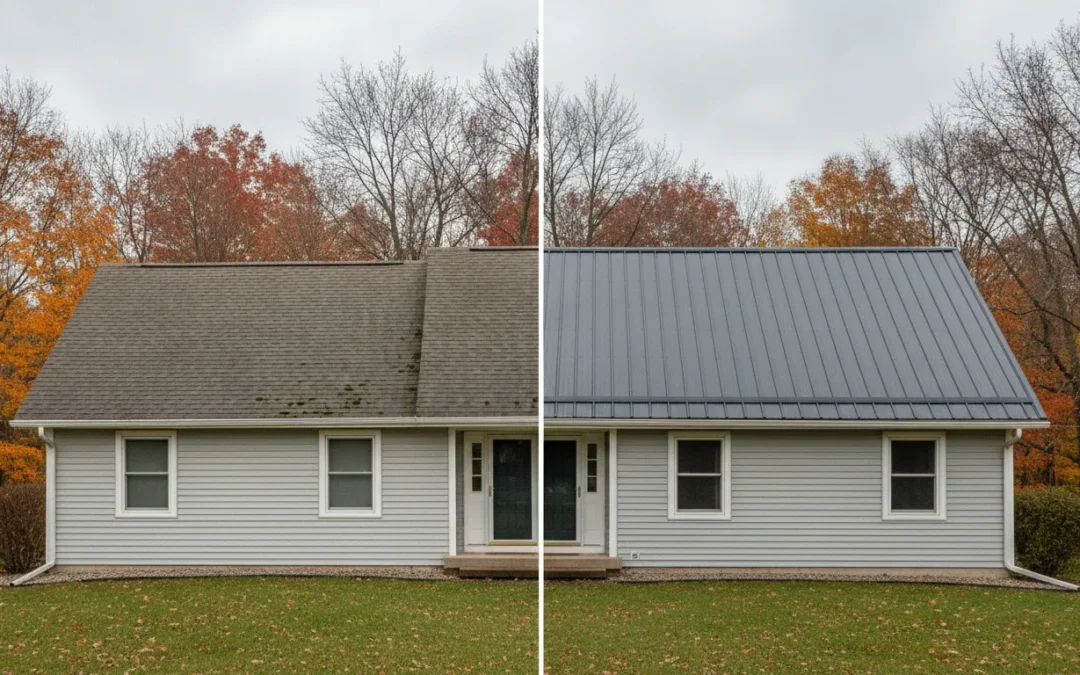
Michigan roofs have to handle more than a single season. Snow, freeze-thaw cycles, wind, hail, and summer heat can all influence how a roofing system performs and how often it needs attention. That makes the choice between asphalt shingles and metal more practical than cosmetic.
Schedule a free roofing consultation with Signature Home Pros for a no-pressure recommendation based on your home.
For most homeowners, asphalt shingles vs metal roofing michigan decisions come down to priorities: asphalt usually offers a lower starting cost and familiar styles, while metal can provide longer service life and strong snow-shedding performance. The right fit depends on your budget, roof design, ventilation, neighborhood, and long-term plans for the home.
Start with the financial side, but look beyond the installation invoice. Comparing upfront cost with expected service life, maintenance, and warranty coverage can clarify which option makes sense for your property. Our roof replacement in Michigan guide provides additional planning context before we examine the cost differences between these materials.
Asphalt Shingles vs. Metal Roofing in Michigan: Upfront Costs
For many Michigan families, the first practical question is how much the new roof will cost today. Asphalt shingles are generally the more cost-effective residential roofing material, which is why they remain a common choice for homeowners balancing a dependable roof with a defined project budget. Metal roofing typically requires a larger initial investment because both the materials and installation are more specialized.
| Consideration | Asphalt shingles | Metal roofing |
|---|---|---|
| Initial cost | Usually the more cost-effective residential option. | Often costs two to three times more upfront than traditional shingles. |
| Typical warranty range | Often 20 to 50 years, with coverage that may be prorated over time. | Often 30 to 50 years, with many premium warranties offering non-prorated coverage. |
| Long-term value | Lower entry cost and straightforward replacement when the roof reaches the end of its service life. | Higher investment that may be worthwhile for homeowners prioritizing longevity and fewer replacement cycles. |
The warranty details deserve a close look before you compare proposals. Asphalt shingle warranties commonly span 20 to 50 years, but prorated terms can reduce the manufacturer’s contribution as the roof ages. Metal roofing warranties also vary by product and finish. Compare the written terms, installation requirements, and exclusions before deciding. A professional installation that follows manufacturer specifications is essential for protecting available coverage.
Think beyond the installation invoice
A higher starting price does not automatically make metal the better choice, just as a lower starting price does not make asphalt the wrong choice. Metal may provide longer service life and, in some cases, a possible insurance discount when the roof has fire-resistant or impact-resistant characteristics. Any discount depends on your insurance provider and policy, so confirm eligibility before including it in your budget. Asphalt can make excellent sense when keeping the initial project cost manageable is the priority.
Michigan homeowners should compare the complete roofing system, not just the covering. Ask what underlayment, flashing, ventilation work, removal, and warranty terms are included. A clear proposal helps your family choose the material that fits both your home and your plans.
Sources: Forbes on asphalt and metal roofing costs and GAF warranty guidance.
Lifespan and Durability in Michigan Weather
Michigan roofs face more than one kind of weather. Snow loads, strong winds, summer sun, and repeated freeze-thaw cycles all test the materials and the installation beneath them. When comparing asphalt shingles with metal roofing, expected service life matters, but it is only one part of the decision.
Metal roofing generally offers the longer lifespan. With proper installation and maintenance, metal roofs can last about 40 to 70 years, while asphalt shingles commonly last about 15 to 30 years, according to industry lifespan comparisons. That difference can make metal attractive to a homeowner who plans to stay in the same house for decades and wants to reduce the likelihood of another full replacement.
How temperature changes affect each material
Michigan’s temperature swings put stress on every roof assembly. Metal panels are designed with clips or fasteners that accommodate thermal movement as the panels expand and contract. Correctly installed systems can manage those changes without placing unnecessary stress on the panels or fasteners. The details matter, so metal roofing should be installed by a crew familiar with the material and the manufacturer’s requirements. See our guide to roof replacement in Michigan for more of the planning decisions that affect long-term performance.
Asphalt shingles can also perform well in Michigan when the roof is properly designed and installed. Over time, however, sunlight and weather may cause shingles to fade and lose granules. Granule loss can change the roof’s appearance and may signal that the shingles are becoming more vulnerable to wear. Regular visual inspections help homeowners notice damaged, lifted, or aging shingles before a small issue becomes interior water damage.
The roof system beneath the surface
Material choice cannot compensate for a weak foundation. The condition of the roof deck and the quality of the ventilation system affect the lifespan of both asphalt and metal roofing. A sound deck provides a stable base, while balanced ventilation helps manage moisture and temperature in the attic. In other words, a durable roof starts with the complete assembly, not just the visible outer layer.
Both materials are recognized by the Michigan Residential Code, with roofing requirements addressed in Sections R901 through R909. A professional evaluation should account for the existing deck, ventilation, roof design, and applicable code requirements before recommending a replacement system.
Energy Efficiency in Cold Climates
In a Michigan winter, the roofing material is only one part of the energy-efficiency picture. Insulation, air sealing, and ventilation work together to help keep heated air inside, limit moisture, and protect the roof assembly through repeated freeze-thaw cycles. The Michigan Department of Environment, Great Lakes, and Energy notes that roof performance depends heavily on proper insulation and ventilation in harsh winter conditions. Learn more about roof insulation in Michigan.
That makes installation quality important for both asphalt shingles and metal roofing. A well-installed asphalt roof can perform efficiently when the attic has adequate insulation and a clear ventilation path. A metal roof does not automatically make a home warmer or lower every utility bill. If the attic is under-insulated or poorly ventilated, the home can still lose heat, and trapped moisture can contribute to roof damage and ice dams.
Metal can offer an efficiency advantage during warmer months. The U.S. Department of Energy explains that metal roofs can reflect solar radiant heat and may reduce cooling costs by 10% to 25%, depending on the roof, climate, insulation, and other building conditions. That benefit may matter to Michigan homeowners who want year-round performance, but it should be considered alongside winter insulation and ventilation needs rather than treated as a standalone solution. See our guide to the best roofing materials for Michigan for a broader comparison.
There is also an environmental consideration. Metal roofing products are often made with recycled content and can be recycled at the end of their service life. Asphalt shingles remain a practical choice for many homes, especially when the priority is a familiar material and a lower initial investment. Whichever surface you choose, ask your roofing professional to evaluate attic insulation, intake and exhaust ventilation, moisture control, and the roof design as a complete system.
Want a professional opinion on your roof assembly? Book a consultation with our central Michigan roofing team.
Noise, Aesthetics, and HOA Considerations
Your roof affects more than weather protection. It also influences how your home sounds during a storm, how it looks from the street, and whether it fits neighborhood design requirements.
How much noise should you expect?
Asphalt shingles are generally quieter than metal roofing during heavy rain or hail because their layered construction helps absorb sound. Metal can sound louder when installed over an open attic or solid deck without enough insulation. That difference is not automatic, though. Metal roofing systems installed with sound-dampening insulation and proper underlayment can significantly reduce sound transmission. If storm noise is a major concern for your family, ask the roofing contractor to explain the complete assembly, not just the visible material. Learn more about roofing noise differences.
Matching your home’s character
Asphalt shingles offer a broad selection of colors and styles. Homeowners can choose from straightforward 3-tab shingles to architectural dimensional designs, making it easier to coordinate with siding, brick, trim, and nearby homes. Metal roofing has also moved well beyond a single industrial look. Modern panels can mimic slate, tile, or shake while keeping the clean lines of a metal system. Review full-size samples in natural light before choosing, since color can look different beside your home’s existing exterior.
Weight, structure, and neighborhood rules
Metal roofing is generally lighter than an asphalt shingle assembly. That may reduce the load on a home’s framing, but a qualified professional still needs to evaluate the existing roof deck and structure before recommending an installation.
Finally, check your HOA or local architectural rules before selecting a color, profile, or material. Some communities regulate visible roof colors, reflective finishes, or styles that differ from surrounding homes. Confirm approval requirements early, then compare samples and written specifications with your contractor so your preferred roof meets both your home’s needs and the neighborhood’s standards.
Which Roofing Material Holds Up in Storm-Prone Areas?
Michigan weather tests a roof in several ways over the same year. Heavy snow can remain on the surface, freeze-thaw cycles can stress materials, and summer storms may bring high winds or hail. The better choice is not determined by the material alone. Roof slope, ventilation, underlayment, fastening, and professional installation all affect how the system performs when the weather turns severe.
Snow and ice dam considerations
Metal roofing has a smooth surface that allows snow to shed more readily. That can reduce the conditions that contribute to ice dam formation, which is a meaningful advantage for Michigan homes during snowy winters. Homeowners should also plan for where sliding snow will land, especially above entryways, walkways, and landscaping. Snow guards or other design details may be appropriate in certain locations.
Michigan roofing requirements generally call for ice barriers at roof eaves, but local permit guidance identifies exceptions for some metal-panel applications and unheated buildings. That does not mean every metal roof installation can skip ice protection. The roof design, building use, local authority, and manufacturer instructions still need to be reviewed before work begins. A qualified contractor can confirm what applies to your home.
If you are comparing metal roof panels, ask how the proposed system will manage snow release, eaves, valleys, penetrations, and areas where ice or runoff could affect people and property.
Wind and hail after a Michigan storm
Asphalt shingles are not automatically a poor choice for windy areas. Wind-related shingle damage is often preventable when the installer follows the required nail count and allows the sealant to activate properly. Manufacturer instructions matter here, so an installation that looks acceptable from the ground may still have details worth verifying before the next storm.
After severe weather, asphalt roofs should be inspected for lifted or missing shingles, wind uplift, hail impact, and exposed areas where granules have been lost. Prompt attention can help identify damage before moisture reaches the roof deck. Metal panels also require a careful inspection of seams, fasteners, flashing, and penetrations after major weather events; durability does not eliminate the need for maintenance.
Permits and fire-rating requirements
Local Michigan building authorities may require roofing materials to meet specific fire-rating standards. Permit requirements can vary by location, so do not select a product based only on a brochure or a storm-resistance label. Your contractor should verify the applicable code, use approved materials, and install them according to both the permit and manufacturer requirements.
For a storm-prone home, the strongest roof is a complete, correctly installed system. Metal may offer advantages for snow shedding, while properly installed asphalt can provide dependable wind performance with a familiar maintenance plan.
Our Recommendation for Michigan Homeowners
There is no single roofing material that makes sense for every Michigan home. The right choice depends on how long you expect to stay, what your budget allows today, and which combination of appearance, maintenance, and long-term durability matters most to your family.
Choose asphalt when affordability and curb appeal lead the decision
For most homeowners, asphalt shingles are the practical starting point. They remain the most common roofing choice in Michigan because they offer an affordable balance of performance and appearance. Asphalt also comes in a broad range of colors and styles, making it easier to complement an existing home exterior or update its curb appeal without changing the character of the house. The initial installation cost is generally lower than metal, which can make asphalt the better fit when you need dependable protection while keeping room in the budget for other home improvements.
That does not make asphalt a lesser roof. A properly selected shingle system, installed with careful attention to ventilation, flashing, and weather protection, can serve a Michigan home well. If you are comparing all the options for your property, our guide to the best roofing materials for Michigan can help you think through the broader decision.
Choose metal when long-term ownership is the priority
Metal deserves serious consideration for homeowners who plan to remain in their home for decades and want to prioritize lifetime durability. Metal roofing can last approximately 40 to 70 years, compared with roughly 15 to 30 years for asphalt shingles, according to Angi’s roofing comparison. That extended service life comes with a tradeoff: metal typically carries a much higher upfront cost, often around two to three times the initial price of traditional shingles.
Metal installation also requires specialized tools and experience. The panels, fasteners, trim, and movement allowances must work together, so choosing an installer familiar with metal systems is essential. Paying for the right expertise matters just as much as selecting the material.
Whichever material you choose, prioritize the installer
At Signature Home Pros, we help families compare both options without pressure. We are a family-owned central Michigan company, and our team offers both asphalt shingle and metal roofing through our roofing services. Our CertainTeed SELECT ShingleMaster certification reflects our commitment to trained, careful installation for shingle systems, while our experienced team can help you evaluate whether metal is appropriate for your home.
Consider your timeline, budget, and long-term plans, then get a clear recommendation based on your actual roof. If financing would make a quality replacement more manageable, ask our team about no-interest, no-payments-until-2027 financing before making a decision.
Get a free, no-pressure roofing consultation to compare the right system for your Michigan home.
Frequently Asked Questions
Is metal roofing better than asphalt shingles for Michigan winters?
Neither material is best for every home. Metal roofing sheds snow effectively and can offer a longer service life, while asphalt shingles usually provide a lower initial cost and broad style selection. The better choice depends on your budget, roof design, ventilation, insulation, and priorities for longevity. Proper installation matters as much as the material in Michigan’s snow, wind, and freeze-thaw conditions.
How long do metal roofs and asphalt shingle roofs last?
Metal roofing commonly lasts about 40 to 70 years, while asphalt shingles typically last about 15 to 30 years, according to Angi’s comparison of the two materials: roofing lifespan guidance. Actual performance depends on product quality, installation, ventilation, maintenance, and exposure to severe weather.
Which costs more, asphalt shingles or metal roofing in Michigan?
Asphalt shingles generally cost less to install. Metal roofing can cost roughly two to three times as much upfront, although its longer service life may change the long-term value calculation, according to Forbes: cost comparison guidance. A contractor should evaluate your roof and provide a project-specific estimate rather than relying on a broad material average.
Will a metal roof be noisy during Michigan rain or hail?
Metal can transmit more storm sound than asphalt shingles, but underlayment, insulation, and the home’s roof assembly can significantly reduce noise. If a quieter interior is a priority, discuss the assembly details before choosing a material. The finished result depends on more than the exposed roof surface.
Ready to Choose the Right Roof for Your Michigan Home?
The best roofing material depends on your home’s condition, design, and priorities for long-term performance. A professional review can help you compare asphalt shingles and metal roofing with those factors in mind. To discuss your options, schedule a free roofing consultation with Signature Home Pros. We will answer your questions, explain the next steps, and help you make a confident decision without pressure.
Recent Comments