
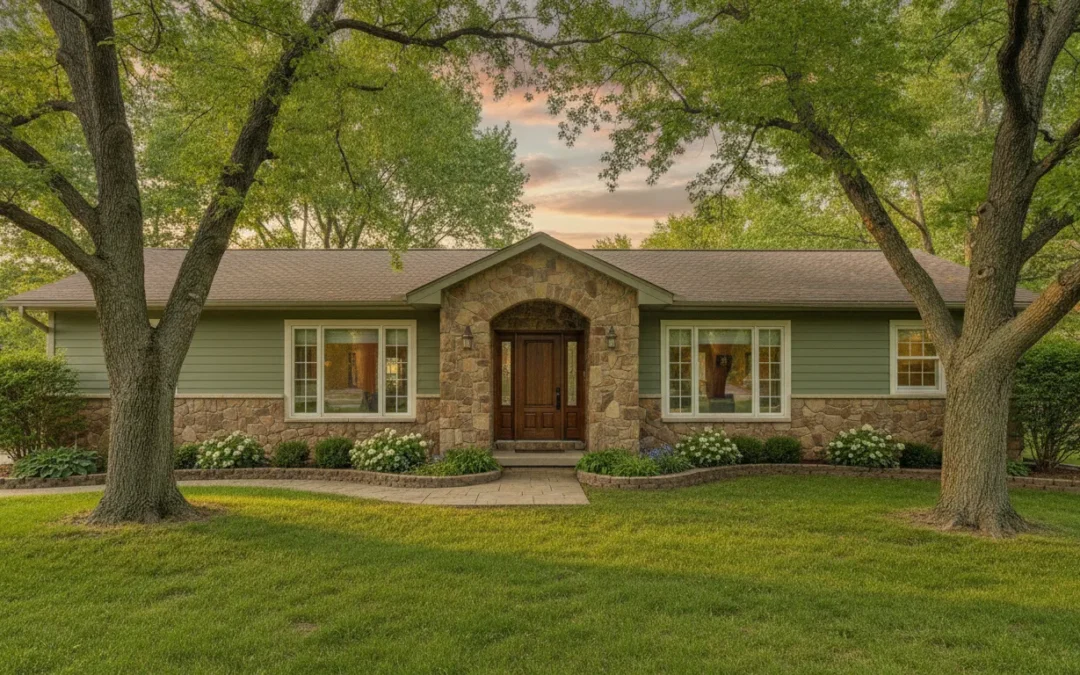
Stone can change the character of an entry, porch, or siding wall, but the word veneer describes more than a decorative finish. It also points to how the material is attached and how the wall behind it manages moisture.
Exterior stone veneer Michigan homeowners choose is a stone facing secured to a supporting surface rather than a full structural stone wall. The system may be installed over concrete, masonry, or framed walls, so the backing, drainage details, and workmanship all matter as much as the visible stone. The North Carolina Department of Insurance explains the basic adhered masonry veneer definition and the range of possible substrates in its technical guidance: adhered masonry veneer guidance.
That distinction makes it easier to compare materials and ask better installation questions. Start with the system itself, then consider how it fits your home’s existing walls and exterior design.
What Is Exterior Stone Veneer?
Exterior stone veneer is a finish layer that gives a home the appearance and character of stone without making the veneer itself the primary structural wall. In many residential projects, the stone is selected for the visible exterior surface while the wall behind it provides the underlying support.
One common system is called adhered masonry veneer. The North Carolina Department of Insurance definition of adhered masonry veneer describes it as a facing material secured to a backing material by adhesive bonding. In practical terms, the installer prepares the wall, applies the appropriate mortar or bonding materials, and sets the veneer pieces as the exterior finish.
That differs from full structural masonry, where the masonry wall is designed as a primary load-bearing part of the building. Veneer is instead one component of a larger wall assembly. This distinction matters because the condition of the backing, the transitions around openings. And the details at the base and top of the wall all affect how the finished surface performs.
What can stone veneer be installed over?
Adhered masonry veneer can be applied over several types of backing. The NC source identifies cast-in-place concrete, concrete masonry, wood-stud walls with various sheathing materials, and metal-stud walls with various sheathing materials as possible substrates. The right preparation depends on the existing wall and the selected veneer system, so a contractor should inspect the surface before recommending an installation approach.
Manufactured stone veneer is one example of this approach. The Concrete Masonry and Hardscapes Association guide to manufactured stone veneer emphasizes that proper performance depends on proper detailing and construction. That includes treating the veneer as part of the complete exterior assembly, not as a decorative layer that can be attached without planning.
If you are considering a new stone accent along with drainage improvements, see this guide to stone veneer exterior upgrades. Looking at the wall, roof runoff, and surrounding finishes together can help you plan a more cohesive exterior project.
How Does Exterior Stone Veneer in Michigan Handle Weather?
Michigan homeowners often prioritize weather-resistant materials because the climate can be hard on exterior surfaces. With stone veneer, the important question is not simply whether the finish looks substantial. The wall assembly behind it, the way water is managed, and the quality of installation all deserve attention before work begins.
Plan for moisture, not just the visible finish
Stone veneer is part of an exterior wall system. The goal is to keep water from moving into vulnerable parts of the wall while allowing the assembly to manage moisture appropriately. A North Carolina Office of the State Fire Marshal evaluation explains that building-envelope requirements intend for the envelope to be water resistant. And it notes that observed water-penetration problems with exterior adhered masonry veneer were primarily associated with installation issues. The regional source is not a Michigan code guide. But its moisture-management lesson is broadly useful when reviewing an installation plan: the veneer should not be treated as the only layer responsible for keeping a home dry.
The same evaluation found that most observed water-penetration damage involved wood-frame and metal-stud structures. That does not mean every wood or metal-framed home is unsuitable for veneer. It does mean the existing wall condition, backing, transitions, and drainage details should be discussed rather than assumed. Read the full technical discussion from the North Carolina Office of the State Fire Marshal for context.
Installation details matter through changing seasons
Michigan’s changing weather makes careful planning especially important, but a responsible contractor should avoid promising a universal freeze-thaw result without reviewing the specific product and wall. The Concrete Masonry and Hardscapes Association guide emphasizes that proper performance depends on proper detailing and construction. It also addresses materials, construction best practices, building-code requirements, and specific details for situations encountered during construction.
Ask how the contractor will evaluate the substrate, handle openings and joints, transition between veneer and other cladding, and follow the selected manufacturer’s installation requirements. Ask which documents will guide the work and how local requirements will be addressed. Signature Home Pros documents a practice of following manufacturer specifications and local building codes. Homeowners can also review the CMHA manufactured stone veneer guide to understand why those details deserve a place in the conversation.
Questions to ask before choosing a contractor
- What moisture-management details are planned behind and around the veneer?
- What condition is the existing wall in, and what repairs could affect the scope?
- How will the veneer meet siding, windows, doors, roof edges, and other materials?
- Which manufacturer instructions and local requirements will guide installation?
- Can the project plan be reviewed before materials are ordered?
If your design combines stone with another cladding, review the company’s siding installation in Michigan service information as you compare the transition details and overall exterior plan.
Natural Stone vs. Manufactured Stone Veneer: What’s the Difference?
Both options can create a convincing masonry look, but they give you different starting points for design and installation planning. Natural stone brings the variation of quarried material. Manufactured stone veneer is a designed veneer system with its own profiles, colors, and installation requirements. The right choice depends less on a simple “better” label and more on the character you want, the wall being covered, and the details your installer must coordinate.
| Decision point | Natural stone | Manufactured stone veneer |
|---|---|---|
| Material character | Quarried stone with natural variation in geology, color, texture, and piece size. | A manufactured veneer system selected by its available profiles, colors, textures, and installation details. |
| Format and weight | Piece sizes can vary widely. Quarry Mill describes common heights of 2.25, 5, and 7.75 inches, with larger pieces ranging from 4 to 12 inches. | Thin veneer is one example of a lighter veneer format. Stone Mill describes most of its blends at 10 to 14 pounds per square foot. |
| Design flexibility | Natural options include ashlar, ledgestone, fieldledge, castle rock, cobblestone, dimensional, and mosaic styles. | Profiles and blends can provide a more controlled, repeatable appearance while still offering varied patterns and textures. |
| Planning questions | Confirm the stone format, piece sizes, wall layout, corners, transitions, and the installation method before ordering. | Confirm manufacturer instructions, substrate preparation, flashing and drainage details, and how the selected system will meet local requirements. |
| Maintenance questions | Ask how the chosen stone should be cleaned and inspected, especially around joints, transitions, and areas exposed to moisture. | Ask how the selected veneer should be cleaned, what to inspect after severe weather, and which repairs or products the manufacturer allows. |
Natural stone is not limited to one appearance. Stone Mill lists dolomite limestone, Soo Lock sandstone, Michigan granites, and basalts among its geologies, along with ashlar, ledge, field ledge, castle, and cobble cuts. Those choices can help you match an existing home’s scale or create contrast at an entry, gable, or accent wall. See more examples of natural stone styles and piece formats before settling on a sample.
Manufactured veneer can be useful when you want a defined profile or a coordinated blend. That does not remove the need for careful planning. The CMHA installation guide emphasizes proper materials, construction best practices, building-code requirements, and detailing for adhered manufactured stone veneer systems. Quarry Mill also describes drystacking as a tight-fit, mortarless installation and notes that custom sizes may be used when that look is desired.
Whichever material you choose, review samples outdoors and look at the full wall plan, not just one piece. Ask how corners, windows, doors, siding, and drainage details will be handled. A well-matched material still needs a well-planned installation.
Which Stone Veneer Styles and Applications Fit Michigan Homes?
Stone veneer style affects the character of an exterior as much as the color does. A few documented cut and style examples can help you describe the look you want before reviewing samples. Ashlar uses more regular, shaped pieces for a tailored appearance. Ledge and ledgestone emphasize narrower courses and horizontal movement. Field ledge and fieldstone tend to create a more varied, natural pattern, while castle or castle rock can give an exterior a heavier, more rugged presence. Cobble and cobblestone offer a rounded, traditional feel. Mosaic is another documented style option for a more varied arrangement. These examples appear across stone industry style and cut listings from Stone Mill and Quarry Mill.
Those styles do not have to cover an entire facade. Stone veneer can create a focused accent around an entry, porch columns, a chimney, a garage face, a gable, or the lower portion of a front elevation. A smaller application may be the right way to add visual weight without making every exterior surface compete for attention. The best placement depends on the home’s existing proportions, rooflines, windows, and other materials.
Planning a clean transition with siding
When veneer meets siding, treat the two materials as parts of one exterior composition. Compare the stone’s color range and pattern with the siding color, trim, roofing, and visible foundation. A busier stone pattern may work best as a contained accent, while a quieter ledge or ashlar look can support a broader application. Pay attention to where the transition begins and ends, especially around corners, windows, and changes in wall depth. The goal is an intentional line, not an abrupt interruption.
Reviewing Michigan siding material options can help you compare siding character alongside the veneer choice. Product listings also show how naming varies: QR Stone, for example, documents options such as Rustic Ledgestone, Country Ledgestone, Cobblestone, Dressed Fieldstone, Fieldstone, and Split Face at its product page. Use those names as examples to guide a sample review, not as a substitute for confirming the exact product, color, and availability for your home.
What Does StoneCraft Industries Offer for Exterior Projects?
When you are comparing options for an exterior stone project, the product conversation should be as specific as the design conversation. Signature Home Pros’ documented manufacturer partnerships include StoneCraft Industries. That partnership is a starting point for reviewing available materials with the contractor. Not a reason to assume that every StoneCraft product, finish, color, certification, warranty, or technical specification is part of your project.
Ask to see the actual product information for the stone being considered. The useful questions are practical: Which collection or profile is being proposed? Is the material intended for this exterior application? What color variation should you expect? How will the selected stone meet the home’s existing siding, trim, windows, doors, and foundation? The contractor should identify the product and explain the installation plan. Ask how it will follow manufacturer specifications and local building codes.
That last point matters because stone is part of the building exterior, not an isolated decoration. Signature Home Pros documents a practice of following manufacturer specifications and local building codes. Product selection, substrate preparation, detailing, transitions, and installation should be considered together. If the wall condition or the connection to another material needs attention, those questions should be addressed before the project begins rather than after the stone is installed.
Stone installation is one of Signature Home Pros’ five primary exterior renovation categories. That broader scope can be useful when a homeowner is planning more than one improvement. Stone accents may need to coordinate with siding, roofing, gutters, windows, or doors so the finished exterior looks intentional and the work is sequenced sensibly. Review the company’s stone veneer installation service information, then use a consultation to discuss the exact material and application for your home.
Is Stone Veneer Installation Right for Your Home?
Stone veneer can be a strong fit when you want to add definition to an entry. Refresh a plain exterior wall, or coordinate several improvements into one larger plan. The right choice depends less on appearance alone and more on the condition of the wall. The moisture-management details, and how the new stone will meet the rest of the exterior.
Use this checklist to organize your decision before you approve a design or request an estimate:
- Define the project goal. Decide whether you want a focused accent, such as an entry surround or gable, or a broader exterior update. A clear goal helps keep the stone proportional to the home and makes it easier to coordinate with roofing, siding, gutters, windows, or doors. If several upgrades are under consideration, learn how to coordinate exterior projects before setting the scope.
- Review the wall condition. Ask the contractor to inspect the existing surface, sheathing where applicable, trim, corners, and attachment areas. Adhered masonry veneer may be used over several substrate types, but the suitable preparation depends on the actual wall assembly. Proper performance depends on proper detailing and construction, as the CMHA installation guide explains.
- Clarify moisture details. Ask how water will be managed at windows, doors, roof intersections, wall bottoms, and other transitions. Ask which materials and construction practices apply to your wall, and how local code requirements will be addressed. The CMHA guide specifically covers materials, construction best practices, and building-code requirements.
- Choose the material and style together. Compare the stone’s color, texture, piece shape, and joint appearance against your siding, roof, trim, and surrounding landscape. Request physical samples or a clear design rendering when possible. A style that looks appealing by itself may not create the balance you want across the full elevation.
- Plan transitions before installation. Identify where stone ends and siding, masonry, trim, or another finish begins. Discuss corners, control or movement areas where relevant, window edges, and the base of the wall. These details should be part of the design conversation, not a last-minute field decision.
- Ask focused contractor questions. Confirm who will inspect the substrate, which manufacturer instructions will guide the work, how code requirements will be handled, and how the crew will communicate changes. Signature Home Pros documents a practice of following manufacturer specifications and local building codes.
- Review the estimate for clarity. Make sure the proposed work identifies preparation, materials, transitions, cleanup, schedule expectations, and any items that are excluded. Homeowners in Genesee, Shiawassee, Livingston, Saginaw, and Oakland counties can request a free, no-pressure estimate and discuss the project before committing to a scope.
A thoughtful review gives you a better basis for deciding whether stone veneer belongs on your home now, later, or as part of a coordinated exterior plan.
Frequently Asked Questions
Is stone veneer a good choice for a Michigan home’s exterior?
It can be a practical choice when the design, wall condition, moisture management, and installation details are planned together. Adhered masonry veneer is a facing secured to a backing material, and it can be installed over several substrate types, including concrete, masonry, wood-stud walls, and metal-stud walls. The right system depends on the existing wall and the manufacturer’s requirements. North Carolina guidance on adhered masonry veneer explains the basic system and substrate considerations.
What are the downsides of exterior stone veneer?
The main concerns are not simply the stone’s appearance. Poor detailing or construction can contribute to moisture problems, especially on framed walls, so the installer must address the water-resistive envelope, transitions, and drainage details. The project also requires careful color, pattern, and edge planning so the veneer works with siding, trim, windows, and doors. Ask how the wall will be prepared and how vulnerable joints and transitions will be handled.
How much does exterior stone veneer installation cost?
There is no responsible single price without reviewing the project. The total depends on the veneer material, the area being covered, wall preparation, substrate condition. Access, corners and openings, removal work, and how the veneer transitions to other exterior materials. A site-specific estimate is more useful than a broad online number because it accounts for the home’s actual conditions and the selected design.
What should I ask a contractor before installation?
Ask which veneer system is proposed, whether the existing substrate is suitable, how moisture will be managed. Which manufacturer instructions and local building-code requirements apply, and how the finished work will meet siding, roof, window, and door details. Also request a written scope that identifies preparation, materials, transitions, cleanup, and project communication. Proper performance depends on proper detailing and construction, according to the Concrete and Masonry Hardscape Association installation guide.
Ready to Explore a Stone Veneer Project?
A thoughtful conversation can help you compare veneer options, plan the transition with your existing exterior, and identify the right next steps for your home. If you are considering stone veneer or a broader exterior project, call Signature Home Pros at (810) 270-5922 to discuss your ideas and request a free, no-pressure estimate.
Recent Comments