
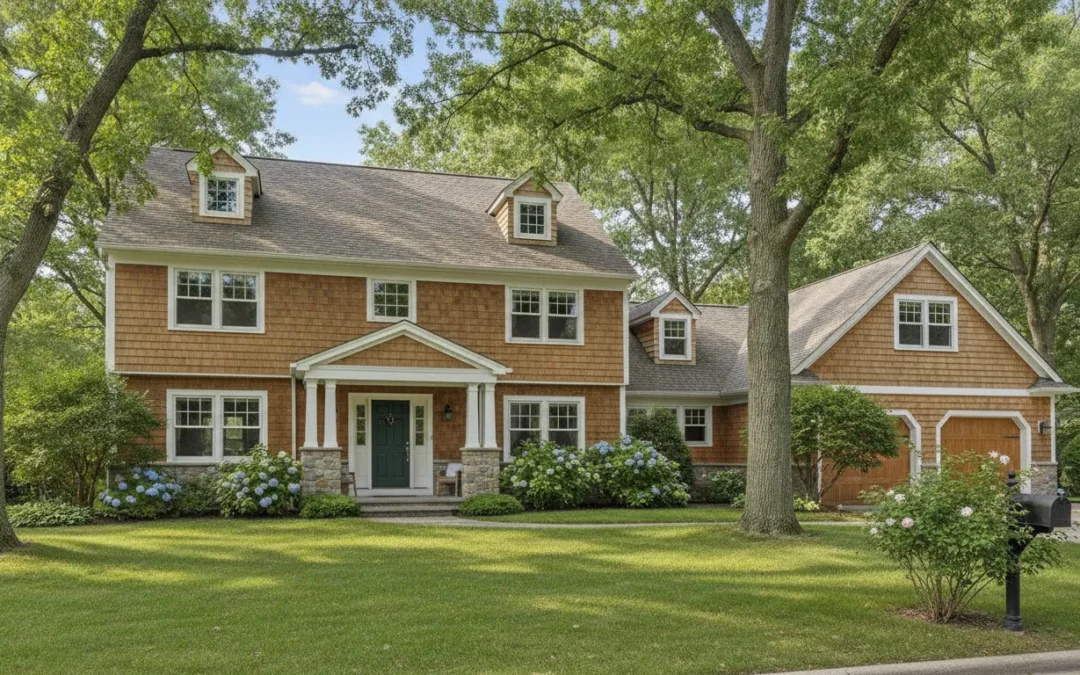
Cedar shake siding Michigan homeowners consider can add natural texture, warmth, and character to an exterior. It also deserves a careful plan for rain, snow, shade, drainage, finish care, and freeze-thaw weather. This guide explains where cedar makes sense, what shapes project cost, how to protect it, and when another siding material may fit better.
Schedule a free siding estimate with Signature Home Pros.
For broader material, energy, and project-planning context, review the Michigan siding, windows, and doors guide. The sections below focus on cedar shake and the conditions that influence its performance.
What Is Cedar Shake Siding?
Cedar shake siding is a natural wood exterior installed in overlapping courses. Cedar shake siding gives Michigan homes a textured, handcrafted appearance that can suit traditional, cottage, woodland, and historic-inspired designs. The finished look depends on the wood, layout, trim, finish, wall exposure, and the way the siding connects to the rest of the exterior.
Shakes and shingles are related, but they do not always look identical. Shingles are generally flatter and more uniform. Shakes tend to show more texture and natural variation. Product names can vary by manufacturer, so look at full-size samples and completed projects rather than choosing from a small color card alone.
Where cedar adds design value
Cedar shake can cover an entire exterior or create an accent on a front-facing gable, dormer, porch, or upper story. Selective use can make a premium focal point while siding, stone, roofing, windows, doors, and trim balance the design. The goal is a coordinated exterior, not simply a material placed on one wall.
Natural variation is part of cedar’s appeal. The material should still be evaluated as a complete wall system. Drainage details, fasteners, clearances, flashing, trim, airflow, and protective coating matter as much as visible grain. A design review that ignores those details can look good at installation and create avoidable maintenance problems later.
Can Cedar Shake Work in Michigan?
Cedar shake siding can work in Michigan when the installation sheds water, allows the wood to dry, and includes a realistic inspection and finish plan. Michigan weather alone does not rule cedar out. Persistent dampness, poor clearances, failed flashing, heavy shade, blocked drainage, and neglected maintenance are the larger concerns for a Michigan home.
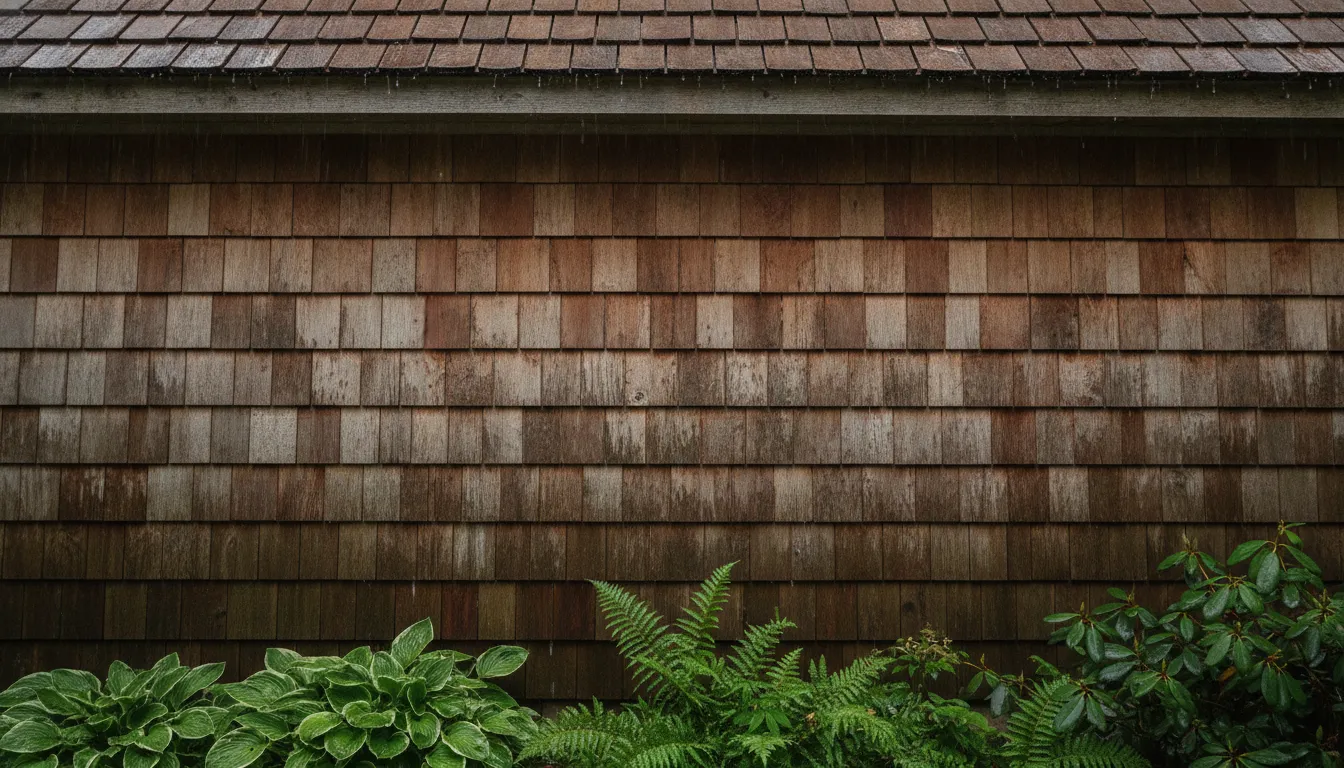
Rain and snow make water management central to cedar installation. The U.S. Department of Agriculture Forest Service wood protection research explains why exterior wood performs better when it is protected from persistent moisture and kept clear of ground contact. That principle applies to material selection, wall detailing, and ongoing inspections.
Cedar should not sit directly on the ground or remain pressed against wet snow. Maintain practical clearance around foundations, decks, steps, roof lines, and areas exposed to splashback. Gutters and downspouts also matter. If roof runoff lands on a wall repeatedly, even attractive siding can face unnecessary moisture stress.
Exposure varies from one wall to another. A sunny wall with good airflow may dry more quickly than a shaded north-facing wall beneath mature trees. A wall-by-wall review is more useful than a blanket statement that cedar is either always suitable or never suitable for Michigan.
Moisture control deserves a site-specific review
Look for soft or discolored wood, peeling finish, gaps around trim, blocked drainage paths, and recurring biological growth. Repeated dampness deserves attention even when the field siding still looks attractive. A qualified contractor should investigate the source instead of covering a moisture problem with new stain.
Cedar may be a poor fit for a persistently damp wall, a property where lower courses are difficult to inspect, or a homeowner seeking a nearly hands-off exterior. A site review can identify whether drainage work, selective cedar use, or another material would better protect the house.
What Shapes Cedar Shake Siding Michigan Cost?
Cedar shake siding Michigan project cost depends on the house, existing wall, installation detail, and finish system. Cedar can require more preparation and detail work than a simpler panel system. A useful written estimate separates removal, repairs, siding, trim, flashing, finish, labor, access, and disposal instead of presenting one unexplained total.
A generic online price is rarely useful for a cedar project. The amount of siding is affected by wall height, gables, dormers, porches, additions, garages, and window openings. Corners, transitions, vents, and custom trim add layout and cutting time. Access, staging, landscaping, and the condition of the existing wall can change the work as well.
Existing conditions can change the project
Removing old siding may reveal damaged sheathing, soft areas, moisture intrusion, uneven framing, or outdated flashing. Address those conditions before new shakes cover the wall. Steep grades, tight side yards, landscaping, porches, and taller elevations can also affect material handling and crew access.
Finish selection affects both initial scope and future care. Ask what preparation is included, which surfaces receive finish, how exposed edges will be handled, and what inspection routine the selected system requires. The lowest estimate may not represent the lowest ownership burden if it excludes preparation or leaves water-management details unclear.
Before comparing proposals, ask each contractor to walk through the estimate in the same order:
- Base scope: Confirm siding area, profile, material, trim, finish, and installation details.
- Existing conditions: Identify removal, disposal, sheathing repairs, flashing updates, and allowances.
- Protection and cleanup: Ask how landscaping, windows, doors, and walkways will be protected.
- Future care: Confirm inspection and finish maintenance for the selected system.
Signature Home Pros does not use a one-size-fits-all price promise for exterior work. A free inspection and estimate can connect the material decision to the home’s condition and desired appearance. Compare written scopes, not just the first number on a proposal.
Review siding options with a local exterior renovation team.
How Much Maintenance Does Cedar Shake Siding Need?
Cedar shake siding needs routine inspections, gentle cleaning, finish monitoring, and prompt moisture repairs. In Michigan, check it in spring and fall, after severe weather, and around lower courses, shaded walls, joints, flashing, gutters, doors, and windows. The right schedule depends on exposure and the finish system.
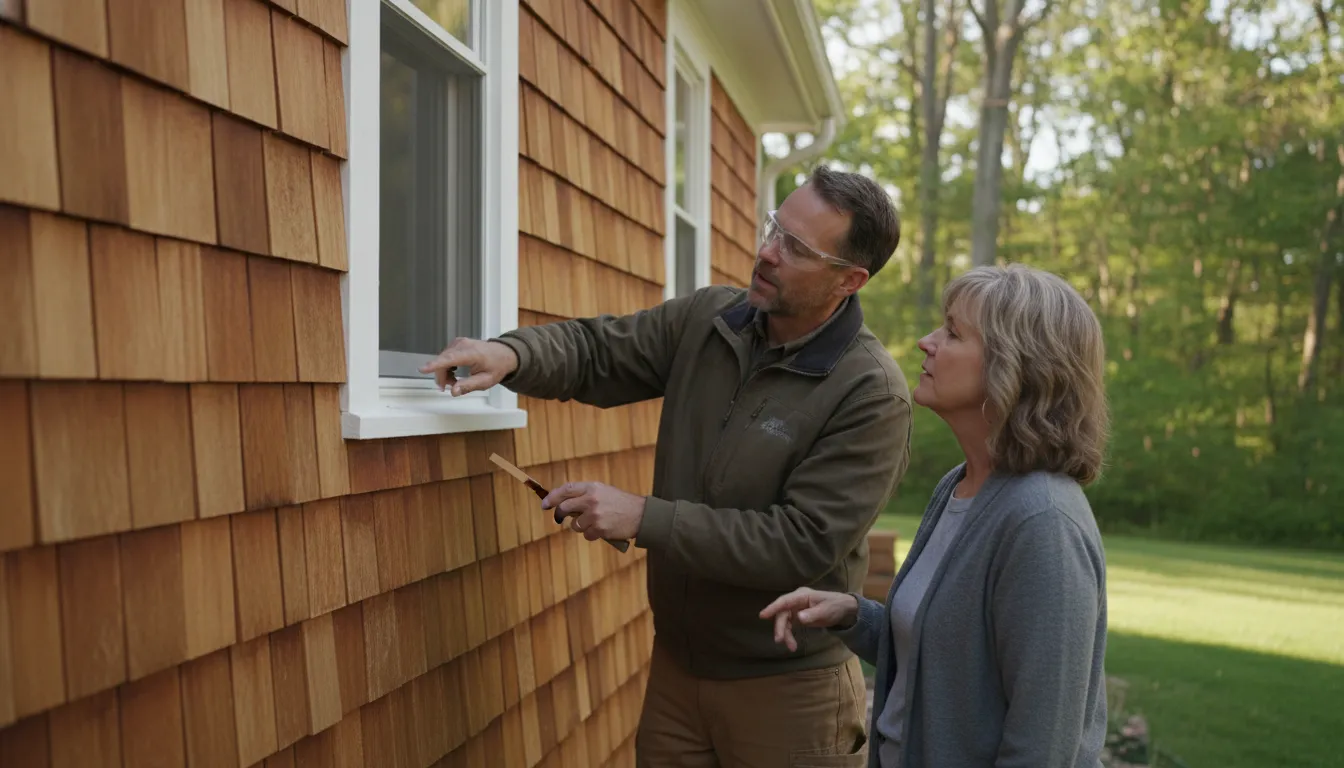
- Inspect twice a year. Look for soft wood, cracking, swelling, discoloration, loose pieces, failed sealant, and finish wear.
- Keep water moving away. Clear gutters and downspouts, correct splashback, keep sprinklers off the wall, and preserve airflow.
- Clean gently. Remove leaves and dirt without aggressive pressure washing that can damage wood or drive water behind siding.
- Monitor the finish. Peeling, fading, chalking, bare areas, and cracks can signal that a coating needs attention.
- Check transitions. Inspect window and door trim, roof-to-wall areas, vents, corners, decks, steps, and utility penetrations.
- Address damage early. Soft shakes, recurring stains, loose courses, interior water marks, or returning decay call for a moisture investigation.
Maintenance is easier when access is safe and the routine is documented. Keep records of inspections, repairs, and finish work so changes are easier to spot. The goal is not to eliminate every weather effect. It is to prevent trapped water and repair small failures before they spread.
Plan a closer review when the finish changes quickly, a lower course stays damp, or a gutter repeatedly overflows. Those signs can reveal a drainage or flashing issue before it affects more siding. If a repair requires unsafe ladder work or exposes hidden damage, bring in a professional rather than guessing.
Cedar Shake vs. Engineered Wood: Which Is Better?
Cedar offers genuine wood character, while engineered wood offers a more consistent manufactured profile. Cedar shake siding suits homeowners who value natural variation and accept finish care. Engineered wood suits homeowners who prefer a predictable appearance and a different maintenance routine. Neither material is maintenance-free, and both depend on proper installation.
Cedar shake and engineered wood siding compared
Appearance
Cedar shake: Natural grain, color variation, and pronounced texture.
Engineered wood: Consistent profiles and wood-inspired finishes.
Moisture planning
Cedar shake: Requires careful drainage, clearances, airflow, and finish protection.
Engineered wood: Still depends on sound flashing, joints, edges, and water management.
Maintenance
Cedar shake: Inspect wood, finish, biological growth, and vulnerable details regularly.
Engineered wood: Inspect, clean, and repair according to product requirements.
Repairs
Cedar shake: Individual shakes can be replaced, but matching texture and finish may take care.
Engineered wood: Replacement methods and visual matching vary by product.
Project fit
Cedar shake: Useful when natural character is a priority.
Engineered wood: Useful when consistency and a wood-like appearance matter.
The right choice depends on exposure, architecture, wall condition, access, maintenance expectations, and the complete installation scope. A material can be attractive but still be a poor fit for a wall that stays damp or cannot be safely inspected. Use the Signature Home Pros siding service page as a starting point for comparing exterior options.
How cedar fits a complete exterior plan
Siding rarely stands alone. Roof runoff, gutters, windows, doors, trim, and grade all affect the wall below. If runoff from a roof edge is affecting the siding, the right solution may involve connected exterior details rather than a siding-only change.
Signature Home Pros handles siding alongside roofing, gutters, windows and doors, and stone installation. That single-source approach can simplify a project involving several exterior surfaces while keeping the recommendation grounded in the home’s actual condition.
Questions to ask during a consultation
Ask whether the existing wall needs repair, how the installation will manage water, where clearances will be maintained, and how trim will be integrated. Ask which finish is proposed and what signs indicate that it needs renewal. Also ask how the crew handles individual damaged shakes in the future, including matching, access, flashing, and the point at which repair becomes replacement.
Is Cedar Shake Right for Your Michigan Home?
Cedar shake siding is worth considering when natural texture is a priority and the home can support disciplined moisture management. It may fit traditional or nature-inspired architecture. It may be less suitable when the wall stays damp, access is difficult, or the homeowner wants minimal finish work. A site-specific review should guide the final decision.
Before selecting cedar, review five practical questions:
- Review exposure. Identify the walls that receive the most rain, snow, sun, and wind.
- Check drainage. Confirm that gutters, downspouts, flashing, grade, decks, and roof edges direct water away.
- Assess condition. Determine whether the existing wall needs sheathing, flashing, or moisture repairs first.
- Confirm appearance. Decide whether natural variation supports the home’s architecture and the look you want.
- Plan upkeep. Make sure you can inspect the siding and renew its finish when needed.
There is no universal yes or no. A site-specific recommendation should explain why cedar, engineered wood, vinyl, or another option fits the property. Signature Home Pros is a family-owned exterior renovation company serving central Michigan with a no-pressure approach. Its team can discuss siding alongside roofing, gutters, windows, doors, and other exterior details.
Contact Signature Home Pros for a clear siding plan.
Frequently Asked Questions
How much does cedar shake siding cost?
Cedar shake siding often has a higher initial investment than vinyl because preparation and detail work can be more involved. The final scope depends on wall area, removal, access, sheathing, trim, flashing, finish, and labor. A project-specific estimate is more useful than a generic online range.
What are the disadvantages of cedar shakes?
The main tradeoffs are higher upfront investment, more maintenance, and sensitivity to prolonged moisture. Heavy shade, poor drainage, snow, failed flashing, and difficult access can make ownership more demanding. Cedar is not a set-it-and-forget-it material, so the finish and wall details need regular attention.
Are cedar shakes good for siding in Michigan?
They can fit homeowners who value natural texture and accept regular inspections and finish care. Michigan weather makes drainage, clearances, flashing, airflow, and prompt repairs important. Cedar should not have direct ground contact or recurring dampness, and each wall should be evaluated on its exposure.
How long does cedar shake siding last?
No single lifespan applies to every cedar shake installation. Service life depends on wood quality, detailing, exposure, ventilation, moisture control, installation, finish, and maintenance. Ask how the system will shed water, how it will be inspected, and which repairs or refinishing it may require.
Schedule a no-pressure consultation about your Michigan home’s siding.
Recent Comments