
Siding replacement is a major exterior project, and good planning starts before you choose a color or set a start date. Michigan homeowners can make the process easier by defining the problem, comparing complete scopes of work, and confirming details that affect the home and schedule. This guide focuses on how to plan the decision and compare proposals, not on assuming every house needs the same product or scope.
For an overview of the company’s siding service, visit Signature Home Pros siding installation in Michigan. The steps below help you prepare, evaluate proposals, and keep the project decision clear.
How can you tell whether siding replacement is the right next step?
Start with the symptoms you can see, but do not treat one symptom as a complete diagnosis. Loose or damaged panels, recurring maintenance, visible deterioration, or moisture concerns may lead a homeowner to consider replacement. The cause and extent matter. A localized issue may call for a different response than widespread wear, and appearance alone does not tell you what is happening behind the siding.
Make a short record before requesting an assessment. Note which elevations or areas look different, photograph damage, gaps, stains, or changes over time, and write down when you first noticed the issue. Add any repairs already made and what you hope to improve, such as appearance, upkeep, or investigating a specific concern. These notes help you explain your priorities and encourage each contractor to assess the same areas.
For example, imagine that one wall has a few visibly loose panels while the rest of the exterior appears intact. A useful assessment should explain whether the issue seems limited or whether there are reasons to examine a broader area. In another case, if several walls show deterioration and you have needed repeated repairs, ask what observations support a full replacement recommendation. The goal is not to diagnose the house yourself. It is to understand the evidence and the proposed response.
Do not remove siding or try to inspect concealed areas yourself just to prepare for an estimate. Ask the professional to explain what can be observed and what cannot be confirmed without further investigation. If moisture is a concern, be specific about where and when you noticed it, and ask what the assessment can establish. A clear distinction between visible facts and unknown conditions prevents assumptions from becoming part of the plan.
What should you decide before requesting estimates?
Define the project in plain language. Are you considering all exterior walls, one side of the house, or a limited repair? Are you looking for a change in appearance, or responding to a condition that needs attention? You do not need to choose every product detail in advance. You do need to tell contractors what outcome matters most so their recommendations can be compared.
Gather a few basics that help conversations stay specific: approximate age of the existing siding if known; relevant repair or water-intrusion history; photos of the exterior and concerns; any homeowner association or neighborhood design requirements you know apply; and your preferred work window or dates when access is difficult. Keep this information in one folder, along with notes from each appointment.
Separate must-haves from preferences. Resolving a documented concern differs from choosing a particular color or trim look. If you are still exploring appearances, collect a few examples of homes or finishes you like, but label them as inspiration rather than final selections. The guide to comparing siding for Michigan homes can help frame material questions; this article covers the broader project-planning sequence.
It also helps to decide how you will evaluate a proposal before receiving one. For instance, you might want every bid to describe the same walls, identify the proposed product, state exclusions, and explain how changes are handled. That makes it less likely that a lower headline figure will distract from a narrower scope. If you are still uncertain about the work area, ask contractors to describe their assumptions rather than silently comparing different projects.
Which project details should every proposal explain?
Compare proposals by scope, not by a headline or a single product name. Ask each contractor to describe the same project areas and clarify what is included. A written proposal should help you understand what work is offered, which selections remain open, and what circumstances could change the plan. If a detail is unclear, ask for an explanation before comparing options.
| Planning item | What to look for | Question to ask |
|---|---|---|
| Work area | Which walls, trim, and related areas are included or excluded | Does this scope cover every area we discussed? |
| Existing conditions | What was observed and what remains unknown until work begins | How will an unexpected condition be documented and discussed? |
| Materials and finish | Product line, profile, color, and accessories or trim selections | Which choices do I need to make, and by when? |
| Preparation and cleanup | How preparation, protection, and debris handling are described | What should I expect around the home during the work? |
| Schedule and communication | Expected sequence, scheduling assumptions, and contact process | Who will update me if weather or another issue changes timing? |
| Payment and changes | Payment terms and how approved scope changes are handled | Will changes be written down and approved before proceeding? |
This table is a comparison aid, not a claim that every contract uses identical terms. Read the actual agreement. A verbal explanation can be useful, but important decisions belong in the written scope. Keep the proposal and any later revisions together.
A practical comparison exercise is to place proposals side by side and mark each row as “clear,” “needs clarification,” or “not addressed.” If one proposal identifies product and trim but does not state which walls are included, ask for that scope in writing. If another describes the work area but leaves change procedures vague, ask how an unforeseen condition would be presented for your review. You are not looking for identical wording; you are looking for enough shared detail to compare what is being offered.
Be careful with exclusions. A proposal may define siding work but omit related trim, accessories, or areas you assumed were included. Ask whether the estimate includes those items, whether they are optional, or whether they require a separate decision. Write down the answer and request a revised document if the explanation changes the scope.
How should you compare siding materials and finishes?
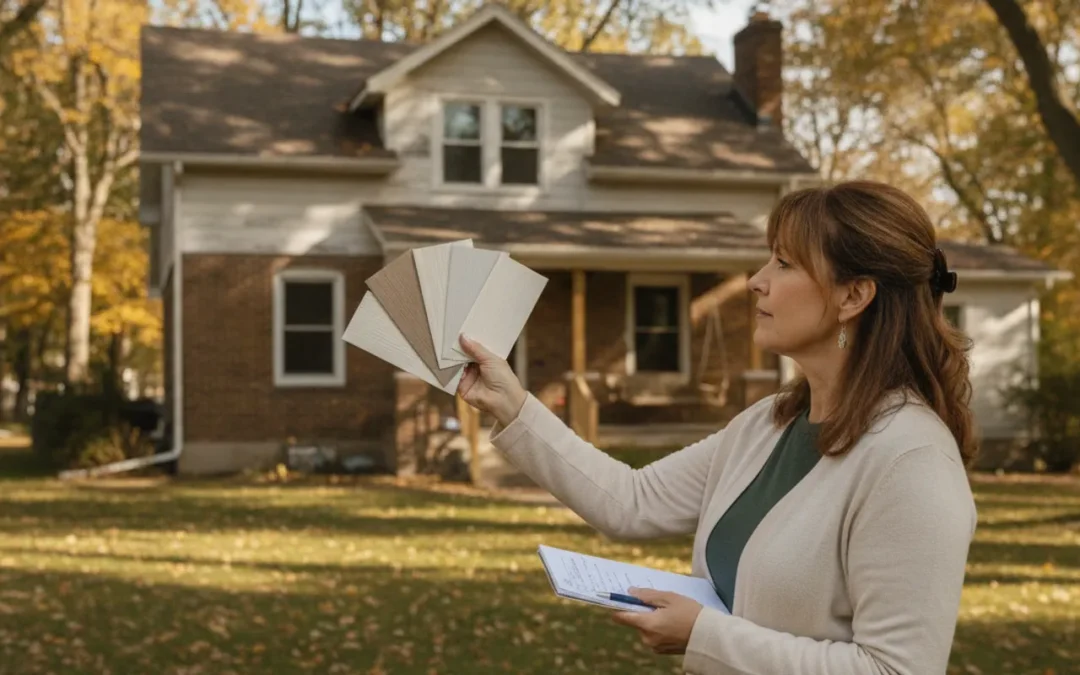
Material discussions should connect to the home’s appearance, maintenance expectations, and the specific products being proposed. Ask for the manufacturer and product line, not only a broad label such as vinyl or engineered wood. Ask how the selected profile, color, and trim will look on your house. When possible, review physical samples outdoors because light and surrounding colors can change how a finish appears.
Think through a selection in layers. First, identify the product family and profile that fit the design you want. Next, compare color and trim combinations against fixed features such as roofing, masonry, and windows. Finally, confirm the exact product and selections in writing. This sequence helps avoid choosing a color before you know which product options are actually part of the proposal.
Also ask what product documentation says about care and coverage. Do not assume two products with similar names have the same terms. Ask the contractor to identify what is covered by the manufacturer and what, if anything, is covered separately for installation. Get the answer in writing and read the stated limits rather than relying on a general phrase such as “lifetime.” This guide does not promise a particular result or warranty; the applicable documents control.
Signature Home Pros identifies CertainTeed among its siding brands, including its PermaColor product offering. Ask which specific product is proposed for your project and consult the applicable product information for its features and terms. For a closer look at one material category, see this explanation of engineered wood siding. Homeowners weighing a traditional appearance can also review the Michigan cedar shake siding guide. Neither option is automatically right for every home.
Use the same questions for each proposed product: What exact line and profile are included? Which colors and trim pieces are available? What does the manufacturer say about care? Which documents explain coverage, limits, and exclusions? If you compare two product families, note the differences that matter to you rather than relying on a broad label or a single feature.
What should you check when choosing a contractor in Michigan?
Review the company’s experience with the type of work in your proposal, ask for clear written answers, and pay attention to how questions are handled. A useful consultation should leave you understanding the scope and any open decisions. Take time to compare rather than feeling rushed. Ask for references or examples when you need more context, and check that the business details and written agreement are consistent.
Michigan homeowners should ask contractors for proof of credentials and insurance relevant to the work. The Michigan Department of Licensing and Regulatory Affairs (LARA) is the state resource for contractor licensing information; use its official LARA website to find current guidance and verify what applies to your project. Ask about applicable license status, liability coverage, and workers’ compensation coverage, and request documentation instead of relying on an informal assurance.
Keep the conversation focused on your home. Be cautious of a proposal that does not describe the work, leaves key choices or exclusions unclear, or pressures you to agree before you have had time to review it. The company’s about page explains its family-owned background and service approach. You can also read customer reviews as one input in your evaluation, while remembering that reviews do not replace checking the scope and credentials for your own project.
Consider the consultation itself a chance to evaluate communication. Can the representative explain why a particular scope is being suggested? Do they distinguish observations from assumptions? Are your questions answered directly, and are follow-up items recorded? If a response is unclear, ask for a written explanation and take time to review it. No-pressure decision-making means you can compare the information rather than agreeing before you understand it.
How do weather, permits, and timing affect planning?
Do not plan around a guaranteed start date until the contractor has explained what the schedule depends on. In Michigan, outdoor work can be affected by weather and site conditions. Ask how schedule changes are communicated and what needs to be ready before work starts. Confirm when product and color selections are due, how access to the work area will be handled, and whether outdoor items need to be moved.
Ask whether permits or local approvals apply to the work at your address and who is responsible for confirming them. Requirements can vary with location and project scope. If a permit is needed, clarify who will apply, what information is required, and how any inspection fits into the schedule. Do not assume a requirement is identical in every Michigan municipality.
Build a simple planning sequence rather than relying on one date. Record the estimate and decision period, selection deadline, expected start window, and any milestones the contractor identifies. Ask what could shift each item and who will contact you if it does. For example, if product choices must be confirmed before scheduling, note that dependency so a delayed selection does not surprise you later. Treat dates as expectations explained in your agreement, not guarantees absent from it.
Think through household logistics as well. Ask where materials or equipment may be staged, how the crew will reach the work area, and what to do with pets or outdoor furniture. These are planning questions, not predictions about a particular contractor’s site practices. Get the company’s answers for your project and write down any arrangements you agree on.
How can you keep the project on track once work is scheduled?
Before work begins, review the final scope, product selections, color, trim details, schedule expectations, and contact method. Make sure changes since the original proposal are captured in current written documents. Keep one copy accessible so you can refer to the same agreed details during the project.
During the work, raise a concern promptly and describe the location or detail as clearly as possible. If an unexpected condition or requested change affects the scope, ask what it means for the work and any cost or timing before authorizing it. Request that the change and your approval be documented. This gives both sides a shared record of what was discussed and agreed.
At completion, walk through the work with the contractor, note any open questions, and ask for care information and relevant product documents. Compare the completed work with the written selections and scope. If something appears different from what you understood, identify the specific location and ask how it will be addressed. Keep the final documents with your home records so you can refer to product details later.
Planning a related exterior update as well? Compare the sequence and scope with the roofing service information if roofing is also under consideration. Coordinating discussions can help you identify questions to resolve, but it does not mean every project must be combined.
What is a practical siding replacement planning checklist?
- Record visible concerns and take photos.
- Define the areas and outcomes you want assessed.
- Collect relevant history and note scheduling constraints.
- Request written proposals based on a consistent scope.
- Compare products, exclusions, preparation, schedule, and change procedures.
- Check applicable credentials and request proof of insurance.
- Confirm local approval or permit questions for the project address.
- Review the final written agreement and keep all revisions.
- Plan access and household logistics, then review the completed work.
For a worked example, suppose you want to replace siding on two sides of the house and are still deciding whether the other walls should be included. Ask each contractor to identify the same two walls, note what was observed elsewhere, and separate any optional work from the base proposal. Then compare the proposed materials and written exclusions. If one contractor recommends expanding the scope, ask what specific observations justify that recommendation and request the reasoning in the proposal. That keeps a practical comparison from turning into a guess about which total is more complete.
Another useful example is a homeowner who values low upkeep but also wants a particular traditional look. Put both priorities on the table and ask which proposed products could meet them, what trade-offs to consider, and what product documents say about care. The answer may narrow the choices without requiring you to select a product on the spot. Record the remaining questions and follow up once you have reviewed the samples and documents.
No single checklist can determine the right siding for every home. It can help you ask clear questions and compare recommendations on the same basis. Signature Home Pros is a family-owned exterior renovation company serving central Michigan homeowners, with siding among its exterior renovation services. To discuss your home’s needs, request a consultation and bring your notes and photos.
Book an appointment to discuss your siding project
Frequently asked questions
Should I replace all the siding at once?
Not automatically. The appropriate scope depends on the home’s condition, affected areas, and your goals. Ask a contractor to explain the basis for recommending full replacement or a more limited project, including areas that were not assessed.
How many proposals should I compare?
There is no universal number that guarantees a good decision. Focus on proposals that address the same scope and provide enough detail to compare products, exclusions, schedule, and change procedures. A proposal that is difficult to understand deserves follow-up questions before you rely on it.
Can I choose a siding color before getting an estimate?
You can gather color ideas early, but confirm available selections for the product proposed. Ask to review samples and find out when the final choice is needed. Record the selected color and product in the project documents.
What if hidden damage is found during the project?
Ask the contractor to explain what was found, what options are available, and how the finding could affect scope, cost, or timing. Request written documentation and approve any agreed change before additional work proceeds.
A thoughtful plan gives you a clearer basis for comparing siding replacement proposals and a more confident way to discuss the work before it begins.
Recent Comments