
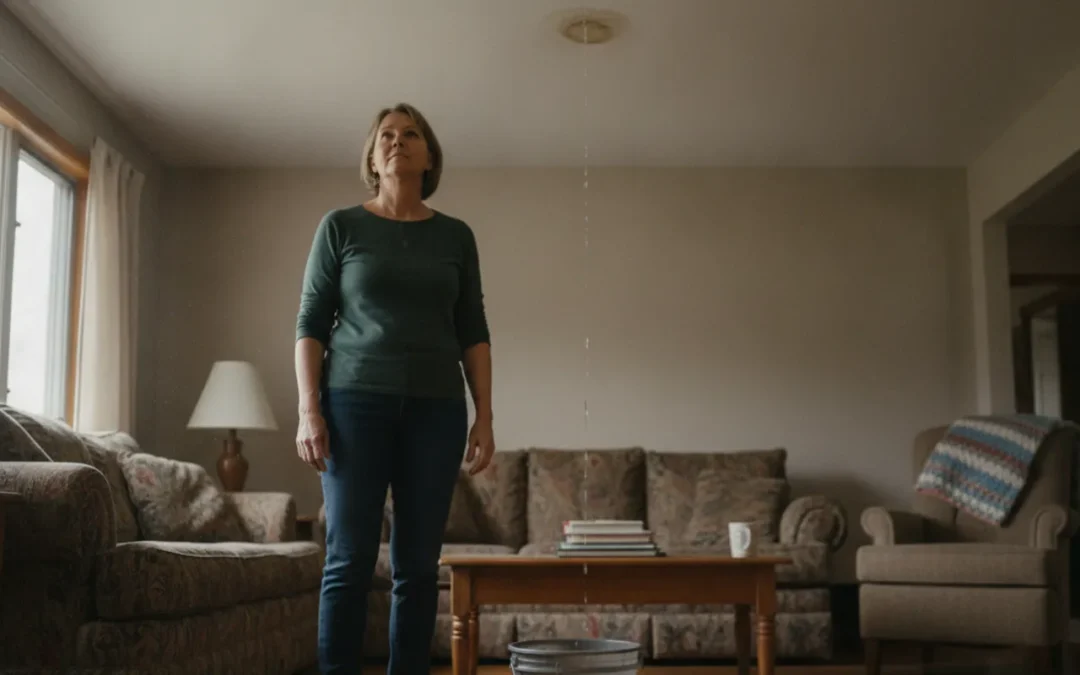
When water appears inside, emergency roof leak repair starts with protecting people and belongings—not climbing onto the roof. If you are in Fenton, these steps can help you respond calmly, limit avoidable damage, and decide when professional help is needed. For local service details, see Fenton roofing help.
Schedule an appointment to discuss the leak
What should you do first when you find a roof leak?
Start by checking for immediate hazards. If water is near a light fixture, ceiling fan, outlet, or electrical panel, do not touch the wet area or nearby switches. Keep people away and contact a qualified electrician or emergency service if you suspect an electrical hazard. If the ceiling is sagging, bulging, or making cracking sounds, keep everyone out of that room. A water-loaded ceiling can fail without much warning.
If the area is safe to approach, place a bucket or sturdy container under an active drip. Move furniture, electronics, rugs, and valuables out of the way. Use towels to catch splashes, but do not put yourself under a visibly bowed ceiling. If water is spreading across a floor, keep foot traffic away to reduce slip risk.
- Protect people first and avoid wet electrical areas.
- Catch drips only where it is safe to do so.
- Move belongings away from the affected area.
- Do not climb onto a wet, icy, steep, or storm-damaged roof.
- Do not cut into a ceiling or remove roofing materials to search for the source.
A ceiling stain may not sit directly below the roof opening. Water can travel along framing or other surfaces before it becomes visible. Avoid assuming that the nearest roof feature is the source. A professional assessment can help determine what needs attention.
Think through the room before moving anything. If the drip is over a couch, for example, move the couch only if the floor is safe and the ceiling above it is stable. If the stain is spreading or a ceiling panel is bowed, do not stand beneath it to rescue belongings. A small amount of water on the floor can be mopped when safe; a compromised ceiling calls for distance, not a closer look.
How can you limit further damage while staying safe?
Once people are safe, focus on simple steps inside the home. Take a few photos before moving items if you can do so without delay or risk. Note whether the water is dripping, seeping, or only showing as a stain. If the leak is active, check the container periodically and keep the floor dry around it.
Do not use a ladder to inspect the roof during rain, wind, snow, darkness, or icy conditions. Roof surfaces can be slippery even when they look dry. A temporary patch attempted from the roof can also make damage worse or create a fall hazard. If a tarp or other temporary cover seems necessary, ask a qualified professional about safe options rather than attempting an unsafe climb.
In a severe storm, keep away from downed wires, fallen branches, and damaged exterior materials. If a tree or large branch has struck the home, or the structure appears unstable, leave the affected area and contact emergency responders as appropriate. A roofer can address the roof, but immediate life-safety risks come first.
For a contained drip, put a stable container beneath it and check that it will not overflow while you wait. If water is splashing, a towel around the container can reduce the spread, but replace it when wet so it does not become a trip hazard. Do not place a container on a chair or other unstable surface to reach a high ceiling. If more than one area is leaking, make a separate note for each location instead of trying to manage every spot at once.
If you need to leave the house or go to sleep, consider whether the container could overflow and whether anyone might walk through the wet area. Keep children and pets away. When a leak cannot be safely monitored or the water is increasing, call for guidance promptly rather than relying on an improvised setup.
What should you document before calling for help?
Clear, simple notes can help explain what happened. Take photos or video from a safe indoor location, including a wider view of the room and closer views of the stain or active drip. If you see water on an upper floor, document that too. Avoid disturbing damaged materials just to get a better image.
Write down when you first noticed the problem and what the weather was like. Record whether the leak started during rain, after snow or ice, or without an obvious weather event. Note whether the water continues when precipitation stops. These observations do not identify the cause on their own, but they give the contractor a useful starting point.
| What to note | What to record | Why it helps |
|---|---|---|
| Location | Room, ceiling or wall area, and nearby features | Helps describe where water is appearing inside |
| Timing | When it began and whether it changed over time | Shows whether the issue is active or intermittent |
| Conditions | Rain, snow, wind, or no obvious precipitation | Provides context for the inspection |
| Visible effects | Dripping, staining, damp materials, or bulging | Helps communicate the urgency and extent you can see |
| Photos | Safe indoor images before cleanup or moving items | Creates a time-stamped visual record for your own files |
Keep receipts for reasonable emergency measures and make a list of affected belongings. If you plan to contact your insurer, ask the insurer what documentation it needs and follow its directions. Do not assume that every leak or repair will be covered; coverage depends on the policy and circumstances. For more roof-planning context, you can also read this roof replacement homeowner guide.
A useful record does not need to be elaborate. One note might say: “Drip began in the upstairs hall during steady rain at about 6 p.m.; stopped after rain ended; small stain near the ceiling light, no visible sag.” Include only what you actually observe. Do not guess at a cause or label a damaged area as structurally unsafe unless a qualified person has assessed it. This keeps the handoff clear and helps separate facts from questions.
Save the original photos and note when they were taken. If you take a second set later, use a similar angle so you can compare whether the stain or damp area changed. If you move belongings, take a quick photo of the affected area first when safe, then record what you moved and where it is stored. These steps can help you explain the sequence without delaying immediate safety measures.
When is a roof leak an urgent problem?
Call for prompt professional guidance when water is actively entering the home, the affected area is growing, or a ceiling is sagging. A leak near electrical components, a roof opening after a storm, or water reaching multiple rooms also deserves quick attention. If there is a risk of structural failure or electrical danger, leave the area and seek appropriate emergency assistance.
A small stain that is not changing may not require the same immediate response as a steady stream of water, but it still deserves investigation. Moisture can remain hidden above a ceiling or behind a wall. Waiting for a visible stain to grow can make it harder to understand how far the water traveled. Arrange an assessment when you can, and tell the contractor if conditions change.
Try to distinguish between an urgent safety issue and a request for an immediate roof visit. When you call, describe what you can observe and ask what response is appropriate. Do not promise yourself that a leak is harmless just because the drip pauses; water entry can be intermittent.
For example, a stain that appears after a storm and then dries may still call for an inspection, but it is different from water pouring through a ceiling beside a light fixture. In the first case, record the timing and arrange an assessment; in the second, keep away from the electrical hazard and seek urgent help. If a leak resumes, spreads to another room, or causes visible sagging, update the contractor rather than relying on an earlier description.
What should you tell a roofing contractor?
Give a concise account of the leak and the steps you have already taken. Share the address, best callback number, the room affected, when you noticed the water, whether it is still coming in, and any safety concerns. Mention recent wind, rain, snow, or other events if relevant. If you have safe photos, say that you can share them.
Ask what to do while waiting and whether anyone should avoid a particular part of the home. A contractor may need to see the affected area and exterior conditions before identifying the source or recommending a repair. An initial conversation is not a substitute for an inspection, and no one should diagnose the roof solely from a ceiling stain.
Signature Home Pros is a family-owned exterior renovation company serving central Michigan. Its roofing work includes CertainTeed products and Velux skylights. If a skylight is near the damp area, mention that detail without assuming it is the cause. The company also handles other exterior work, including gutter installation and siding installation; an inspection can help clarify whether the concern is limited to the roof or involves another exterior component.
Before the call, jot down the essentials so you do not have to reconstruct them under stress: where the water is, whether it is active, when you first saw it, what weather was occurring, and whether anyone faces a safety risk. Then ask what information the company would like you to have ready and what safe steps to take while waiting. If you cannot answer a question, say that you do not know rather than making an assumption.
Keep the description focused on what you can observe. “Water is dripping from the upstairs ceiling near the hallway, and it began during last night’s rain” is more useful than guessing that a particular shingle or vent has failed. Mention whether you can safely access the room and whether a container is catching the water. If conditions change after the first call, share the update.
How can you compare repair recommendations?
Once the immediate situation is under control, ask for a clear explanation of what was inspected and what the recommendation addresses. A useful discussion should connect the visible symptoms to the proposed work without relying on pressure or vague assurances. Ask what is known, what remains uncertain, and whether the recommendation is for a localized repair or a broader project.
- Which area was inspected, and what condition was observed?
- What work is being recommended, and what problem is it intended to address?
- Are there areas that could not be inspected safely or clearly?
- What should you monitor if work cannot happen immediately?
- What is included in the written scope, and what would require separate approval?
Request the proposed scope in writing and take time to understand it. Compare the same basics across proposals: location of the work, materials identified, work included, exclusions, and any stated next steps. Do not rely only on a short verbal description if you are making a decision about significant work.
For Michigan homeowners, contractor licensing is also an appropriate question when hiring for residential construction or repair. Ask the contractor for applicable license information and verify it through the state. The Michigan Department of Licensing and Regulatory Affairs provides state licensing information. You can also ask for proof of insurance and workers’ compensation coverage relevant to the project. Verify details rather than treating a verbal statement as documentation.
For a fair comparison, line up the proposals rather than comparing only their totals or the speed of a promised visit. One contractor may describe a specific repair while another recommends additional work; ask each to explain the observed condition and the limits of the inspection. Check whether the written scope identifies the area, material or component, work to be done, and any exclusions. If two recommendations differ, ask what evidence or uncertainty accounts for the difference.
Do not feel you need to settle every larger home-improvement question during a leak call. First understand any action needed to protect the home and the scope proposed for the immediate problem. Then consider broader work separately, with time to review the written details. Signature Home Pros emphasizes a no-pressure sales approach; homeowners should feel able to ask questions and decide after they understand the recommendation.
What can make a leak harder to trace?
Roof water does not always follow a straight path. It may move along a surface or framing before showing up inside, and different entry points can create similar-looking stains. That is why a single symptom is not enough to identify the repair. A stain near an exterior wall, chimney, vent, roof valley, or skylight can be a clue to mention, not proof of a specific failure.
Weather can also affect what you observe. A drip that appears only during wind-driven rain may behave differently from one that continues after precipitation ends. Snow and ice can make exterior inspection unsafe, so record the conditions and let a qualified person determine when and how to inspect. Do not test a suspected leak by spraying water on the roof; that can introduce more water and does not provide a reliable diagnosis.
Inside the home, note whether the damp area is new or has appeared before. If there is a recurring mark, take a new photo from a similar angle and note the date. Do not paint over or conceal a fresh stain before documenting it. These small records can make it easier to explain changes over time, even though they cannot replace a professional inspection.
Several observations can be useful without turning your home into a testing site. Note whether a leak appears after wind from a certain direction, after a long period of rain, or only when snow is melting. Say whether it is near an attic hatch or skylight if that is plainly visible from inside. Do not open a ceiling, enter a wet attic, or pour water on a roof to reproduce the condition. A qualified inspection can assess the exterior and interior safely and consider the full route water may have taken.
What common mistakes should you avoid?
In a stressful moment, it is easy to take on more than is safe. Avoid climbing onto the roof to locate a leak, especially during bad weather or after a storm. Do not assume that a stain marks the exact point of entry. Avoid covering a bulging ceiling, cutting into it, or pulling down wet materials without considering the risk.
Also avoid delaying a call because the drip has stopped. A temporary pause does not establish that the source is fixed. Do not discard damaged items or materials before documenting them if you may need records for an insurance discussion. Follow your insurer’s instructions and keep copies of communications and receipts.
Finally, be cautious about agreeing to a broad scope before you understand what it covers. Ask questions, review written details, and make sure you know what work is being proposed. A no-pressure conversation should leave you with a clearer view of the next step, not a rushed decision.
Another common misstep is treating a quick indoor cleanup as proof that the problem is over. Drying the floor or emptying a bucket helps manage the immediate mess, but it does not establish whether water is still entering or whether materials above the ceiling are damp. Continue to observe the area from a safe position, update your notes if anything changes, and arrange an assessment even if the visible drip has paused.
How should Fenton homeowners prepare for a visit?
Clear a safe path to the affected room and keep pets and children away from wet or damaged areas. Gather your notes, photos, and any information about when the leak began. If you know of attic access or a nearby skylight, mention it, but do not enter an unsafe or wet area to investigate.
Make a short list of questions you want answered. You might ask what was checked, what needs immediate attention, and what should be monitored. If other exterior concerns are present, mention them separately so the discussion can address each one. Signature Home Pros offers roofing and other exterior services under one roof, so homeowners can discuss related concerns without coordinating several exterior contractors at the outset.
Homeowners looking into broader improvements may find the company’s exterior renovation services overview useful. To learn more about the team and its approach, visit About Signature Home Pros. Review the specific scope and your priorities before deciding what work to authorize.
A simple visit-preparation checklist can make the conversation more useful: keep the affected room accessible if it is safe, secure pets, have your observations ready, and identify any areas that should not be entered. If you have photos, keep them available on your phone or in a folder. Tell the contractor about any changes since you first called. There is no need to clean or rearrange a damaged ceiling area to make it look presentable; accurate observations are more helpful than a staged room.
If the concern extends beyond the roof—for example, you also noticed a gutter problem or loose exterior material—list that separately. The symptoms may be related, or they may be separate issues. A clear list helps keep the discussion organized without presuming a cause or authorizing work you have not reviewed.
Request a free estimate or discuss your roof concern
Frequently asked questions
Should I put a bucket under a roof leak?
Only if the area is safe to approach and there is no nearby electrical hazard or sagging ceiling. Keep people away from unstable areas and do not climb onto the roof.
Can I patch the roof myself during a storm?
Do not climb onto a wet, icy, windy, or storm-damaged roof. A fall can cause serious injury, and a temporary patch may not address the source. Ask a qualified professional what safe steps are appropriate.
Does a ceiling stain show where the roof is leaking?
Not necessarily. Water can travel before it becomes visible indoors, so the stain may be some distance from the opening. A roof assessment is needed to determine the source.
What should I do if water is near a light or outlet?
Do not touch the wet area, fixture, or nearby switches. Keep others away and seek qualified electrical or emergency assistance when a hazard may be present.
How do I arrange emergency roof leak repair in Fenton?
Share where water is appearing, when it began, whether it is active, and any safety concerns. To speak with Signature Home Pros, call (810) 270-5922 and explain what you are seeing.
If water is entering your home, protect people first, document what you can safely observe, and call (810) 270-5922 to discuss the next step with Signature Home Pros.
Recent Comments