
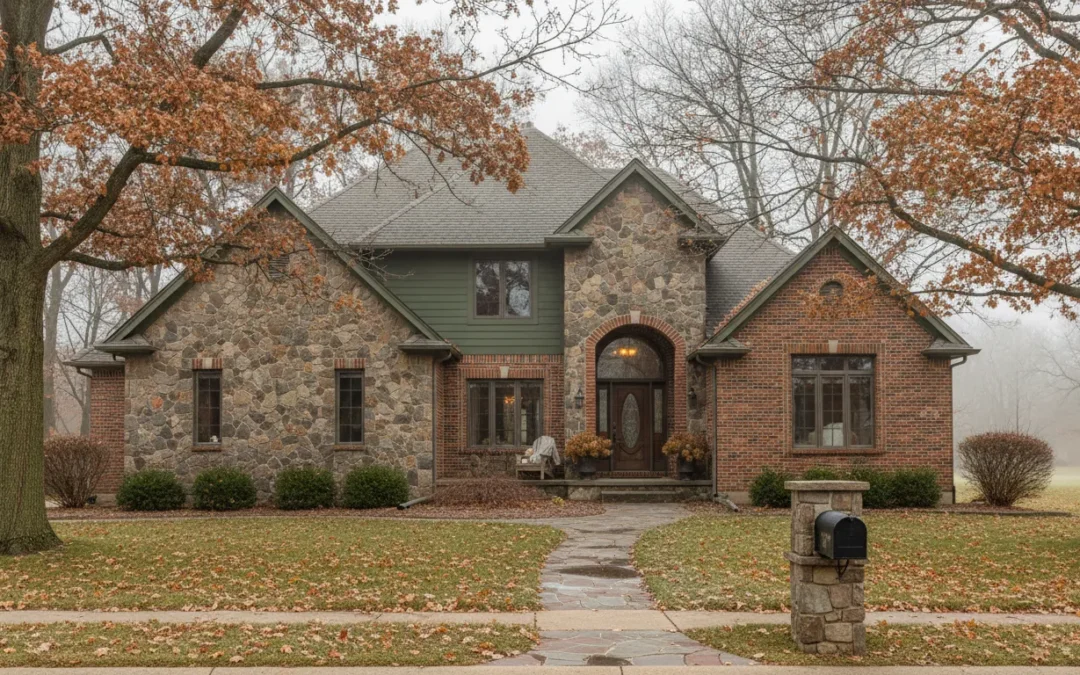
Michigan homes have to handle more than changing tastes. Snow, rain, freeze-thaw cycles, and moisture exposure all make the wall assembly and installation details part of the material decision. The most attractive finish is not automatically the best fit for every home.
For stone veneer vs brick michigan projects, the better choice depends on the home’s structure, design goals, weather exposure, drainage plan, maintenance expectations, and budget. Manufactured stone veneer may offer a lighter, flexible design option, while brick brings a distinct appearance and installation approach. Either can perform well when the system is selected and installed correctly.
That means the comparison should begin beneath the surface, not with a color sample alone. Understanding how brick, natural stone veneer, and manufactured stone differ in weight, support needs, and attachment methods will make the rest of the decision clearer. If you are considering professional stone installation in Michigan, start by comparing the materials and the wall conditions they require.
Stone Veneer vs. Brick Michigan Homeowners Should Compare First
Before comparing colors and curb appeal, make sure you are comparing the same type of wall system. A veneer is a nonstructural exterior finish attached to a structural wall. The home’s framing or masonry carries the building loads, while the veneer provides the visible exterior layer. That distinction matters in Michigan, where moisture management, freeze-thaw exposure, and installation details can affect how an exterior performs.
Natural stone veneer is real stone cut for an exterior finish
Natural stone veneer may use limestone, slate, fieldstone, bluestone, or similar materials cut thin enough to apply over a structural wall. One regional masonry comparison describes natural stone veneer pieces as roughly 1 to 2 inches thick. While another guide describes sliced natural stone in the 3/4-inch to 1-1/2-inch range. Because the pieces are real stone and can be irregular, the wall assembly and support requirements deserve careful review before installation. This masonry comparison explains the distinction between natural stone and structural walls.
Manufactured stone is designed to reduce the load
Manufactured stone veneer is made to recreate the look of natural stone in a more consistent product. The cited comparison guide lists manufactured stone at about 15 pounds per square foot or less. Compared with approximately 25 to 45 pounds per square foot for natural stone. It also notes that some manufactured systems are panelized or mortarless, while traditional installations may use lath, a scratch coat, and mortar. For a remodel, that lighter weight can be relevant when an existing foundation or wall assembly cannot support a heavier veneer. The product still needs to be selected and installed according to its system requirements.
Brick uses a different visual and installation language
Brick veneer is typically installed as individual units in a mortar bed, with drainage details such as weep holes included in the wall assembly. The same guide lists clay brick at approximately 40 pounds per square foot. That does not make brick automatically better or worse than stone. It means the comparison should include the home’s existing structure, the planned support, the wall’s drainage design, and the exposure of the elevation. For Michigan homeowners, the best choice is the material that fits the home and can be installed with the right moisture-management details. Not simply the one that looks best in a sample.
Stone Veneer’s Strengths and Tradeoffs in Michigan
Stone veneer gives Michigan homeowners a broad range of exterior looks, from clean-cut limestone to irregular fieldstone. Natural stone veneer uses real stone, such as limestone, slate, or fieldstone, cut to a thinner profile for installation over a structural wall. Its variation can create a more individual appearance, but that natural character can also make layout and fitting more involved.
Manufactured stone veneer offers another design path. It is formed to reproduce the color, texture, and shape of natural stone, so homeowners can choose from many profiles and color combinations. The specific product matters. The research reviewed for this guide identifies ASTM C1670 as a standard associated with high-quality manufactured stone veneer, including considerations such as freeze-thaw durability and colorfastness. That standard is useful context, but product specifications should still be reviewed for the particular system being considered.
Weight can influence whether a veneer is practical for an existing home. The cited comparison places natural stone at roughly 25 to 45 pounds per square foot, while manufactured stone is typically 15 pounds per square foot or less. A lighter manufactured option may be worth considering during a renovation when the existing foundation or wall assembly cannot support a heavier veneer. That does not eliminate the need to evaluate the substrate, attachment method, and manufacturer requirements.
Installation details are central to performance. With traditional mortar-set stone, metal lath should be attached to the framing or sheathing with corrosion-resistant fasteners that penetrate into the framing. The wall assembly also needs a deliberate approach to water management, including appropriate flashing, drainage, and clearances. An attractive product cannot compensate for a poorly prepared substrate or an installation that allows moisture to remain trapped.
Maintenance is generally about keeping joints, transitions, edges, and surrounding drainage in good condition rather than assuming the material is maintenance-free. Inspecting after severe weather can help identify movement, cracking, staining, or drainage concerns early. In a stone veneer installation project, the best choice depends on the home’s structure, exposure, desired appearance, and the care plan that fits the homeowner.
Brick’s Strengths and Tradeoffs for Michigan Exteriors
Brick remains a familiar choice for Michigan exteriors because its fired clay construction creates a substantial, traditional appearance. A cited masonry guide describes brick veneer as clay and shale fired above 2,000 degrees F, with common modular units measuring 3-5/8 inches. Those details help explain brick’s visual character, but they do not make it the automatic choice for every renovation. The wall assembly, support, drainage design, and home’s architectural style still matter.
Weight is one of the clearest practical differences in a stone veneer vs brick Michigan comparison. The same guide lists clay brick at about 40 pounds per square foot. Compared with approximately 10 to 15 pounds for manufactured stone veneer and 25 to 45 pounds for natural stone veneer. On an existing home, that load may affect the ledge, framing, or other support details. A professional evaluation should confirm what the structure can accommodate rather than relying on a material label alone.
| Material. | Appearance. | Typical installation. | Weight consideration. | Maintenance focus. | Best fit. |
|---|---|---|---|---|---|
| Brick. | Classic, regular courses. | Individual units, mortar bed, weeps. | About 40 psf in cited guide. | Mortar joints and drainage. | Traditional or structured designs. |
| Manufactured stone veneer. | Broad color and texture range. | Lath and scratch coat, mortar set or panelized system. | Usually 15 psf or less. | Joints, drainage, surface condition. | Remodels needing lighter options. |
| Natural stone veneer. | Distinct, varied natural character. | Lath, scratch coat, thicker mortar set. | About 25 to 45 psf in cited guide. | Joints, moisture, and stone condition. | Custom designs with natural variation. |
Brick also depends on careful water management. The cited guide recommends a clear air space behind brick and regularly spaced weep holes. Those concealed details matter in Michigan, where moisture and seasonal temperature changes test exterior assemblies. In practical terms, brick can be a strong fit when its orderly appearance and support requirements suit the home. Manufactured or natural stone may better match a different design or structural situation. The best decision comes from reviewing the full assembly, exposure, and installation plan together.
Sources: masonry material and installation comparison.
How Michigan Freeze-Thaw Cycles Affect Both Materials
Michigan exteriors face repeated wetting, freezing, thawing, and temperature changes. The material matters, but the wall assembly and installation details matter just as much. Research on exterior ceramic materials connects changes in performance with moisture, microstructure, and freeze-thaw cycles, while facade studies note that stone expands and contracts as temperatures change. These effects do not make brick or stone veneer an automatic failure risk, but they do make moisture management essential.
For stone veneer, retained water can freeze and expand inside the material or at vulnerable interfaces. That pressure can contribute to cracking or rupture, particularly when water has no reliable path to drain. Thin stone systems also experience changing stresses through seasonal temperature swings. The exact exposure depends on the stone, veneer system, substrate, detailing, and workmanship, so a material label alone cannot predict performance. A university-hosted facade study explains the relationship between temperature movement and moisture-related damage.
Brick veneer has its own moisture considerations. A peer-reviewed study of traditional ceramic building materials links exterior changes to water absorption and freeze-thaw cycling, including laboratory testing across 50 cycles. That does not mean every brick wall will respond the same way. Brick type, mortar, joints, air space, flashing, and drainage details all influence the wall’s behavior. The study’s findings provide useful context for evaluating ceramic materials in changing outdoor conditions.
Drainage details protect the wall assembly
Both materials need a drainage strategy that moves incidental water away from the sheathing and framing. Flashing should direct water outward, and weeps should remain open rather than blocked by mortar or debris. A government building-code evaluation specifically identifies water penetration problems associated primarily with installation issues. It also notes that much observed damage involved wood-frame and metal-stud structures. That evaluation highlights why the building envelope and substrate deserve careful attention.
Grade clearance matters too. Masonry veneer should remain separated from final grade so splashback and ground moisture do not stay trapped against the assembly. Proper flashing, open drainage paths, and careful transitions around windows, doors, roofs, and wall bases help both brick and stone handle Michigan exposure. In practice, the safest comparison is not simply stone veneer vs brick Michigan homeowners can see in a sample. It is the complete system, including movement, drainage, clearance, and the crew installing it.
Cost and Installation: What Actually Changes the Budget
Material price is only one part of a veneer project. The wall assembly, preparation, drainage details, access, and labor can change the scope significantly. The customer knowledge base does not contain a verified stone veneer versus brick price comparison. A responsible estimate should be based on your home and project rather than a generic online figure.
Weight is one early consideration. The cited masonry comparison lists manufactured stone veneer at roughly 10 to 15 pounds per square foot. It lists natural stone at 25 to 45, and clay brick at about 40. Heavier materials may require a suitable foundation ledge or additional structural review, particularly on an existing home. Manufactured stone can be useful when an existing foundation cannot support a heavier veneer, but the installer still needs to evaluate the wall before recommending it. See the material and installation comparison.
Installation details also affect labor. Brick typically involves individual units, mortar, a drainage cavity, and weep holes. Traditional mortar-set stone may require properly fastened metal lath, a scratch coat, and a mortar setting bed. Corners, returns, window and door openings, transitions, and complex layouts take more measuring and fitting than a broad, flat wall. Flashing and weeps are not decorative extras; they help manage water behind the veneer. The bottom of the masonry also needs appropriate clearance from final grade, with the cited guide identifying four inches as a standard minimum in unpaved areas.
Questions to ask before approving the work
- What is the existing wall condition, and does it need repair or reinforcement?
- How will the design handle corners, openings, flashing, weeps, and grade clearance?
- Which installation system and fasteners are being specified for this material?
- How do access, removal, preparation, and weather conditions affect the labor plan?
- Which parts of the estimate are allowances, and which are based on measured site conditions?
For stone veneer vs brick Michigan projects, the best comparison is a written scope that explains these decisions clearly, not a material-only price.
Which Material Is Better for Your Michigan Home?
There is no single winner for every Michigan exterior. The right choice depends on your home’s wall assembly, weather exposure, design goals, maintenance preferences, and project budget. Use this checklist to compare the options without reducing the decision to appearance alone.
- Start with the home’s structure. Confirm what the existing wall and foundation can reasonably support. Brick and natural stone veneer can be substantially heavier than manufactured stone, so a renovation may require a closer look at support conditions before material selection. Do not assume a preferred finish can be added without evaluating the assembly.
- Consider how the exterior handles Michigan weather. Snow, rain, ice, and repeated freeze-thaw cycles make moisture management important. Ask how the planned system will address flashing, drainage, clearances, and transitions around windows, doors, roofs, and other materials. Installation quality matters as much as the product category.
- Match the finish to the home’s design. Compare the color, texture, scale, and pattern of brick, natural stone, and manufactured stone against the roof, siding, trim, and neighborhood style. If you are coordinating several exterior finishes, this guide to how to coordinate stone and brick with siding can help you think through the overall palette.
- Define your maintenance expectations. Look beyond the initial visual effect. Ask what cleaning, mortar-joint attention, inspections, or future repairs may be appropriate for the selected material and installation method. Your contractor should explain those responsibilities in practical terms rather than promise a universal outcome.
- Compare complete project scopes. Material selection is only one part of the decision. Request a clear explanation of preparation, wall repairs, corners, openings, drainage details, labor, and cleanup. Since verified stone-versus-brick pricing varies by project, a site-specific estimate is more useful than a generic number.
For homeowners who want help evaluating those details, professional stone installation in Michigan is available through Signature Home Pros. The best choice may be brick, natural stone, or manufactured stone, depending on the home and the plan. A careful review of the wall assembly, exposure, appearance, maintenance needs. And full scope can produce a result that fits your house instead of forcing your house to fit a material.
Frequently Asked Questions
Is stone veneer or brick more affordable for a Michigan home?
There is no reliable one-size-fits-all answer. The total budget depends on the material selected, wall condition, project access, corners, structural support, flashing, drainage details, and installation labor. Comparing material costs alone can overlook important project expenses, so ask for a project-specific estimate rather than relying on a general price range. Proper stone installation should be evaluated alongside appearance, maintenance, weather exposure, and budget.
Which material handles Michigan freeze-thaw cycles better?
Both brick and stone veneer can perform well when the wall assembly is designed and installed correctly. Moisture management is critical because retained water can freeze, expand, and contribute to cracking or material rupture in stone systems. Research also connects ceramic material performance with moisture and freeze-thaw cycles. Sources: Penn State facade study and peer-reviewed brick study.
Is manufactured stone veneer lighter than brick?
Typically, yes. One comparison guide lists manufactured stone veneer at about 10 to 15 pounds per square foot, compared with approximately 40 pounds per square foot for clay brick. That difference may matter during a renovation, but the existing wall and foundation still need to be evaluated before selecting a system. Source: material comparison guide.
What maintenance does veneer require in Michigan?
Maintenance starts with keeping water away from vulnerable wall details and watching for cracking, loose units, staining, or failed sealant and flashing. Neither material eliminates the need for periodic inspection. The better choice depends on the home’s exposure, drainage design, installation quality, and the look you want to maintain over time.
Ready to Plan the Right Exterior?
Stone veneer and brick can both be excellent choices when the material, wall assembly, drainage details, and installation approach fit your Michigan home. A project conversation can help you weigh those details alongside your design goals. Schedule a no-pressure appointment or request a free estimate by contacting Signature Home Pros. We can discuss stone, brick, and other exterior renovation options for your home.
Recent Comments