
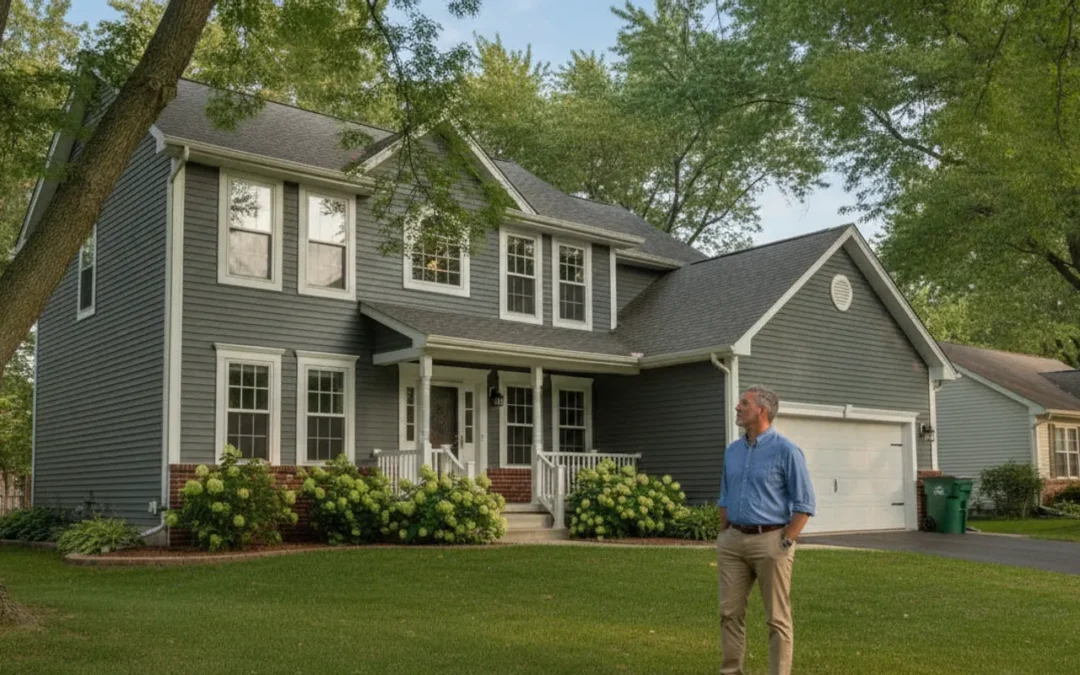
If you are searching for siding repair Flint MI homeowners can trust, start by finding out whether the damage is limited to one area or points to a wider problem. A small, accessible issue may be a candidate for repair, while repeated damage, moisture concerns, or siding that is failing across several walls may call for a broader evaluation. Signature Home Pros serves central Michigan homeowners with siding installation and replacement; learn about the company’s siding services as you consider the right next step.
Schedule a no-pressure siding consultation
What should you check before deciding on siding repair in Flint, MI?
Do not decide from one mark or loose-looking panel alone. First, note where the issue appears, how much siding is affected, and whether there are signs that water may be getting behind it. The purpose of this first look is not to diagnose the wall yourself. It is to collect useful observations for a professional assessment.
From the ground, look at each side of the house in good daylight. Take photos from several distances. Include one wide view that shows the location on the wall and closer images of cracks, holes, gaps, buckling, or discoloration. Record when you first noticed the problem and whether it changed after a storm or a period of wet weather. Do not climb a ladder or pull panels away to investigate.
- Map the location: Note the wall, height, and nearby features such as windows, doors, corners, or downspouts.
- Describe the visible damage: Record whether it is a single crack or hole, a loose section, warping, fading, or several kinds of damage.
- Look for patterns: Similar issues in different areas may matter more than one isolated blemish.
- Check indoors for clues: If you notice dampness, staining, or a musty odor near the same exterior wall, mention it during the inspection. Do not assume the siding is the only possible source.
- Keep a simple record: Date-stamped photos can help you compare the condition over time and explain what you have observed.
These notes help focus the conversation. They do not confirm what caused the damage or whether a repair is possible. Siding is part of an exterior system, so a sound recommendation considers the visible panels and any related concerns that can be safely assessed.
When should you arrange a closer inspection?
Some siding concerns can wait for a scheduled evaluation, while others should be discussed sooner. If you see a large loose section, a hole that leaves the wall exposed, or water entering near an opening, keep people away from the affected area and contact a qualified contractor. After high winds, take photos from a safe location and note when damage appeared. Ask the evaluator to explain what is visible and whether the proposed scope is limited to confirmed damage. A timely inspection can help you understand whether the next step is a small repair, a larger project, or monitoring the condition.
When might a localized repair be worth exploring?
A limited repair is most plausible when damage is confined to a small, clearly defined area and the surrounding siding appears stable. Examples might include one cracked or punctured panel, a small section that has come loose, or a discrete area affected by an impact. Even then, the outcome depends on the siding material, the condition of the surrounding wall, and whether a suitable replacement piece can be matched.
Ask the evaluator to explain what they can see and what they cannot confirm without further inspection. A repair plan should identify the affected area, describe the work proposed, and explain whether the replacement material will be an exact match or simply close in color and profile. On older or sun-exposed siding, a new panel can look different from weathered material even if it is the same product and color.
It is also reasonable to ask whether a small repair will address the apparent cause. Replacing a damaged panel alone may not resolve a recurring issue if water is being directed onto that location or if the surrounding material is also deteriorating. A responsible recommendation should distinguish the visible symptom from any underlying condition that has actually been verified.
What signs suggest you should inspect a larger section?
Damage that repeats across a wall, appears on more than one side, or keeps returning deserves a broader look. Widespread fading or brittleness, multiple loose or distorted panels, open seams, and recurring moisture concerns can indicate that the issue is not limited to one piece. These signs do not automatically mean the whole house needs new siding. They do mean that a quote for one small patch may not answer the important question.
Pay attention to how the siding meets other parts of the exterior. Gaps around window and door trim, corners, or transitions between materials can merit closer attention. So can an area where runoff repeatedly reaches the wall. Take photos and point out the location rather than trying to remove trim or siding to see what lies behind it.
If you suspect moisture inside the wall, share that concern directly. Ask what evidence supports the assessment and whether additional evaluation is needed. Avoid accepting a confident explanation based only on a quick glance from the driveway. At the same time, do not assume every stain or soft-looking spot proves hidden wall damage; it needs appropriate inspection.
How can you tell whether the issue is isolated?
Look at the pattern rather than treating every mark as the same problem. For example, one impact point with intact siding around it is a different observation from several panels bowing along the same wall. A gap near a window trim calls for a different question than fading across a full elevation. The visible clue helps define what to ask, but it cannot establish the cause on its own.
A practical way to organize your observations is to make a small wall-by-wall list. For each side, record the number of areas that concern you, whether they are near openings or corners, and whether anything seems to have changed since your first photos. Add a note if the issue appears only after rain or wind, but avoid assuming that timing proves a particular source. This gives the contractor a useful starting point and makes it easier to confirm whether each concern was considered.
Also separate urgent conditions from appearance questions. A loose panel or opening that exposes the wall deserves attention to the condition and protection of the area. A color mismatch or fading may be an appearance concern that can be compared with the benefits and scope of a larger project. Keeping those priorities distinct helps prevent a cosmetic issue from obscuring a possible moisture concern, or a small visible defect from being mistaken for evidence that every wall has failed.
How do repair and replacement compare?
There is no single rule that makes replacement the right choice whenever siding is damaged. The decision depends on the extent and condition of the material, whether a repair can be made reliably, the availability of compatible siding, and the homeowner’s priorities. Use a written comparison to understand the scope before choosing.
| Option | When it may fit | What to clarify |
|---|---|---|
| Localized repair | A small, contained area is damaged and surrounding siding appears sound. | Which panels or sections are included, how the material will match, and whether the cause of the damage is addressed. |
| Repair a larger section | Damage is limited to one wall or defined area, but more than a single panel needs attention. | How the repair boundary is determined and whether adjacent areas were evaluated. |
| Replacement of a wall or larger area | Several sections are failing, the material is difficult to match, or broader work better fits the condition. | Exact work area, material and profile, trim and transition details, preparation, and cleanup. |
| Whole-home siding replacement | Problems are widespread or the homeowner wants a coordinated exterior update after reviewing alternatives. | What is included on each elevation, material choices, schedule, written terms, and any related work excluded from the proposal. |
When you compare estimates, check that each proposal describes the same material and scope. Siding material and type are among the details discussed in research on replacement-cost estimating, so make sure the estimate clearly identifies what is being considered rather than comparing totals without context (academic discussion of replacement-cost estimating). This source is not a repair manual; use it only as a reminder to clarify what the estimate actually covers.
How does the siding material affect a repair?
Different siding products have different profiles, finishes, and ways of joining. A repair that seems simple from the street may be harder if the original style is no longer available or if surrounding pieces have changed color with age and exposure. Ask the contractor to identify the existing material and describe any limits on obtaining a close match before you decide.
For vinyl siding, ask how a replacement section will align with the existing profile and what visible difference to expect. For cedar shake or other textured siding, discuss the pattern, finish, and how the repaired area will blend. If you are considering new siding rather than a patch, Signature Home Pros describes its siding installation options and materials on its service page.
Appearance is only one factor. Ask whether the proposed scope addresses the condition of the adjacent siding and the areas where materials meet. If a contractor recommends replacement, ask why that scope is more appropriate than a smaller repair, and request that the reasoning be stated clearly in the proposal.
What should a siding estimate explain?
A useful estimate should help you understand the recommended work, not just present a bottom-line figure. Request a written description of the issue observed, the area included, the materials proposed, and any assumptions or exclusions. If the contractor cannot confirm something during the initial visit, ask how that uncertainty affects the recommendation.
- Condition and scope: Which walls or sections were inspected, what visible issues were found, and exactly what work is proposed?
- Materials: What product, profile, color, and finish are specified? Is a matching material available, and how might the finished appearance differ?
- Related details: How will corners, trim, openings, and transitions be handled? Are any related repairs excluded?
- Preparation and cleanup: What work is included to prepare the area and leave the site orderly?
- Schedule and terms: What timing is anticipated, how will changes be documented, and what written terms apply?
- Recommendation: Why is this repair or replacement scope being recommended, and what alternative was considered?
Compare proposals line by line. One estimate may cover a single area while another includes a broader wall or additional trim. If something is unclear, ask for a revised description before signing. Avoid relying on a verbal promise to resolve a scope question later.
It can help to make a side-by-side worksheet before reviewing proposals. Copy each contractor’s description of the work area, materials, trim treatment, preparation, cleanup, and exclusions into separate columns. Mark an item “not stated” rather than assuming it is included. Then send the same focused questions to each provider. This keeps the comparison fair and highlights whether different totals reflect different scopes or simply different proposals.
Keep the estimate, photos, and any written answers together. If a proposal changes after an inspection reveals more information, ask for the revision in writing and make sure it identifies what changed. This is especially useful when the initial view could not confirm a condition behind the siding. A clear record lets you evaluate the revised recommendation without relying on memory of a conversation.
Book a consultation to review your siding options
Read about the siding installation process in Michigan for additional context when a proposal involves replacement. If you are weighing replacement more broadly, this guide to siding replacement options in Michigan can help you prepare questions.
How can Flint homeowners make a fair comparison?
Local homeowners can use the same basic method whether the home is in Flint or another Mid-Michigan community: compare the inspected areas, the proposed scope, the materials, and the explanation behind each recommendation. Do not assume that two estimates are comparable because both use the word “repair.” Ask each provider to mark the area being addressed and describe the work in plain language.
For a practical comparison, create a short checklist and use it for every consultation:
- What exact siding condition did the evaluator observe?
- Is the proposed work limited to one area, one wall, or more of the home?
- What material and finish will be used, and how close can the visual match be?
- What related work is included or excluded?
- What makes repair or replacement the recommended option?
- Which questions remain unanswered, and who will confirm them in writing?
Look for a clear, pressure-free explanation rather than a rushed decision. Signature Home Pros is a family-owned exterior renovation company based in Flushing and serving central Michigan homeowners. Its approach emphasizes honest communication and no-pressure consultations. You can learn more about the company on its About Us page, review its customer reviews, or check its service area.
Explore cedar shake siding care and design considerations if that material is on your home, or use the questions for comparing siding contractors as you prepare to speak with providers.
What should you do next?
Start with clear photos and a short written description of the problem. Arrange an inspection if damage is hard to assess from the ground, occurs in several places, or may involve moisture. Ask for a written explanation of whether a localized repair, a larger section, or replacement is being proposed. You do not need to commit before you understand the scope and the alternatives.
If the siding is near a roof edge or gutter, note the location and ask the evaluator whether the adjacent exterior should also be checked. Signature Home Pros also offers gutter installation and roofing services, which may be relevant when planning exterior work, but the inspection should establish whether those areas relate to the siding concern.
Request a no-pressure siding estimate
Frequently asked questions
Can one damaged siding panel be repaired?
Sometimes. It depends on the panel’s condition, the surrounding siding, and whether a compatible replacement is available. Ask the evaluator to explain the repair boundary and any likely difference in color or profile.
Does warped siding always mean the whole house needs replacement?
No. Warping is a reason to investigate, not proof that every wall needs new siding. The cause, how widespread the condition is, and the state of nearby materials should guide the recommendation.
Should I try to remove a loose panel to inspect behind it?
No. Do not climb or pull materials apart based on a visual concern. Photograph the location from a safe place and have an appropriate professional assess it.
What should I bring to a siding consultation?
Bring dated photos, notes about when the issue appeared, and any observations about changes after storms or wet weather. A list of questions and any existing estimate can also help you compare the proposed scope.
Ready to discuss siding for your Flint home?
A careful inspection and a clear written scope make it easier to decide whether a limited repair or a larger siding project fits the condition of your home. Signature Home Pros offers no-pressure consultations for central Michigan homeowners, so you can ask questions and consider your options before moving ahead.
Recent Comments