
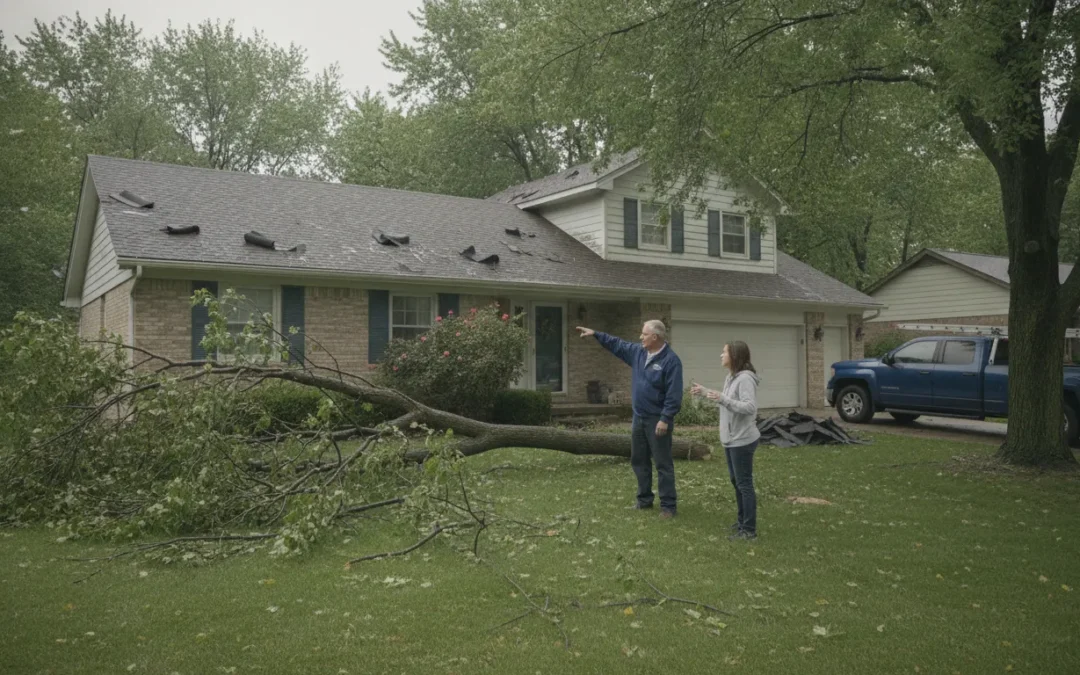
Storms can damage roofs even when they look intact.
Schedule a no-pressure roof evaluation with Signature Home Pros.
For Genesee County homeowners dealing with storm damage, start with safety, document what you can see without climbing onto the roof, and arrange a professional evaluation. The right next step may be a focused repair or a broader replacement discussion, depending on the roof’s condition and the extent of the damage.
Signature Home Pros is headquartered in Flushing and serves homeowners throughout its core Genesee County market. Its team handles roof repairs and replacement, so a careful evaluation can help clarify your options without pressure. Before considering roofing services in Genesee County, begin with the immediate steps that protect your household and preserve useful information about what happened.
What to Do After a Storm Damages Your Roof
Put safety ahead of a closer look at the roof. After wind, hail, or falling debris, inspect from the ground and wait for dangerous conditions to pass. Do not climb onto a wet, damaged, or visibly unstable roof. A professional evaluation can identify problems that are difficult to see safely.
- Check the area before approaching the house. The National Weather Service recommends looking carefully for loose power lines, gas leaks, and structural damage. If you smell gas, see major structural damage, or the building may be unsafe, leave the area and wait for authorities to declare it safe. Review the NWS post-storm safety guidance.
- Stay away from downed electrical wires. Treat every fallen line as live, and keep children and pets away from the area. Watch for weakened walls, fallen objects, and other hazards around the property.
- Look for signs of water entry indoors. Check ceilings, upper walls, and attic areas only when they can be reached safely. Active dripping, damp insulation, or new staining deserves prompt attention because water can spread beyond the original roof impact.
- Record what you can see from a safe location. Take photographs from the ground, note when the storm occurred, and write down any new leaks or visible debris. Avoid moving dangerous debris or making repairs before the area is safe.
For a more detailed first-response reference, see these emergency roof repair steps, then arrange an inspection when conditions allow. The right next step may be a focused repair or a broader evaluation, depending on what the storm affected and the roof’s existing condition.
How to Spot Wind, Hail, and Debris Damage
Storm damage is not always obvious from the ground, and a roof can be unsafe to inspect immediately after severe weather. Start with a ground-level look around the home. Never climb onto a wet, damaged, or unstable roof. If you see a fallen power line, weakened structure, or other immediate hazard, keep your distance and contact the appropriate emergency or utility service.
What to look for outside
- Wind damage: Look for shingles that are lifted, missing, curled, or displaced, along with exposed underlayment or roof edges that no longer appear secure.
- Hail damage: Check for scattered dents, bruising, or broken areas on shingles, soft metals, vents, gutters, and downspouts. Damage may be easier to notice on exterior metal than from the yard.
- Branches and debris: A fallen limb can crush roofing materials or damage flashing around a chimney, wall, skylight, or other roof penetration. High winds can turn branches into projectiles, according to the National Weather Service.
- Water clues: Look for sagging gutters, displaced flashing, wet exterior walls, or water collecting where it should drain away. The NWS recommends clearing clogged gutters and downspouts to help water flow during heavy rainfall.
Check the rooms below the roof
Inside, inspect ceilings, upper walls, attic areas, and spaces around skylights or chimneys for new stains, damp insulation, peeling paint, or a musty smell. Mark new spots and note when they appeared, but do not disturb wet electrical fixtures. If the roof needs a closer evaluation, a qualified professional can inspect it from a safe position. For additional guidance, review these signs a roof needs replacement.
Storm Damage Roof Repair for Genesee County Homeowners
After wind, hail, falling branches, or heavy rain, do not assume you need a new roof. Ask what the inspection found. An inspection should first separate isolated damage from conditions that affect a larger portion of the roof system. A few displaced shingles, localized flashing damage, or a leak tied to one identifiable area may point toward repair. Widespread impact marks, repeated leaks, weakened decking, or damage across multiple roof planes may call for a broader replacement discussion.
Do not climb onto the roof to make that decision. From the ground, note missing or lifted shingles, exposed underlayment, damaged flashing, sagging areas, and water stains inside the home. A qualified roofing professional can then evaluate the visible covering and the underlying components, while you keep the inspection findings separate from assumptions about insurance coverage.
| Situation | Likely next question | Homeowner action |
|---|---|---|
| Damage appears limited to a small, identifiable area | Can the affected shingles, flashing, or leak source be repaired without disturbing sound materials? | Request a documented inspection and repair scope. |
| Damage is visible across several roof sections | Is the problem broad enough that replacement is more appropriate than repeated isolated repairs? | Ask what was found, which areas are affected, and why each option is recommended. |
| The roof has storm damage plus age-related wear or recurring leaks | Would a repair address the immediate symptom while leaving wider roof concerns unresolved? | Compare the written repair and replacement scopes before choosing a path. |
For background on the broader decision, see this guide to roof repair versus replacement. When you are ready to discuss the condition of your home with a local team, review the available roofing services in Genesee County. The goal is a clear recommendation based on observed damage, not pressure to choose the largest project.
Does Insurance Cover Storm Damage to a Roof?
Sometimes, but coverage is not automatic. Whether a homeowners policy covers storm damage to a roof can depend on the cause of the damage, the policy’s exclusions, the roof’s condition, and the deductible. The insurer makes the coverage decision under the terms of the specific policy. So avoid assuming that wind, hail, falling branches, or rain-related damage will be handled the same way.
Before arranging major work, review your policy and contact your insurance company with questions about the loss. Michigan’s Department of Insurance and Financial Services offers general guidance for consumers preparing for tornadoes and severe storms: read the Michigan severe-storm information. It is general consumer guidance, not a promise that a particular roof repair or claim will be covered.
Document the condition before repairs
If it is safe to do so, photograph visible damage from the ground and record the storm date, approximate timing, and any related interior signs, such as water staining. Keep copies of communications, inspection notes, receipts for permitted temporary measures, and the written scope of proposed work. Do not climb onto a damaged or wet roof simply to collect evidence. Loose materials, unstable surfaces, and downed wires can create serious hazards.
A qualified roof evaluation can help identify affected areas and separate storm-related concerns from ordinary wear. Ask for findings in writing, including whether the recommendation is a limited repair or broader replacement work. You can then compare that information with your policy and your insurer’s instructions. No contractor can guarantee claim approval, and a careful evaluation should not pressure you into work before you understand your options.
Why a Local Genesee County Roof Evaluation Helps
After wind, hail, heavy rain, or falling branches, a roof evaluation should answer a practical question: what does this roof need now? A site-specific review helps separate visible damage from issues that may be affecting shingles, flashing, ventilation, or the roof’s underlying condition. It also gives you a clearer basis for discussing repair, replacement, new installation, or skylight work instead of making a decision from storm photos alone.
Local context matters because homes across Genesee County do not all face the same conditions or have the same roof history. Signature Home Pros is headquartered in Flushing, Michigan, and Genesee County is its core market. Its documented communities include Flint, Flushing, Grand Blanc, Fenton, Burton, Davison, and Swartz Creek. That regional focus can make it easier to discuss the home’s location, the observed damage, and the scope of work in a conversation grounded in the community.
The company documents roof repair, replacement, and new installation among its services, along with skylight installation. It also identifies CertainTeed SELECT ShingleMaster certification for its roofing work. Those details do not determine the right outcome for every storm-damaged roof, but they give a homeowner useful questions to ask: Is the damage isolated? Are repairs practical? Does the roof’s broader condition support replacement? What materials and workmanship are appropriate for the property?
For homeowners in the eastern part of the county, review the information about roof repair in Davison. You can also learn about Signature Home Pros before requesting an evaluation. The goal is a measured, property-specific decision, not a one-size-fits-all promise of service coverage.
How to Document Damage and Compare Repair Options
Good records make the next conversation clearer, whether you are reviewing the damage yourself or speaking with a roofing professional. Start from safe ground. Photograph the roofline, missing or displaced shingles, damaged flashing, gutters, siding, fallen branches, and any visible interior staining. Do not climb onto a wet or unstable roof. If the home may be structurally unsafe, stay out and follow local safety guidance.
Add context to each photo. Note the date and approximate time, the type of weather you observed, and which side of the home appears affected. Keep copies of weather alerts or other local records that help establish when the damage occurred. Save related receipts for temporary cleanup or other work, and keep your notes with the photos. These records can also help you explain the situation to your insurer, but coverage decisions depend on your policy and the insurer’s review.
Ask for a written scope
When comparing repair options, ask each contractor to describe the observed damage in writing. The scope should identify affected areas, recommended work, materials, and items that are not included. Ask whether the recommendation addresses only visible damage or also any underlying issue found during the evaluation.
- Which areas are repairable, and why?
- What conditions would make replacement a better choice?
- Are flashing, ventilation, cleanup, and related exterior work included?
- What should be monitored after the work is complete?
A careful comparison is more useful than choosing based on a brief verbal estimate. For additional context on distinguishing isolated damage from broader roof concerns, review these signs a roof needs replacement.
When to Schedule Storm Damage Roof Repair in Genesee County
Once everyone is safe, schedule an evaluation if you notice missing shingles, damaged flashing, fallen branches, interior stains, or water entering the home. You do not need to wait for damage to become more obvious. A roof can look intact from the yard while wind or hail has affected vulnerable areas.
An evaluation is also worthwhile when you are unsure whether a problem is storm-related, when several roof sections show visible damage, or when the roof is older and you want an informed repair-versus-replacement discussion. Avoid climbing onto the roof after a storm. Share ground-level photos, the approximate date of the weather event, and any indoor signs with the contractor instead.
For homeowners comparing roofing services in Genesee County, ask what the inspection found, which areas require attention, and whether the recommended work is limited to a repair or involves broader replacement planning. Signature Home Pros serves homeowners in communities including Flushing, Flint, Grand Blanc, Fenton, Burton, Davison, and Swartz Creek. The goal is clear information and a no-pressure next step, not a rushed decision.
This article focuses on planning for storm-specific roof damage across Genesee County. If you are dealing with an active leak or an immediate safety concern, review the separate emergency roof repair steps guide for first-response guidance.
Request a no-pressure roof evaluation or estimate when you are ready to discuss what you found.
Frequently Asked Questions
Does insurance cover storm damage to a roof?
Coverage depends on your policy, deductible, exclusions, the cause of damage, and the condition of the roof. Review your policy and ask your insurer what documentation and next steps apply to your situation. Do not assume that every storm-related repair will be covered. Michigan’s Department of Insurance and Financial Services also recommends reviewing your insurance information after severe weather: Michigan DIFS storm guidance.
What should I do if a storm damages my roof?
Put safety first. From the ground, look for visible damage, fallen branches, exposed areas, or signs of water entering the home, but do not climb onto an unstable roof. Stay away from downed electrical wires and leave the building if it may be structurally unsafe or you smell gas, following the National Weather Service guidance at weather.gov. Then document what you can safely see and arrange a professional evaluation.
How do I know whether my roof needs repair or replacement?
An inspection helps determine whether the storm affected isolated shingles, flashing, or leak points, or whether the roof has broader damage or underlying concerns. Ask for a written explanation of the findings and why the recommended work fits the roof’s condition. A repair may address limited damage, while replacement may be worth discussing when damage is widespread or the roof was already near the end of its service life.
What should I document before scheduling roof work?
Take photos from safe locations, note the storm date, record when leaks or interior staining appeared, and keep copies of weather notices, inspection notes, and written estimates. Avoid making unsafe roof access part of your documentation. These records can help you compare scopes of work and give your insurer or roofing professional a clearer picture of what happened.
Schedule a Storm Damage Roof Evaluation
A clear evaluation can help you understand which roof issues need attention and what repair options make sense for your home. When you are ready, contact Signature Home Pros to schedule an appointment or request a free estimate for storm damage roof repair guidance in Genesee County.
Recent Comments