
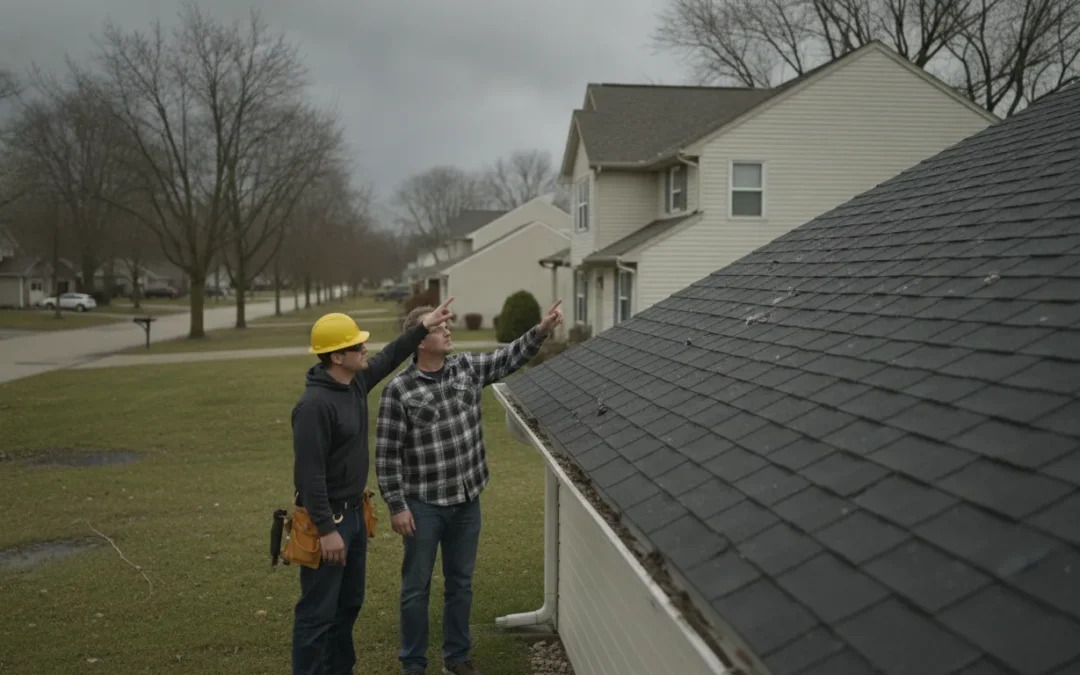
A Michigan hailstorm can leave a roof looking normal from the driveway while quietly stripping away protective granules. The safest first step is a ground-level check, followed by a professional inspection before you climb a ladder or file an insurance claim.
To learn how to spot hail damage on roof michigan homeowners should look for random dark spots, soft or bruised areas on asphalt shingles, loose granules in gutters, and dents in vents, flashing, or other soft metal.
These clues can support a claim, but they do not replace an experienced assessment.
Photograph what you can safely see, note the storm date, and avoid assuming every mark is hail damage. Hail impacts, wind wear, and ordinary aging can look different up close, and hidden damage may not be obvious immediately. For broader storm and replacement planning, see our roof replacement guide.
Call (810) 270-5922 to schedule a free roof inspection.
Start with the shingles themselves, where the pattern and feel of an impact often reveal more than a quick visual scan.
How to Spot Hail Damage on a Michigan Roof
Asphalt shingles cover roughly 80% of Michigan roofs, so they are often the first place homeowners look after a severe storm. Hail damage is not always dramatic from the ground. Some impacts leave a clear circular bruise, while others remove only the protective granules and expose the asphalt beneath. Knowing what to look for can help you decide when a professional inspection is warranted.
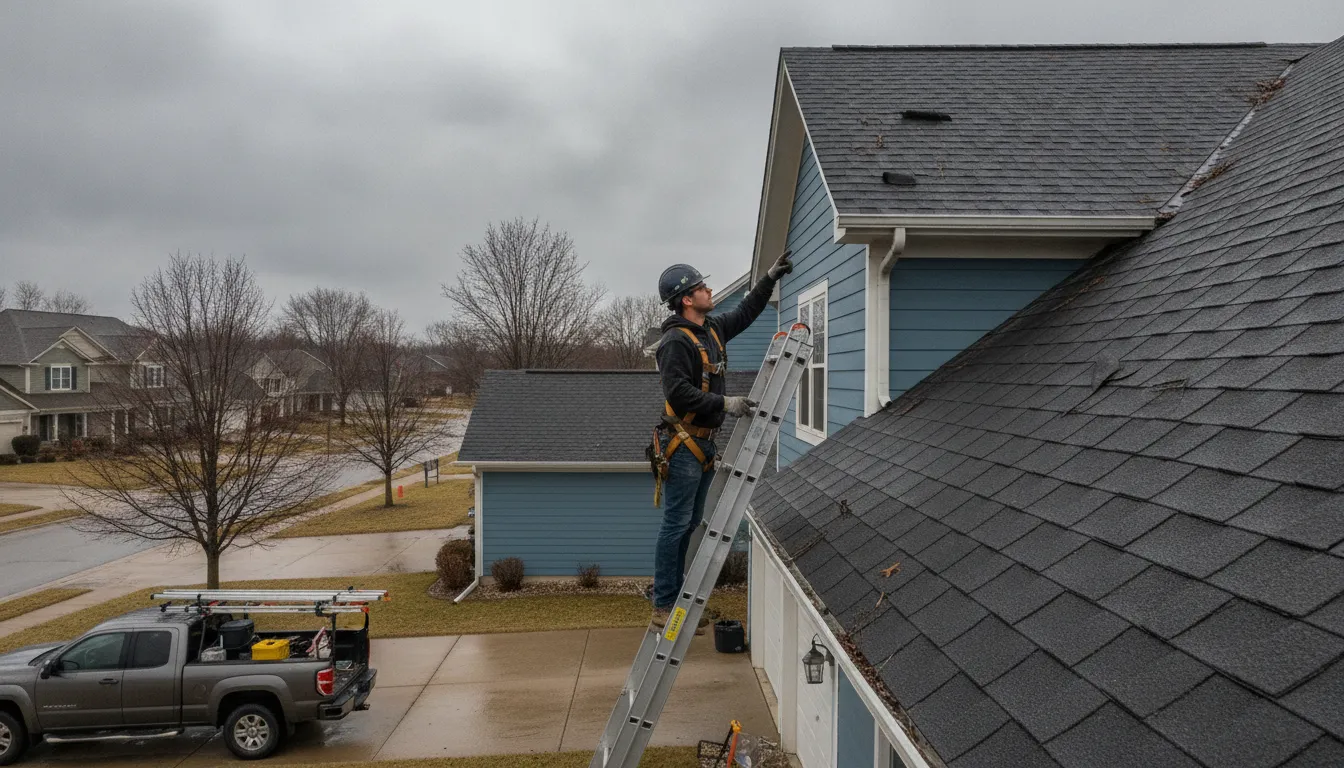
Look for random dark spots
One of the most recognizable patterns is a group of random dark spots scattered across the shingle surface. These spots may indicate that hail knocked away the granules, exposing the darker asphalt backing. Unlike ordinary weathering, hail impacts tend to appear in irregular locations rather than as uniform fading across an entire roof plane. You may also notice loose granules collecting in gutters or at the base of downspouts, which is why a ground-level check of the drainage system is useful.
Check for bruising, dents, and soft areas
A bruised shingle can look slightly sunken or dimpled even when the surface is not punctured. Pressing on a roof is not safe, and homeowners should not climb up to test suspected damage. Instead, use binoculars from the ground, or have a qualified roofer examine the surface closely. Bruised shingles may be early-stage impact damage that becomes more vulnerable during Michigan’s freeze-thaw cycles.
Hail can also leave dents in nearby metal components, including vents, flashing, and gutters. Those marks do not prove that every shingle is damaged, but they are useful corroborating evidence that the roof experienced an impact event. The National Weather Service severe-thunderstorm benchmark includes hail at least 3/4 inch in diameter. Although actual damage depends on the roof’s age, condition, materials, wind, and the storm’s intensity.
If you are researching how to spot hail damage on roof michigan, focus on patterns rather than one isolated blemish. Photograph what you can safely see, note where granules have accumulated, and avoid disturbing the roof surface. A professional can distinguish hail bruising from blistering, installation issues, foot traffic, or normal aging. For broader guidance on storm-related decisions, review our roof replacement guide.
Other Areas to Check After a Michigan Hailstorm
Learning how to spot hail damage on roof Michigan homes requires more than scanning the shingles. In Michigan, spring and summer storms can leave evidence around the entire roof system, while wind, rain, and later freeze-thaw cycles can make small problems harder to notice. A ground-level check is a safe first step after the weather clears. Do not climb onto a wet or damaged roof. Instead, walk around the property and look for these secondary signs.
- Gutters and downspouts: Look for an unusual amount of loose asphalt granules in the gutters. Granule buildup can indicate that hail struck and loosened the protective surface of the shingles. Check downspout outlets and the ground below them as well. A small amount of debris may be normal, but a concentrated pile of granules after a storm deserves closer attention. Clear the downspouts only when it is safe, and note what you find before removing anything.
- Roof vents: Inspect visible vent caps and metal collars from the ground for fresh dents, dimples, or chips. Roof vents are often made from softer metal, so hail marks may be easier to see there than on an asphalt shingle. Compare several vents rather than relying on one mark, since older weathering or installation damage can look similar.
- Flashing: Check the flashing around chimneys, skylights, wall transitions, and other roof penetrations. Fresh dents or bends can show where hail made an impact. Flashing helps direct water away from vulnerable joints, so damage in these areas can become a leak risk even when the roof surface appears intact.
- Other soft metals: Examine aluminum edging, furnace or plumbing caps, gutters, and downspout sections for new dents. These components can provide useful clues about the storm’s direction and intensity. Photograph the marks from a safe position, but do not press on loose metal or attempt a repair yourself.
- Ground debris: Look along driveways, patios, landscaping, and the base of exterior walls for shingle pieces, broken vent material, or other roof debris. Hail may also knock loose small fragments that are easier to see on the ground than from above. Photograph the debris in place and record which side of the home it was found on.
Michigan weather can change quickly, and damage that seems minor immediately after a storm may allow moisture beneath the roofing materials later. Keep notes about the storm date and the areas you inspected. If you find several matching signs, compare your observations with the guidance in our roof replacement guide, then arrange a professional inspection before making assumptions about repair or replacement.
The Difference Between Cosmetic and Structural Hail Damage
Not every mark left by a hailstorm means the roof has failed, but every suspicious mark deserves context. Cosmetic damage usually affects the visible surface of an asphalt shingle. You may see scattered granule loss, dark spots where the asphalt backing is exposed, or shallow bruising that leaves a soft, sunken area. These signs can change the roof’s appearance without creating an immediate opening into the home.
| Type | Typical Signs | Why It Matters |
|---|---|---|
| Cosmetic hail damage | Granule loss, dark spots, shallow bruising on the shingle surface | Affects appearance now, but the roof may still shed water |
| Structural hail damage | Compromised shingle mat, damaged underlayment, worn flashing or roof penetrations | Weakens the weather barrier and can lead to leaks later |
Structural damage goes deeper. A forceful impact can compromise the shingle substrate, loosen the mat beneath the surface, or damage the underlayment that helps keep water out. It may also weaken the areas around flashing, vents, ridges, and roof penetrations. Once those protective layers are impaired, rain and melting snow have more opportunities to reach the roof deck or attic. Early identification can help prevent more significant structural damage and water intrusion later. Research on hail impacts notes that roofing materials can be damaged at impact sizes that are not always easy for a homeowner to evaluate from the ground.
Why a roof can look intact after a storm
Hail fractures do not always leak immediately. A shingle may remain in place while its internal structure has been weakened. In Michigan, repeated winter freeze-thaw cycles can make hidden fractures worse as moisture enters small damaged areas, freezes, expands, and then thaws. The result may be a leak weeks or months after the storm, long after the original impact is easy to identify.
That is why an answer to “how to spot hail damage on roof michigan” cannot rely on appearance alone. Look for patterns, but do not assume a roof is sound simply because there is no stain on the ceiling. Interior damage may not be visible from outside, and the absence of an active leak only means water has not found its way through yet.
Hail damage is not the same as ordinary wear
Wind can lift or crease shingles. Foot traffic, installation work, falling branches, and age can create marks that resemble hail impacts. Hail typically produces random impact patterns, while mechanical wear may follow walking paths, tool contact, or a localized repair area. Distinguishing hail impact from wind damage or mechanical wear takes experience, especially when a roof already has weathering.
A professional assessment looks at the whole roof, including the shingle surface, edges, penetrations, soft metals, underlayment, and attic-side evidence when appropriate. The goal is not to label every blemish as storm damage. It is to separate harmless appearance changes from compromised materials that require timely attention, then document the findings clearly for the homeowner and insurer.
How Soon Should You Inspect After a Storm?
Inspect your property as soon as the storm has passed and conditions are safe. Michigan’s spring and summer storm season can bring hail, wind, and heavy rain in quick succession. Many cities in the continental United States experience at least one hailstorm each year, so a post-storm check is a sensible habit, not an overreaction. The National Weather Service uses hail 3/4 inch or larger as one benchmark for a severe thunderstorm, although smaller hail can still damage vulnerable roofing materials.
If you are learning how to spot hail damage on roof michigan homeowners should begin with a safe ground-level review, then arrange a professional inspection rather than climbing onto the roof.
- Wait until the area is safe. Stay off the roof immediately after a storm. Wet shingles, fallen branches, damaged electrical lines, and unstable roof surfaces create hazards that are not worth the risk. Look from inside or from the ground first, and keep children and pets away from debris.
- Scan the roof from the ground. Use a camera or phone with a zoom function to look for scattered dark spots, missing granules, lifted shingles, or visible debris. Do not treat a clear view from the yard as proof that the roof is undamaged. Hail impacts can be subtle, and some damage is not visible from below.
- Check the gutters and surrounding ground. Look for loose shingle material or unusually heavy collections of granules in the gutters, downspouts, driveway, and landscaping. Also check accessible soft-metal components, including gutters, vents, and flashing, for new dents. These clues can help establish that the storm affected the roof even when individual shingle impacts are difficult to see. See our guide to roof repair costs for context on why early evaluation matters.
- Watch for water intrusion. Check ceilings, attics, upper walls, and around light fixtures for fresh stains, dampness, dripping, or musty odors. If you find an active leak, place a container under the drip, move belongings away from the area, and contact a roofing professional promptly. Avoid opening a wet ceiling or touching electrical fixtures.
- Call a professional quickly. Contact a qualified roofer for a closer assessment and clear photographs or documentation. Insurance policies commonly set deadlines for reporting or filing storm claims, and those deadlines vary by policy. Prompt documentation helps preserve your options and may prevent a small opening from becoming more serious water damage. A professional can distinguish hail impacts from ordinary aging, wind damage, or mechanical wear without asking you to take unsafe risks.
Do not wait for a leak before seeking help. A timely inspection gives you a clearer record of the roof’s condition and a better chance to address damage before Michigan’s next round of rain or temperature changes exposes it.
Documenting Damage for Your Insurance Claim
Once the storm passes, create a clear record before weather, cleanup, or temporary repairs change what the roof looks like. Proper documentation is essential when you submit a Michigan hail insurance claim. It gives your adjuster a timeline and helps connect the observed damage to the storm event.
Start from the ground. Do not climb onto a wet, steep, or damaged roof to take close-up photos. Photograph each roof slope from several safe positions, then capture wider images showing the entire property and closer images of visible concerns. Include the gutters, downspouts, siding, window trim, vents, flashing, and any debris around the home. Granules collected in gutters, shingle pieces on the driveway, and dents in soft metal can help show that the storm affected more than one roof area.
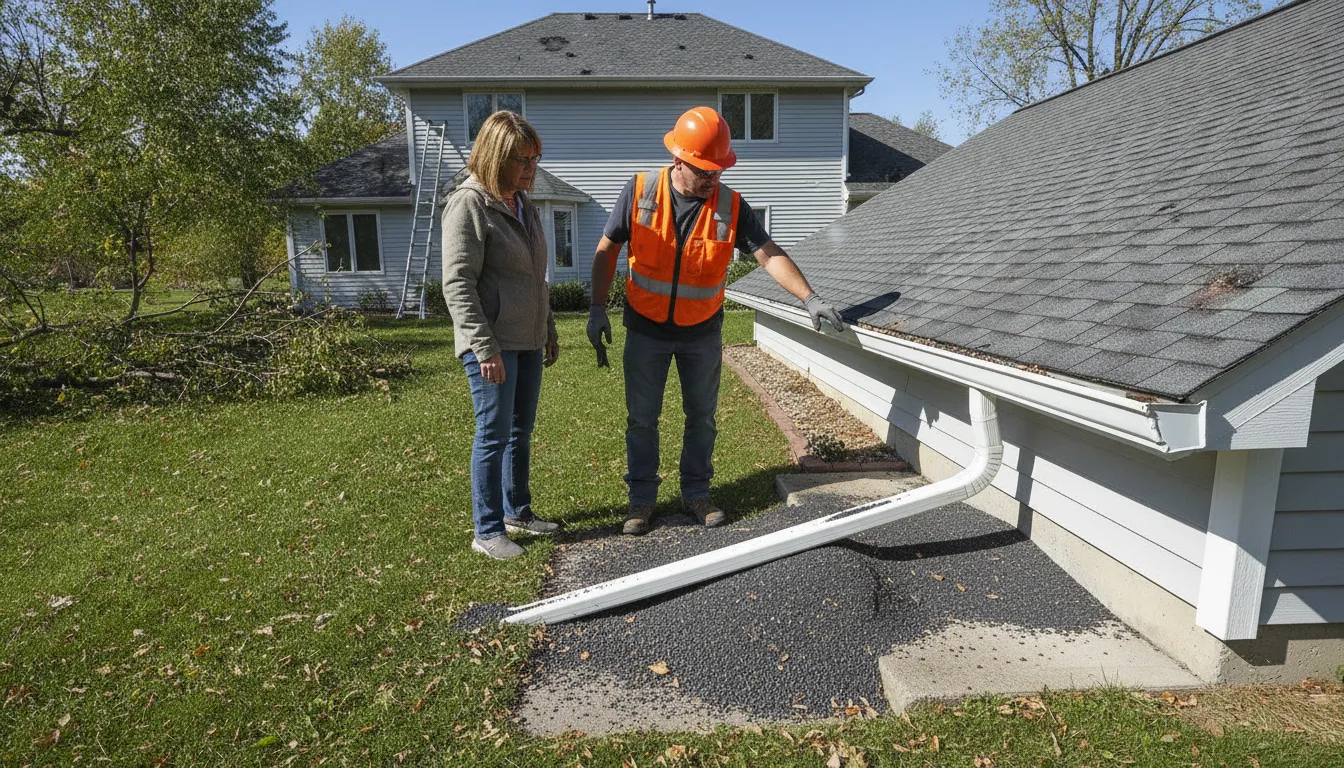
Use your phone’s original files when possible, and avoid heavy editing or filters. Note the date and approximate time of the storm, when you first noticed the damage, and the location of every photograph. A simple note can record the weather conditions, fallen branches, leaking areas, ceiling stains, or water entering the attic. Keep copies of your photos, notes, contractor communications, estimates, and receipts in one folder. If you make an emergency repair to prevent further water intrusion, photograph the condition first and save the invoices for materials and labor.
Record what you can see, and leave the roof assessment to a professional
Knowing how to spot hail damage on roof michigan homeowners can help you identify warning signs, but a ground-level review cannot confirm the full extent of a loss. Hail impacts may look like random dark spots where granules are missing, soft bruised areas, or dents in metal components. Some damage is subtle, and distinguishing hail impacts from wind damage, age-related wear, or mechanical marks takes experience.
Ask a professional roofer to inspect the roof safely and provide a written report with photographs. The report should identify affected areas, describe the observed impact patterns, and separate storm-related findings from pre-existing conditions when possible. That professional assessment supports your own documentation and gives the insurer a clearer basis for reviewing the claim. A certified roofer can also identify damage that is not visible from the ground without asking you to take unnecessary safety risks.
Act quickly after a Michigan hailstorm. Insurance policies and carriers can set claim deadlines, and waiting may allow water intrusion or freeze-thaw cycles to worsen the roof. Contact your insurer promptly to ask about reporting requirements, then arrange an inspection and keep a record of every claim-related conversation. For additional guidance, review whether homeowners insurance covers roof replacement in Michigan before you file.
When to Call a Certified Roofing Inspector
A ground-level check is a sensible first step after a Michigan hailstorm, but it has a clear limit. If you notice a leak, water staining on a ceiling, widespread granule loss. Or dents across multiple roof areas, stop trying to diagnose the problem yourself and arrange a professional inspection. Climbing onto a wet, steep, or damaged roof can lead to a fall and can disturb evidence that may be useful for an insurance claim. Qualified professionals should handle treatment and assessment of suspected hail damage so the roof’s structural integrity can be evaluated safely.
That distinction matters when you are researching how to spot hail damage on roof michigan. Some hail impacts are not immediately visible from outside. A shingle may be bruised or weakened without an obvious hole, and damage below the visible surface can contribute to water intrusion later. A trained inspector can look for patterns that separate random hail impacts from wind damage, aging, installation problems, or mechanical wear. That experience is especially valuable when the evidence is subtle or the roof has several layers of past repairs.
Situations that call for a professional assessment
- You find an active leak. Place a container under the water, protect belongings, and contact a roofer promptly. Do not assume a small stain means the damage is minor.
- Granule loss is widespread. A few loose granules may not explain the full condition of a roof, but heavy accumulation in gutters or downspouts after hail deserves a closer evaluation.
- You suspect structural damage. Sagging areas, damaged roof decking, displaced shingles, or interior moisture require more than a visual check from the driveway.
- You need insurance documentation. Clear ground-level photographs are useful, but a professional report can document both visible damage and evidence of compromised roofing elements. Proper documentation is essential when submitting a storm-related claim.
Choose a contractor carefully. Before hiring anyone, Michigan homeowners can use the state Department of Licensing and Regulatory Affairs, or LARA, to verify that a building contractor’s license is current. Ask who will inspect the roof, what the report will include, and whether the company can explain which findings are storm-related without pressuring you into unnecessary work.
Signature Home Pros is a CertainTeed SELECT ShingleMaster certified roofer and provides professional assessments and repairs for storm-damaged roofs. When the inspection supports repair, the next step may be professional roof repair services, with the scope based on documented conditions rather than guesswork. A careful inspection gives you a safer answer, a clearer record for your insurer, and a practical plan for keeping your home protected.
Schedule a free roof inspection with Signature Home Pros to get a documented assessment of any hail damage before you file a claim.
Frequently Asked Questions
How do I know if I have roof damage from hail?
Look for random dark or shiny spots where granules have been knocked away, soft or bruised areas on shingles, and dents in gutters, vents, or flashing. Check the ground and gutters for loose granules or shingle debris as well. These signs can indicate impact, but a professional inspection is the safest way to distinguish hail damage from age, wind, or mechanical wear.
Can I see hail damage on my roof without getting on a ladder?
Often, yes. Start from the ground and inspect visible roof slopes, then check gutters for an unusual buildup of granules and look at accessible metal components for dents. Do not climb onto a wet, steep, or damaged roof. Take clear photos from safe positions and have a qualified roofer inspect areas you cannot safely reach.
Does hail damage look different than wind damage?
Hail commonly leaves scattered, circular-looking bruises, indentations, or dark impact marks. Wind more often lifts, creases, or tears shingles along their edges. The patterns can overlap, and weathered shingles may have similar-looking defects, so an experienced inspector should evaluate the full roof rather than relying on one mark.
How quickly should I check for roof hail damage in Michigan?
Check the property as soon as conditions are safe after a suspected hailstorm. Early photos help establish what happened, and insurance policies may set deadlines for reporting claims. Document visible damage from the ground, prevent further exposure if an opening is apparent, and arrange a professional assessment promptly. Proper documentation is essential for a storm-damage claim (Signature Home Pros).
What should I do if I suspect roof hail damage?
Photograph the roof and surrounding property from safe locations, save any relevant storm-date information, and avoid making permanent repairs before the damage is assessed. A certified roofing professional can document visible and less-obvious damage and explain practical next steps without pressuring you into unnecessary work.
Ready to Schedule Your Free Roof Inspection?
Hail damage can be difficult to judge from the ground, and a professional inspection can help clarify what your roof needs after a Michigan storm. To schedule a free roofing inspection and discuss a clear, no-pressure plan for your home, call Signature Home Pros at (810) 270-5922.
Recent Comments