
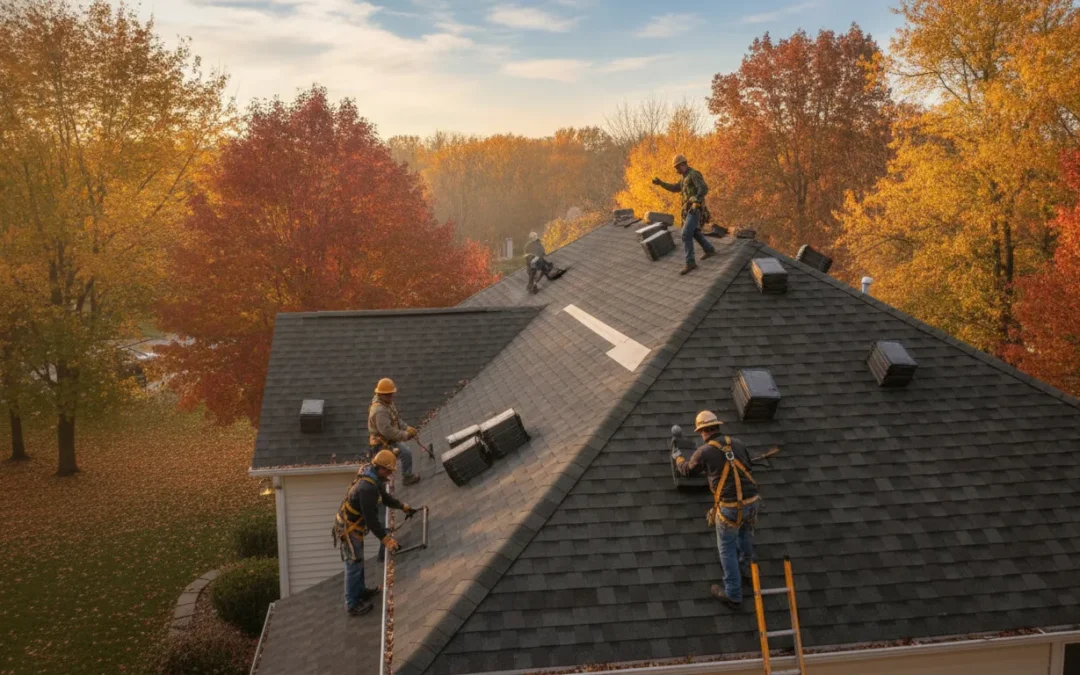
Michigan weather can change quickly, so roof replacement timing is about more than choosing an open spot on the calendar. Temperature, humidity, dry conditions, contractor availability, and the condition of your existing roof all affect the project.
For most Michigan homeowners, the best time for roof replacement in Michigan is late spring through early fall, when temperatures are moderate and the forecast offers dry, stable working conditions. These conditions support proper asphalt-shingle installation, but the right date still depends on the roof’s condition, the material manufacturer’s requirements, and the local forecast. Start planning early so a qualified contractor can inspect the roof and schedule the work before peak-season calendars fill.
That does not mean every month is equally dependable. Early spring may remain cold and damp, summer demand can fill contractor schedules, and fall weather can shift quickly. Planning ahead gives you more control and time to address ventilation, decking, or other issues before they become delays. For a broader look at materials, certifications, and storm protection, see our roof replacement in Michigan guide. Next, we will compare the seasonal conditions that matter most.
Schedule a free roof inspection with Signature Home Pros to find your ideal replacement window.
What Is the Best Time of Year to Replace a Roof in Michigan?
For most Michigan homeowners, the best window for roof replacement runs from late spring through early fall. In practical terms, the best time of year to replace roof michigan homes is when temperatures stay roughly between 40 and 85 degrees Fahrenheit. Humidity is low, and the forecast offers dry working conditions.
Temperature and moisture matter because asphalt shingles need suitable conditions to seal correctly. Cold weather can make shingles brittle and slow the adhesive bond. Excessive heat can soften them and increase the risk of scuffing during installation. Rain, damp materials, and sudden changes in the forecast can also interrupt the work and leave crews managing unnecessary exposure.
Michigan makes scheduling more important than simply choosing a month on the calendar. Conditions can change quickly across central Michigan, from a warm afternoon to a cold, wet system moving through the area. A reputable contractor watches the forecast, confirms that materials and the roof deck are ready, and builds the installation around a dependable stretch of weather. For a broader look at materials, costs, and planning considerations, review this roof replacement in Michigan guide.
What makes the late-spring-to-early-fall window practical?
- Better shingle performance: Moderate temperatures support adhesive activation and help shingles lay flat during installation.
- More reliable workdays: Dry conditions reduce weather interruptions and help protect the exposed roof during tear-off and installation.
- More planning flexibility: Homeowners can compare estimates, confirm materials, and address deck or ventilation concerns before work begins.
- Fewer cold-weather complications: Scheduling outside the harshest winter conditions reduces concerns related to brittle shingles, snow, freezing temperatures, and slow sealing.
Demand is part of the timing equation, too. Roofing contractors are often booked weeks or even months ahead during the height of Michigan’s roofing season. Waiting until the first warm week can mean accepting a less convenient date or rushing a decision. Start with an inspection and discuss realistic scheduling options early. Signature Home Pros takes a family-owned, no-pressure approach. Helping homeowners in the Flushing and central Michigan area choose a sound installation window based on the roof’s condition and the actual forecast.
Spring Roofing in Michigan: Pros and Cons
Spring can be an excellent time to replace a roof in Michigan, especially once the weather settles into a consistent pattern. The key is to distinguish early spring from late spring. A professional roofer will watch temperature, moisture, and the forecast rather than rely on the calendar alone.
Advantages of a spring roof replacement
- Late spring offers favorable installation conditions. Late spring typically falls within the 40-85 degrees Fahrenheit range considered ideal for roof replacement, along with dry conditions and lower humidity. Those conditions help asphalt shingles lie flat and seal as intended. Michigan State University guidance identifies late spring as part of the broader seasonal window that can work well for roofing.
- Scheduling may be more flexible. Spring and late fall are shoulder seasons, so reputable contractors may have more availability than they do during the busiest part of summer. That can make it easier to choose a qualified crew and reserve a date before your roof develops a more urgent problem.
- You can address problems before summer storms. Replacing a worn roof in spring gives your home a stronger weather barrier before the season brings heavier rain, wind, and heat. It also leaves time to discuss ventilation, flashing, and other details during a planned project.
Potential drawbacks to plan around
- Early spring may be too cold or damp. Temperatures can remain below the activation range needed by many asphalt shingle adhesives. Until the seal forms properly, shingles may be more vulnerable to wind-related damage. Cold, wet mornings can also delay safe installation.
- Michigan weather can change quickly. Rain, overnight freezes, and windy conditions may interrupt the schedule. A responsible contractor should build weather monitoring and contingency time into the project rather than rush work between storms.
Is spring a good time to roof in Michigan?
Yes. Late spring is often a good time to replace a roof in Michigan because temperatures are more likely to be within the ideal range and contractor availability may be better than during peak summer. Early spring can still work for some projects, but only when the temperature, moisture, and forecast support proper shingle sealing and safe installation.
Summer Roofing: Ideal Conditions and Scheduling Tips
Summer is often a practical season for roof replacement in Michigan. Warm, dry weather generally falls within the 40 to 85 degrees Fahrenheit range considered favorable for installation, but the calendar still matters. Extreme heat and high demand can create avoidable complications if the project is scheduled at the last minute.
| Consideration | Late spring | Summer |
|---|---|---|
| Weather | Often mild, though early spring may still be cold or damp. | Usually warm and dry, with conditions commonly suited to installation. |
| Availability | Shoulder-season scheduling may offer more flexibility. | Peak demand can mean contractors are booked weeks or months ahead. |
| Timing consideration | Confirm temperatures will support proper shingle sealing. | Plan around heat, crew availability, and possible weather delays. |
Why summer heat still requires planning
Warmth helps asphalt shingles seal, but excessive heat can make them soft and pliable. That increases the chance of scuffing during handling and installation, according to Michigan State University guidance. A qualified roofing crew can adjust its work plan to the conditions, including limiting unnecessary handling and paying attention to the roof surface throughout the day.
How to schedule a summer roof replacement
- Book early. Contact contractors well before your preferred installation window. Peak-season demand can fill schedules weeks or months in advance.
- Ask about start times. Beginning earlier in the day can help the crew avoid the hottest afternoon conditions while still allowing enough daylight for safe, careful work.
- Confirm material storage. Shingles and other roofing materials should remain in a dry, ventilated area before installation. Improper storage can contribute to premature degradation, as noted in MSU’s roofing safety guidance.
- Leave room for weather. Even a favorable season does not eliminate Michigan’s changing weather. A realistic schedule includes flexibility for rain, storms, or an unexpected heat wave.
Summer can offer dependable working conditions, but it is not automatically the best choice for every home or project. The right timing depends on the roof’s condition, the forecast, and a contractor’s ability to plan the work safely.
Fall Roofing: The Michigan Sweet Spot
For many Michigan homeowners, early to mid-fall offers the most balanced conditions for a roof replacement. Daytime temperatures can remain within the roughly 40 to 85 degree Fahrenheit range recommended for installation. While cooler mornings and lower seasonal demand may make scheduling more flexible than it is during the height of summer. Dry weather still matters, so your contractor should confirm the forecast and plan the work around a dependable stretch of conditions.
This timing can be especially helpful if your roof is aging but has not yet developed an urgent leak. Peak-season contractors may be booked weeks or months ahead, while shoulder-season scheduling can offer more practical options with reputable crews. Start by arranging an inspection, then ask how the proposed dates account for material delivery, tear-off, cleanup, and weather interruptions. Our roof replacement in Michigan guide covers the broader planning decisions that go into this project.
Plan around Michigan’s quick weather changes
Fall is not a guarantee of steady weather. Michigan can move from mild afternoons to freezing conditions with little warning as autumn gives way to winter. Sudden temperature drops can create suboptimal conditions for roofing adhesives, and an exposed roof needs careful protection if rain, wind, or frost arrives during a multi-day project. Ask your roofing professional what weather threshold would pause installation and how the home will be protected overnight. It is also useful to discuss how long a roof replacement takes, since the expected duration affects the best calendar window.
Use the project to prevent ice dams
A new roof covering alone does not solve every winter roofing risk. Before cold weather settles in, have the attic insulation and ventilation evaluated. Inadequate insulation and ventilation can contribute to ice dams, which may damage roof coverings as meltwater refreezes along the eaves. A roof replacement is an appropriate time to review attic airflow, intake and exhaust ventilation, and areas where heat may escape into the attic. The review should be part of the plan rather than an afterthought, because proper attic circulation also helps manage moisture buildup. Michigan State University Extension’s roofing safety guidance identifies ventilation and insulation as important parts of ice-dam prevention: review the guidance.
In short, early or mid-fall can be an excellent opportunity to replace a roof before winter. Provided the forecast, installation temperatures, and attic conditions all receive the same careful attention.
Can You Replace a Roof in Winter in Michigan?
Yes, a roof can be replaced during a Michigan winter when an emergency leaves no safe alternative. For a planned replacement, though, winter is usually a sub-optimal time. Cold, snow, and freezing conditions make installation more difficult and give shingles less opportunity to seal properly.
Asphalt shingles can become brittle in cold temperatures, which makes handling and fastening them more challenging. Their adhesive seal can also activate more slowly. Until that seal takes hold, wind can lift or damage shingles. Michigan State University notes that winter snow and freezing temperatures increase the risk of damage during roof work and hamper adhesive activation.
That does not mean every winter project is automatically unsafe or impossible. An experienced roofing contractor can evaluate the roof, weather, materials, and emergency conditions before recommending a response. If a storm or sudden leak has exposed the home, the immediate priority is to limit water entry and protect the interior. A temporary, professionally installed repair may provide time to plan a full replacement when conditions improve.
Temperature requirements also matter for the manufacturer’s warranty. Some shingle warranties may be affected when materials are installed outside the manufacturer’s specified temperature range. Ask which products are being used, what temperature limits apply, and how the contractor will protect the roof if cold weather delays the adhesive seal. You can also review options for choosing the best roofing materials for Michigan conditions.
For most homeowners, the practical approach is to respond to active leaks now, then schedule the permanent work for a warmer, dry-weather window. Planning ahead is especially useful because reputable contractors may already be booked weeks or months during the main roofing season. A winter inspection can still help you understand the roof’s condition, compare materials, and reserve a spring or early-summer installation date without rushing the decision.
How to Book a Michigan Roofing Contractor in Advance
Once you know your roof may need replacement, planning ahead gives you more time to compare qualified professionals and choose a workable installation window. The right process also helps prevent surprises after the old shingles come off. Use these steps to prepare before Michigan’s busiest roofing weeks fill up.
-
Start with a professional roof inspection
Before scheduling a replacement, have a qualified roofing professional inspect the entire system. A roof can look worn without requiring full replacement, while less visible problems may be more serious. An inspection can identify hidden wood rot or mold and evaluate the roof deck’s integrity and structural stability. Those findings help you make an informed repair-versus-replacement decision and give the contractor a clearer scope of work. A full tear-off also allows the deck to be inspected before new roofing materials are installed. Choosing a professional roofing contractor is an important part of getting an objective assessment.
-
Verify licensing, insurance, and permits
Ask for the contractor’s current Michigan LARA Building Contractor license information, proof of insurance, and confirmation that the required building permit will be obtained. Licensing and permits support code-compliant work, while insurance helps clarify responsibility if an accident or property issue occurs. The City of Grand Rapids identifies permits and licensed contractors as requirements for residential re-roofing projects. So treat this verification as a basic consumer safeguard, not an optional detail. Review the residential roofing permit requirements if you want to know what to ask.
-
Request a comprehensive written estimate
Get the proposed scope in writing before you commit. The estimate should explain the tear-off, disposal and debris removal, new materials, labor, and any structural repairs that may be needed after the deck is exposed. It should also identify items such as flashing or other work included around roof penetrations. A detailed estimate makes it easier to compare bids on the same scope and reduces the chance that necessary work appears as an unexpected add-on.
-
Book before peak-season calendars are full
Michigan contractors can be booked weeks or months ahead during the height of roofing season. Contact companies early, especially if you are aiming for the late-spring, summer, or early-fall weather window. Build in flexibility for rain, temperature changes, and other weather delays. Starting early improves your odds of securing a qualified crew when conditions are suitable, rather than waiting until an urgent leak limits your choices. When you are ready to discuss roofing services, ask about inspection timing, projected start dates, and the plan for protecting your home if weather interrupts the work.
Call Signature Home Pros at (810) 270-5922 to plan your Michigan roof replacement.
Frequently Asked Questions
What is the best time of year to replace a roof in Michigan?
Late spring through early autumn is generally the best window, when conditions are more likely to be dry and moderate. Michigan State University guidance identifies temperatures between 40 and 85 degrees Fahrenheit as ideal for roof replacement, although the actual forecast and roofing material requirements should guide scheduling.
What is the cheapest month for roofing?
There is no universally cheapest month because pricing depends on material availability, project complexity, local demand, and weather. Late spring or late fall may offer more scheduling flexibility than peak summer. But homeowners should compare complete written estimates rather than choosing a month based on price alone.
Can you replace a roof in the winter in Michigan?
Yes, but winter replacement is usually less favorable and requires careful planning. Cold temperatures can make shingles brittle, slow adhesive sealing, and increase the risk of wind damage before the seal activates. Snow and freezing conditions can also make roof work more hazardous, so urgent winter repairs should be evaluated by an experienced contractor.
Why is fall considered the sweet spot for roof replacement in Michigan?
Early and mid-fall can combine comfortable installation temperatures with less intense summer demand. However, Michigan weather can shift quickly as winter approaches. Schedule early, confirm the forecast, and ensure the contractor has a plan for temperature changes and weather delays.
Ready to Plan Your Michigan Roof Replacement?
A roof inspection can help you understand your roof’s condition and choose a practical installation window before seasonal schedules fill. To schedule a free roof inspection and roof replacement consultation, call Signature Home Pros at (810) 270-5922. Their team can answer questions about your home and help you decide on a sensible next step without pressure.
Recent Comments