
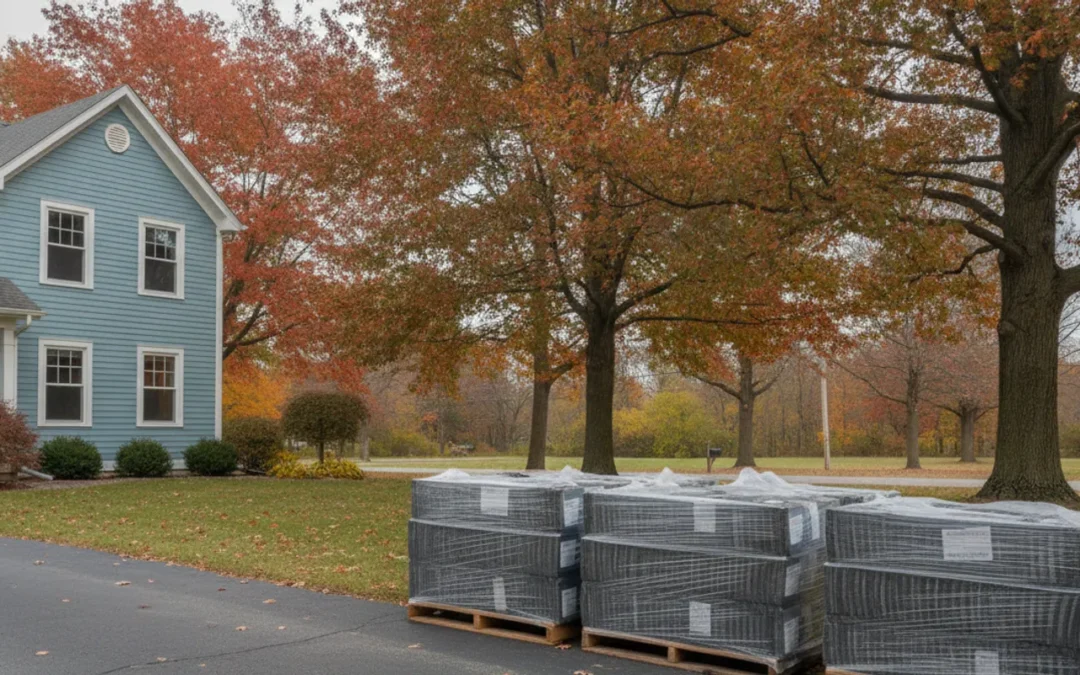
Roofing material delivery in Michigan can affect your driveway, yard, and daily routine before installation starts. A few specific questions about timing, access, and placement can help you prepare without assuming where a truck can go or how materials will be handled.
Delivery is part of the project plan, not just a date on a calendar. The right arrangement depends on the home, available access, the materials ordered, and the supplier’s equipment. Use this guide to clarify the plan with the roofing contractor, protect the areas that matter to you, and know whom to contact if the delivery does not match expectations. For broader project context, start with this roof replacement homeowner guide.
What happens during roofing material delivery?
Roofing materials are brought to the property before or around the time installation is scheduled. A residential order may include shingles, underlayment, flashing, ventilation components, and other items specified for the job. The exact materials and shipment arrangement vary. Ask the project contact what is expected for your home rather than relying on a generic description of a roofing delivery.
Materials need a planned place to be received or staged. Depending on site conditions and the supplier’s equipment, the plan may involve a designated area on the ground or another location that the contractor and supplier have determined is suitable. Do not assume that a driver can place materials on a roof, reach a backyard, or use a particular surface. Confirm feasibility, responsibility, and any limits in advance.
Delivery and installation are separate schedule items. The materials may arrive before the crew begins, or an order may be divided into more than one shipment. Ask whether anyone needs to be home, whether the delivery window is firm or estimated, and how you will hear about a change. A scheduled delivery date should not be treated as confirmation that work starts that same day.
What should you confirm before delivery day?
Ask for a clear plan from the person coordinating the project. If details are discussed by phone, follow up with a short message that records the agreed date, expected time range, staging location, and contact person. The point is not to create paperwork for its own sake. It is to make sure the homeowner, contractor, and supplier are working from the same expectations.
- Date and arrival window: What day is currently planned? Is there a time range, and who will tell you if it changes?
- Staging location: Where are materials expected to be placed? Who has confirmed that the area is suitable?
- Vehicle access: Will the truck need the driveway, alley, side yard, or a shared entrance? Is there enough room for its approach and departure?
- Placement limits: Are there areas that must remain open, surfaces to avoid, or obstacles the driver should know about?
- Household arrangements: Should vehicles be moved, a gate unlocked, or pets kept indoors during the delivery window?
- Follow-up contact: Whom should you call if the truck arrives early, cannot access the agreed area, or leaves materials somewhere unexpected?
- Next project step: Will materials remain on site before work begins, and will you receive a separate update about the installation schedule?
Be concrete about constraints. “The driveway is narrow” is useful, but details make the conversation more actionable: note a tight turn, low branch, shared access, parked vehicle, slope, soft lawn, or area where a vehicle must not stop. If the property has a gate or access code, ask how it will be handled and whether it should remain closed outside the delivery window.
Clarify household access, too. If someone relies on a car for work, school, or an appointment, ask whether the delivery could block it and what parking arrangement to use instead. Where a neighbor shares an entrance, contact them early and agree on a practical plan. Do not assume the driver will be able to wait while vehicles are moved or residents coordinate access.
How do you choose and confirm a staging area?
Think of a staging area as a shared decision. You can tell the contractor which areas are convenient and which ones raise concerns, but the final plan also depends on access, equipment, the load, and site safety. A preferred spot is not automatically a workable one. Ask the project contact to confirm the location and explain any limitations before delivery day.
Walk the proposed route and destination if possible. Consider the width of the approach, turning space, overhead obstructions, slope, and whether the area is needed for everyday use. Point out garden beds, paving, drains, lawn areas, landscaping, or other features you are concerned about. Ask whether the surface can support the planned access and whether another staging place should be considered. Do not promise yourself that a particular surface will be unaffected; get the plan and any precautions from the contractor.
If the only apparent space is beside a garage, check what that means for the garage door and normal access. If the area is near a sidewalk or shared drive, ask how people will pass safely. If there is no obvious open space, send clear photos of the driveway, side yard, and possible alternatives before the date is set. A photo can help start the discussion, but it does not replace the contractor’s confirmation of what is feasible.
Ask who has authority to approve a change on site. A driver may arrive to find that a vehicle, temporary obstruction, or weather condition has changed the available space. Knowing who can make a decision prevents conflicting instructions. If the plan changes, ask the coordinator to tell you where materials were placed and what the next step is.
How can you prepare your property and household?
Once the staging area and access route are confirmed, prepare only the spaces the plan requires. Move cars and portable items out of the route or destination before the expected window. Put away planters, lawn tools, bicycles, toys, and other movable objects if they could interfere with access. If you have a shared driveway, agree on which portion should remain clear and when.
- Review the route: Check the driveway entrance and the agreed staging location. Make sure there is no new obstruction, such as a parked vehicle or a delivery bin.
- Identify concerns: Tell the coordinator about fragile landscaping, low branches, drains, soft ground, or other features that need to be considered.
- Ask about protective steps: Do not assume a particular cover or surface protection will be used. Ask whether the contractor recommends a precaution for the site and who will arrange it.
- Plan parking and access: Move vehicles if needed, and make arrangements for people who need to enter or leave during the delivery window.
- Brief the household: Let household members know where the activity may occur and which areas to avoid. Keep children and pets away from delivery and work areas.
- Keep the contact handy: Save the coordinator’s number and the latest delivery information so you are not searching for it if something changes.
Do not climb onto a truck or roof, enter an active unloading area, or try to move a heavy bundle yourself. A National Institute for Occupational Safety and Health report documents a roofer who died after being struck by a falling load during roofing-material delivery. That incident is a clear reason to keep a safe distance from trucks, lifting equipment, and loads, and to follow instructions from the people managing the delivery. Read the NIOSH incident report on a fatal falling-load injury.
If you want to understand how material choice and roof assembly fit into the larger project, review the company’s overview of roofing materials for Michigan homes and its explanation of what roof underlayment does. Those subjects are separate from the delivery schedule, but they can help you keep product questions distinct from access and staging questions.
How do weather and site conditions affect timing?
Michigan weather can change the practical conditions around a planned delivery. Rain, snow, ice, wind, or a thaw that leaves the yard soft may affect access, staging, or the work sequence. These conditions do not affect every property in the same way, and a forecast alone cannot tell you what the supplier or contractor will decide. Ask for an update from the person coordinating your project instead of assuming the original date is fixed or cancelled.
Build a simple contingency plan around decisions you can control. Ask whether materials could arrive before installation, whether the intended staging location remains acceptable if the ground is wet, and how a revised arrival window will be communicated. If the date moves, ask whether your parking or access arrangements need to change. If materials have already arrived, ask the project contact what to expect next; do not move or cover them unless you have been given instructions.
Weather can also affect household plans even when delivery proceeds. A wet or icy approach may make it harder to walk around the property, and a blocked driveway may matter more if you need to leave on short notice. Keep the route you need for daily access in mind when you agree on placement. If an urgent roof concern arises while the project is being scheduled, use the guidance in this article about what to do first during an emergency roof repair situation rather than trying to inspect an unsafe area yourself.
How should you compare delivery plans?
Compare plans by how clearly they address access, timing, placement, communication, and responsibility. There is no placement method that suits every home, and a table cannot determine which equipment or location is suitable. Use these prompts to identify unanswered questions and confirm the plan with the project contact.
| Planning point | What to confirm | Why it matters |
|---|---|---|
| Ground staging | Which surface and area are planned, and what site concerns should be reviewed? | Helps you prepare the location and discuss lawn, driveway, or landscaping concerns beforehand. |
| Placement near the work area | Is this feasible for the property and delivery equipment, and who confirms it? | Prevents assumptions about a location that may not be accessible or appropriate. |
| Arrival window | What date or time range is expected, and who reports a delay? | Lets the household plan parking, work, school, and other access needs. |
| More than one shipment | Could items arrive on separate dates, and will each arrival be communicated? | Prepares you for repeated access needs and avoids confusion about whether the order is complete. |
| Weather contingency | What happens if the approach or planned staging area is affected? | Establishes who makes the schedule decision and what information you will receive. |
| Issue on arrival | Who can approve an alternate plan if the agreed route or spot is unavailable? | Gives the driver and homeowner a clear contact instead of competing instructions. |
A strong plan does not have to guarantee an exact arrival minute or an impact-free site. It should make clear what is currently expected, what constraints have been shared, who communicates a change, and how a new decision will be made. If a proposal leaves one of those points unclear, ask a direct follow-up question before the truck is dispatched.
What should you do if the delivery does not go as planned?
If the truck cannot reach the agreed area, the arrival time changes substantially, or materials are placed where they block essential access, contact the project coordinator promptly. Describe what happened, where it happened, and what access or property concern needs attention. If it helps, take a photo from a safe location. Do not stand near equipment or try to direct a moving load from an unsafe position.
If materials appear damaged or the delivered items seem different from what you expected, note the concern and tell the coordinator before installation proceeds. Identify the item or bundle, where it is, and what you observed. Ask who will review it and how you will receive an answer. Do not make a determination about product suitability based only on an outside appearance, and do not open, lift, or rearrange a load yourself.
For an access problem, explain the practical impact: for example, a car cannot leave, a shared entrance is blocked, or a gate cannot be used. Ask what can be done safely and who is responsible for making that decision. If the proposed solution differs from the original arrangement, confirm the new plan and any follow-up with the coordinator. Keep your notes factual and focused on the issue rather than arguing about what the driver should have done.
What questions should you ask during a roofing consultation?
Delivery planning is easier when it begins before a date is selected. Before a consultation, make a short list of property constraints and daily routines that could affect access. Note a narrow driveway, shared parking, overhead branches, a detached garage, a gate, or areas you would prefer not to use. A few photos can make the discussion more specific. Bring the same list to a conversation about the roof itself so delivery logistics are not forgotten amid material choices.
- Who coordinates the supplier and confirms the delivery window?
- Where is the proposed staging spot, and what factors determine whether it can be used?
- Will delivery and installation occur on different dates?
- Could the order arrive in multiple shipments?
- What access should remain open for household members or neighbors?
- How will a weather-related or site-related change be communicated?
- Who should I contact if materials are damaged, misplaced, or blocking access?
Use the answers to understand the process, not to demand a particular method that may not fit the property. Signature Home Pros describes itself as a family-owned exterior home renovation company serving central Michigan homeowners. You can learn more about the company’s background on its About Us page, review its service area, and explore its roofing services. The customer reviews page is another resource when considering a conversation with the company.
When you are ready to talk through the property, timing, or material-delivery questions, use the verified appointment scheduling page. You can also discuss the wider project through the company’s contact page.
Schedule a roofing consultation
Frequently asked questions
Do I need to be home when roofing materials arrive?
Not always, but the answer depends on access and the agreed delivery plan. Ask whether someone must be present, how the driver will reach the confirmed location if you are away, and who should be contacted if the plan needs to change.
Can I choose where materials are placed?
You can share a preference and explain property concerns, but the final arrangement depends on access, equipment, safety, and the project plan. Confirm the proposed location with the contractor before delivery day rather than assuming a preferred spot will be used.
Will materials arrive on the same day installation begins?
Not necessarily. Delivery and installation are separate schedule items, and some orders may be split into more than one shipment. Ask for the expected dates and how updates will be shared if either changes.
What if delivery blocks a vehicle or shared driveway?
Contact the coordinator as soon as possible, explain the specific access problem, and ask what can be done safely. Before the delivery date, discuss parking and shared access with the project contact and any affected neighbor.
What should I do if I see damaged materials?
Keep a safe distance, make a note of what you observed, and report it to the project coordinator before installation proceeds. Ask who will review the concern and explain the next step; do not try to lift or rearrange the materials yourself.
A clear delivery plan gives you a practical way to prepare for access, staging, and schedule changes while keeping safety and your household’s needs in view.
Recent Comments